Helping the Blind to See Without an Operation, a World Devoid of Musical Pleasure (Anhedonia) and Sexual Cannibals Identified in Europe (featuring Voluntary Self-Castration)

********************************************************************************************

STOP PRESS!! Have you tried the YouTube Playlist featuring all of my compositions for the TRANSFORMATES? Here it is:

********************************************************************************************

This week I have uncovered a number or important developments from around the world with a strong sensory focus. Each of these subjects is covered in a more detailed separate article in the Alpine Press section of this site.

Helping the Blind to See Without an Operation

The first exciting development comes from Israel and focuses on how we recognise images. For most of us this involves our visual senses: we see objects and this information is processed and interpreted in the visual cortex area of our brains. However for the World’s 45 million people who are totally blind this option of processing images by looking at them does not exist.

A team in Israel have been working on converting images into soundscapes. They make a representation of the image using sound and blind participants in their research have learned to use these representations to see and even reproduce the images by writing them down. The equipment can be worn by the blind person allowing them use a head set to take pictures as they move and ‘see’ the soundscape representation through headphones.

Not only could these people identify what they saw but they could use this equipment to move around independently.

The neuroscientists involved in this research were amazed when they used MRI scanning technology to investigate which parts of the brain were involved in processing these soundscapes. If you would like to read more and see some remarkable videos please take a look at my more detailed article by clicking on the link below:

22nd March 2014: Helping the Blind ‘Hear’ Shapes and Pictures – Image Recognition Area of Brain Stimulated by ‘Soundscapes’ in Congenitally Blind – Despite Never Having Seen Before!

The next article moves away from image recognition but continues to look at our sense of hearing:

A World Without Musical Pleasure (Anhedonia)

Having discussed how scientists are trying to help people who can not see let us now try to imagine what it must be like to hear music and derive absolutely no pleasure at all from the experience – regardless of which music you listen to.

Some people suffer from a psychological condition known as Anhedonia; they are unable to experience pleasure from activities usually found enjoyable to others like exercise, hobbies, music, sexual activities or social interactions. This form of pathological depression can result in joylessness, dreariness, and dejection.

Researchers have recently been able to identify that a small proportion of individuals suffer from Music Anhedonia and have examined this situation in more depth. Their research is summarised in my second article which you can read by clicking on the link below:

19th March 2014: Coldness Towards Music May be a Sign of Pathological Depression – Evidence for Musical Anhedonia

Having spent so much time on the visual and hearing senses let us now turn our attention towards two other areas of sensory enjoyment – namely the ability to appreciate a good meal and the pleasure we derive from a mutually rewarding physical relationship:

Sexual Cannibals Identified in Europe (Including Voluntary Self-Castration)

I struggled to find a less ‘in your face’ title for this subject because the description I have used here is precisely what the research was about.

Once again a team of highly respected scientists have been involved in this research, both from Germany and Finland. Those of us who spend a lot of time in Germany will be well aware of the recent trials involving a computer technician in Rotenburg who found a voluntary ‘dining’ partner on the internet. The host together with his new partner removed and then jointly attempted to eat the partner’s penis. Following this the computer technician killed the victim and ate a lot more of his flesh (this story can be found under the search term Rotenburg Cannibal or the master butcher (Der Metzgermeister in German).

The research team from Hamburg and Finland have identified that this is by no means a unique situation in mainland Europe. They have identified other situations where cannibalism is practised in association with sexual relationships and have photographic evidence of the use of castration to strengthen the bond between consenting partners.

Now before you race to click on the link to my article I should warn you that I have included a number of pictures illustrating both the cannibalistic sexual act and the process of castration. Therefore my more detailed article is not to be viewed by those of a sensitive disposition. Under age visitors to this site should only read the article after first checking with their parents or their biology teacher. Under no circumstances should you read the article while eating your lunch.

After duly considering these ‘safety’ warnings please find below the link to this important investigation into our understanding of the role of cannibalism and self mutilation in promoting mutually beneficial sexual relationships:

18th March 2014: Germany and Finland Joint Investigation: New Case of Sexual Cannibalism Including Self-mutilation (Castration) During Intercourse.

Well I guess that is enough sensory excitement for this week. Following the tremendous response I received from my article featuring the trio London Grammar (you can look again here – the video is at the end of the blog) I would like to finish this blog with another wonderful musical discovery. Regular readers will know I have a little weakness for Vikings – probably due in part to my genes and the long history of the Duggleby’s (more info here). This lady is from Denmark but now lives in Berlin. She combines beauty both in looks and in her musical compositions and performances. So for those who need something a little more relaxing after having read the last article please enjoy Agnes Obel. Here she sings ‘Riverside‘ from her debut album Philharmonics. In November 2011 at the Danish Music awards she won five prizes: Best Album Of The Year, Best Pop Release Of The Year, Best Debut Artist Of The Year, Best Female Artist Of The Year and Best Songwriter Of The Year. Her new album is called Aventine.

I hope this has helped to bring your blood pressure back under control. If you like this music Agnes Obel is just embarking on a European Tour. Details can be found on her website here

If you were unable to find just the right article from my small selection above please don’t forget that there are many more exciting subjects dealt with in the reviews provided on my Alpine Press page: just follow the link here to see the contents page.

Have a great week and remember to keep an eye out for unexpected cannibals hiding in your back garden.

Chris Duggleby

Vienna Wolves – Giant Killer Defrosted – French Meat Eating Aliens

While you read the following article why not listen to my e-baroque compositions – just click on the box below:

or if techno music is more your cup of tea here are my techno/ambient compositions:

I hope you find the information below interesting…please visit chrisduggleby.com again.

I am writing this bloglet from Cape Town, having escaped once again the European winter to get some much needed vitamin D therapy. Actually the South African village of Llandudno where I live is deserted of traffic today because of the Annual Argos Pick n Pay 109 km cycle tour. If you are not familiar with the event here is a nice little video showing off some of the local sights and illustrating the very African nature of this race:

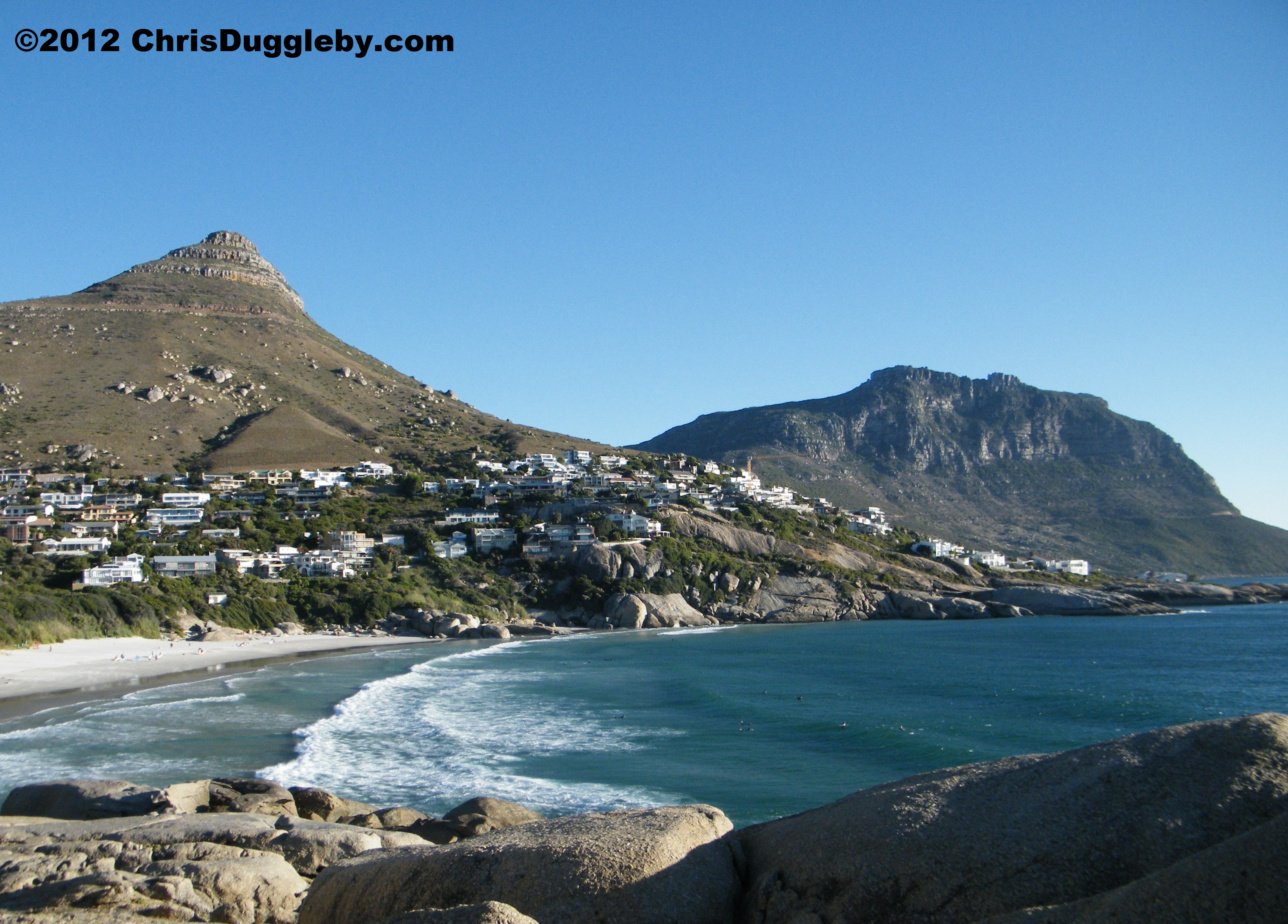
The race closes the main road that passes by the only vehicular entrance to Llandudno, Sunset Rocks and Sandy Bay. So we are cut off from the main causes of local pollution but that doesn’t mean we are cut off from the excitement. As I went for my early morning beachcombing exercise at the crack of dawn there were already many non-motorised vehicles whizzing down the hilly village roads. This is the day when the Cape Town skateboarders take over Llandudno village. They arrive in their masses (some younger ones transported in by Mummy before the roads close at 07:00 a.m.) – needless to say this is quite early for your average skateboarding teen but they soon wake up as they join their pals zooming down the steep curvy car free roads leading to the beach. Here is a photo of the setting for this annual sporting event:

 Beach and Mountains taken from Llandudno Rocks (CapeTown)
Skate Boarder’s Paradise – whenever the Argos cycle tour blocks of the local access road for motorised vehicles (March each year) – Llandudno, Cape Town

Despite being based here in Africa I have still managed to check out the European Press for those important news articles which do not always make it into the English language press (or certainly do not get the prominence they deserve). Here are three stories I came across during the last week.

Incredible Wolf Discovery in Vienna

The first special article I have prepared this week describes a discovery made near Vienna about wolves’ ability to learn from their peers. It brings some insight into the comparative evolution of wolves and dogs after the latter became domesticated by humans. If you are interested in things canine and in particular if you would like to see some great photographs of wolves taken in their countryside setting near Vienna please click on the article below:

2nd March 2014: Wolves are better at learning from their ‘pals’ than dogs. Through domestication dogs have lost a capability that is key to success in the wild.

Young wolves Wamblee, Kay and Tala from the USA and Canada, now residing at the Wolf Science Centre near Vienna. Photo kindly provided by Peter Kaut.

Giant Killer Defrosted from Siberian Permafrost

With this article chrisduggleby.com is just about to go viral. Try to imagine the discovery of 30,000 year old rats as the polar ice caps melt. These rats are however the size of elephants and as they defrost they come back to life and start looking for suitable prey to kill. The report I have prepared describes a similarly horrific scenario only the giant creature is not a rat but a huge virus. Most viruses have a size of between 20 to 300 nanometre (a nanometre is one thousandth of a micrometre or one millionth of a millimetre). A new virus identified in the Siberian permafrost is 1.5 microns in length – in other words over ten times larger than most other kinds of virus. It is 30,000 years old but the scientists have managed to carefully defrost it. Despite its age and being frozen for such a long time it is still able to infect and kill its host. Want to learn more? Read my article below:

4th March 2014: 30,000 Year old giant virus found in the Siberian Permafrost and ‘resurrected’ – it is still infectious!

Carnivorous Alien found in France

Finally I would like to share with you a report carried out by a team of scientists working in Paris. They have identified an Invasive Alien Species in the French provinces which is predicted to have a devastating effect on the ecosystem. I should warn you that in this report there are photographs of this Alien Species devouring its prey and therefore you should not encourage under-age readers or persons of a sensitive disposition to read the article. However I feel I have a duty to report such meaty (sorry) subjects to the wider international community. As the authors of the report say that ‘now is the time for action’ (or more precisely: IL FAUT AGIR MAINTENANT!). If you want to read more about this (with photos) here is my summary report:

7th March 2014: Invasive Alien Species (IAS) Discovered in France– Potential for European Ecosystem Disaster

Well I think that is enough excitement for one week. If you find these reports interesting don’t forget I regularly update the Alpine Press page with similar pioneering discoveries – here is the link. I will endeavour to continue to search the European scientific publications to keep you abreast of the latest major developments which, in many cases, simply get overlooked by the English language press. At ChrisDuggleby.com we do not sugar-coat the news – we tell it how it really is. If you have any suggestions or recommendations please do not hesitate to use the comments box below or at the bottom of any of my articles. My thanks to all the scientists who have contributed to these reviews.

Next time you go into the garden at night keep an eye open for tree climbing alien carnivores (like the one below).

Primed to attack any unsuspecting prey - The Invasive Alien Species of carnivorous Flatworm which has now been discovered in Europe. Photo by courtesy of Pierre Gros
Primed to attack any unsuspecting prey – An Invasive Alien Carnivore has been identified in France. Photo by courtesy of Pierre Gros

Chris Duggleby   

Nazi Biological Warfare, Poisonous Ants Building Sea Craft and Fireflies Dancing to Laser Shows

********************************************************************************************

STOP PRESS!! Have you tried the YouTube Playlist featuring all of my compositions for the TRANSFORMATES? Here it is:

********************************************************************************************

This weeks blog features three very different subjects linked by one common theme: insects.

The first two subjects are items I came across recently in the German language Alpine Press and I thought they would be of interest to a more international audience.

Experiments on Concentration Camp Victims with Malaria in Support of Offensive Biological Warfare by the Nazis.

I was particularly concerned upon reading about some research carried out in the German University of Tübingen by Dr. Klaus Reinhardt. He investigated some of the old archives of research work carried out for the SS at Dachau during the second World War. His conclusion from this work was that the Nazis were indeed developing biological warfare to be used against the allied troops. More specifically he uncovered text in the research notes that show that tests were being carried out on the most suitable mosquitoes to deliver malaria when dropped behind allied lines.

To find out about this research and some of the other atrocious supporting experiments carried out on the inmates at the Dachau Concentration Camp please take a look at my more detailed article under the Alpine Press section of this website. You can use the link here.

Killer Ant Populations Capable of Building Seaworthy Craft in their Quest for Global Supremacy 

Moving on to a rather different aspect of biological warfare you may find my next article of interest, particularly if your home or garden suffers from plagues of ants.

Although I came across this article in Germany most of the research was carried out in Texas. I am sure I do not need to point out to our Texan visitors how unpleasant the poisonous bites from Fire Ants can be. In my article on this subject I describe the research carried out into the ‘ship-building’ capability of these rather unpleasant colonists. This ability is what has enabled them to escape from the floods in the rain forests of South America where they originally evolved and discover the new virgin lands of the South USA.

The article goes on to describe how the fire ants appear to have met their match in another South American illegal immigrant, namely the Crazy Ant. Research has been carried out to explain how the crazy ant is able to resist the powerful toxins of the fire ant (this could be of interest if you live in Texas!). As a result crazy ants are starting to displace parts of the fire ant population. There is however one important downside to this latest development in the ant wars – if you have electrical/electronic equipment you might find the article worth a quick read. Again my report on this subject can be found in the Alpine Press section of this website. Just use the link here.

Fireflies Supporting Musical Performances (by London Grammar).

My third and final insect story this week has a musical angle. After a rather stressful days work pushing back the frontiers of risk management in the oil industry I often relax in my private gym (OK, by doing the ironing) and listen to music on BBC 6 Music’s Radcliffe and Maconie show on the I-player.

Last week I was so impressed with a track played by the trio London Grammar that I immediately turned on the keyboards and started jamming along (fortunately I keep my keyboards close to the ironing board). The song is called Hey Now and the insect connection? Well they have fireflies starring in their video. If you would like to take a look here it is with the fireflies dancing to a laser show:

I would be surprised if anyone can continue ironing during that song. London Grammar is a trio that met at Nottingham University (remind me to tell you one day about my own career as one of Nottingham’s up and coming organists on the local rock music scene some 40 years ago!). If you would like to see what London Grammar looks like playing a live session please take a look at the following set taken from KEXP radio in Seattle. Hannah Read the lead singer reminds me very much of the early Judie Tzuke (yes also over 30 years ago!).

They released their début album ‘If you wait’ on 9th September 2013.

So that’s all from ‘Insect News’ for this week. If you have any comments, suggestions or recommendations please use the comments box below. Back now to my private ‘gym’.

Chris Duggleby

Dugglebys from the 11th to the 21st Century – The Chris Duggleby Family Tree

After spending most of the weekends last year and my vacations sat over a keyboard the Family Tree is now ready to publish. Thanks to everyone for their patience and support.

One of the reasons the project has taken up a lot of time is because of the need to prepare the data for presentation in a format which allows me to hide certain details of Dugglebys who are still alive. This is to comply with the various Data Protection laws around the world. These people are currently highlighted in the tree using yellow ‘Data Protected’ boxes. If you would like me to make the relevant information for yourself visible in the next version please let me know via the comments box. You should be able to find yourself in the tree by using the search function in your PDF reading software and looking for your most recent deceased Duggleby relation. In some cases I have made a guess that someone is no longer living and included their information despite not having a confirmed date of death. If you happen to be a Duggleby who is aged over 100 and I have prematurely moved you into my heavenly Dugglebys file just drop me a line and I will protect your data on the chart.

Another reason for the time required to prepare the tree resulted from my desire to include geographical and occupation information. This will help to bring some of the characters to life and hopefully provide a useful research source for your children if they find themselves doing a ‘family tree’ project for school. This information has mainly been taken from official records like birth registrations, censuses or death certificates. Clearly this means the information was taken at a particular point in time and is only representative of that moment. In some cases births or deaths may have been registered at a regional bureau near a maternity hospital rather than at the place where the person actually lived. The information should however provide an indication of the rough geographical location and the type of work undertaken during the persons lifetime.

It has been necessary to keep the number of data points to a manageable size (if I can refer to 130 pages as manageable!). Therefore I have only included people in the tree whose surname includes the word Duggleby (or Dugelby or a similar variant). Sadly this means that the vast majority of daughters of daughters of Duggleby males have not been included (in this version). This was necessary to avoid me needing another year prior to publication.

Most of the colouring of the boxes in the tree follows fairly standard conventions (blue boxes for males, red for females). I have tried to indicate the direct line to myself using dark blue (I am on page 53).

Where there are other variants of the spelling of the word Duggleby, especially in some of the older records, I have tried to include these. In addition there are a couple of points in the older records where the parental links are speculative, being based primarily on the close geographical proximity of identified Dugglebys. These are also highlighted in the tree. There are also Dugglebys in the world who we have not yet been able to tie into this tree. The age of the records and the potential for errors or misinterpretation of some of the older records is significant. If you are derived from a Duggleby but can not find your link into this tree please do not give up hope – this is still very much work in progress. In the future we can hopefully extend the early DNA testing project which may help us to find out how ‘other’ Dugglebys link into the tree. I will provide more information about this later.

Finally it would be a serious oversight not to mention that this version of the tree simply builds upon the tremendous work of many other people involved in the research into this family. This includes Ellen Reid (whose electronic archive has been used as the main source of original data records and linkages), Vincent Duggleby (and his Father), Bonny McLeod and many others – some of whom I have referred to directly in the body of the tree.

There will be errors! There will be miss-interpretations. There will be debates about exact linkages. However by publishing the tree in this format it can undergo a global peer review and future versions should be even more robustly substantiated than this one. I would very much appreciate it if you use the comments boxes on this site to let me know of any errors, improvement suggestions or additions (with relevant page numbers please). If you are keen to have your own information released from the ‘data protection’ process and published on the master tree just let me know what it is you would like to see published (and please always let me know the page number concerned).

Here is the Tree:

140112 DP Dugglebys 11th to 21st Century Family Tree linked to Chris Duggleby

Happy reading!

Chris Duggleby

If you are interested in reading my other health focused articles try the following

Torture In The Shower – Face and Body Soap Allergies – Main Suspect: Pears Transparent Soap

Poison in your Washing Machine: Allergic Contact Dermatitis from Laundry Detergents, Softeners, Conditioners and Whiteners

Is Alzheimer’s caused by the Gum Disease Bacterium P. Gingivalis – A Dementia Prevention/Treatment Breakthrough?

Toxic Chemicals in Sex Toys – 18 Vibrators, Cock Rings, Love Balls Tested – Only 3 Get All Clear

My T-shirt Made Me Sick – Textile Allergies – Sinusitis From Your Underwear

Fantastic Pics of Whales in Llandudno (not Llandudno in Wales) Whale Porn Bestiality near Sandy Bay Cape Town

Happy New Year 2014
Happy New Year 2014

This blog was originally intended to be released on New Year’s day however we lost the broadband internet connection in Llandudno for my last week in Cape Town. Living in paradise has its price, sometimes we lose the internet, sometimes the electricity and on other days we have to struggle without fresh water. I live next to a nature reserve so we have accepted the need to take the rough with the smooth. In the photos below I will introduce you to some of the compensating pleasures of this region.

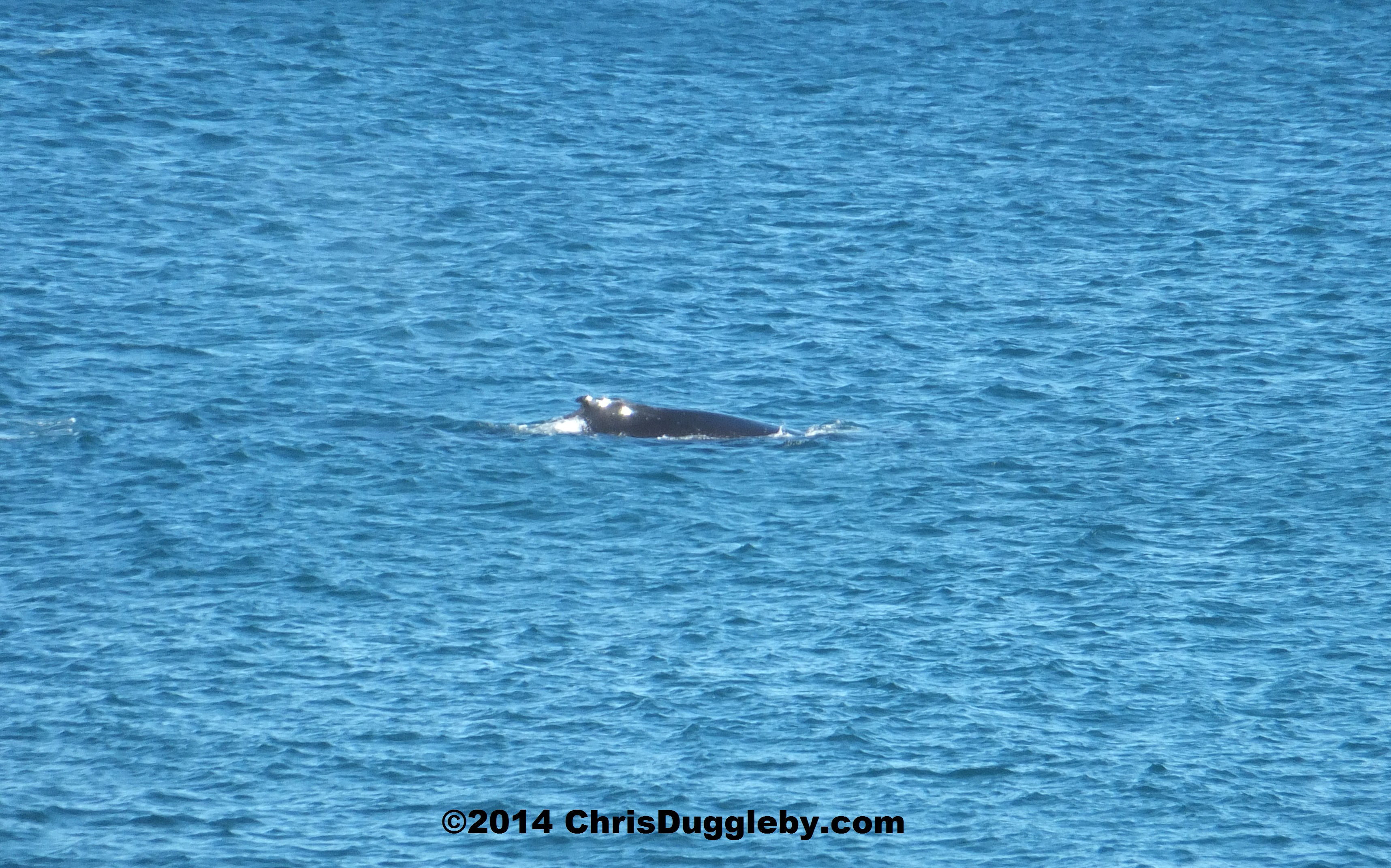
First of all I should explain that I am not the only regular visitor to this location. In this blog I will introduce you to Wilf and Wendy who regularly visit Sunset Rocks for a bit of summer romance. Wilf has something of a wind problem – so he tends to snort a lot. I always know when he is near because I can hear his rather loud snorting. In the picture below I have tried to capture him while he snorts.

Wilf the Whale spouting a greeting near sunset rocks, Llandudno, Cape Town

Wilf is a whale and around mid-December (2013) we were treated to a visitation by dozens of whales. During one of my daily treks to Sandy Bay beach I managed to count about 8 spouts rising out of the sea at one time. Clearly not all whales spout at the same time so eight simultaneous spouts indicated that there were something like 30-50 whales playing in the sea.

At a local party I recently met someone who used to take people on whale spotting trips from the Cape Town waterfront. He said that on a typical day they might be lucky enough to see a single whale in the distance (fog and rain permitting!). This made me feel slightly guilty since I can simply sit in the comfort of my balcony and enjoy multiple whale events. Clearly we do not get these every day. I hardly saw any whales during my two week November trip. In contrast I discovered a true orgy of whale activity immediately upon my arrival in December.

Many visitors to the region initially mistake the local rocks for whales. One of the main differentiators is that the rocks don’t normally express wind and rarely spout water!

Wilf the Whale pretending to be a floating rock

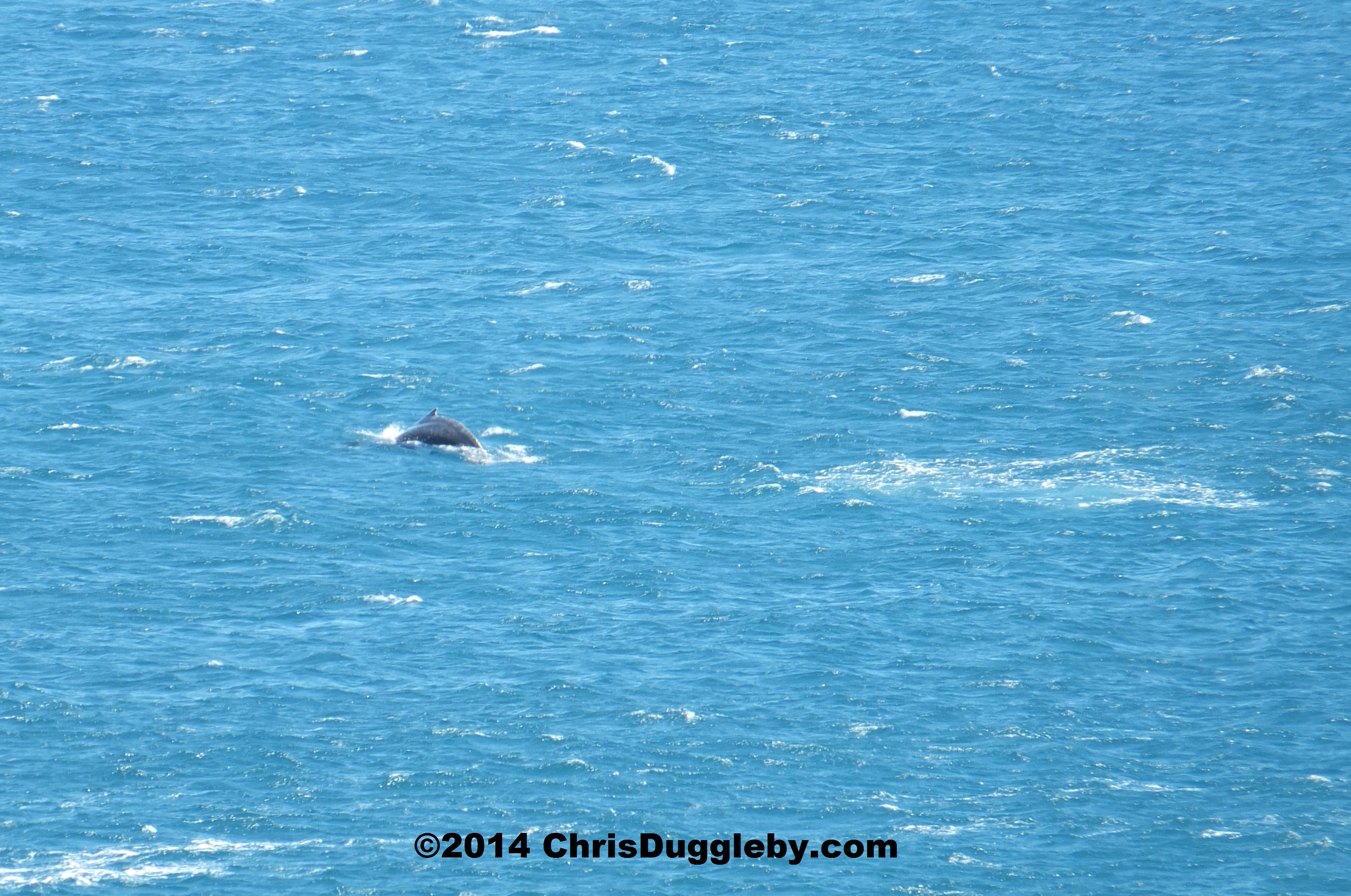
Also rocks do not have a tendency to dive or wave their tails….

Wilf the Whale flashes his tail as he dives near sunset rocks, Llandudno

As soon as I saw Wilf I knew that his girl friend Wendy was unlikely to be far.  I was right – just after he decided to take a dive Wendy surfaced.

As Wilf the Whale dives who should surface but his mate Wendy

In the following two photos Wilf and Wendy demonstrate some whale ‘togetherness’ as they prepare themselves for more energetic fun.

Wilf and Wendy regularly pop over for some romantic whale fun near Sandy Bay
Wilf the Whale and Wendy get closer for a romantic cuddle at sunset rocks

As they got closer to Sunset Rocks I could sense there was going to be some major courting activity. Wilf was certainly starting to get rather restless.

Wilf entices Wendy towards sunset rocks: let the passion fireworks begin

At first when I saw Wilf in the picture below I thought he might be waving at me to invite me to come and join in the fun. However he had a much bigger prize in mind – the voluptuous Wendy!

Wilf can be such a show off - Here he waves to Wendy to race him round sunset rocks
Wilf can be such a show off – Here he waves to Wendy to race him round sunset rocks

Wilf started the activities by demonstrating that he was no slow coach when it came to swimming round the rocks.

Quick as a flash: Here's a fantastic picture of Wilf racing past the rocks
Quick as a flash: Here’s a fantastic picture of Wilf racing past the rocks

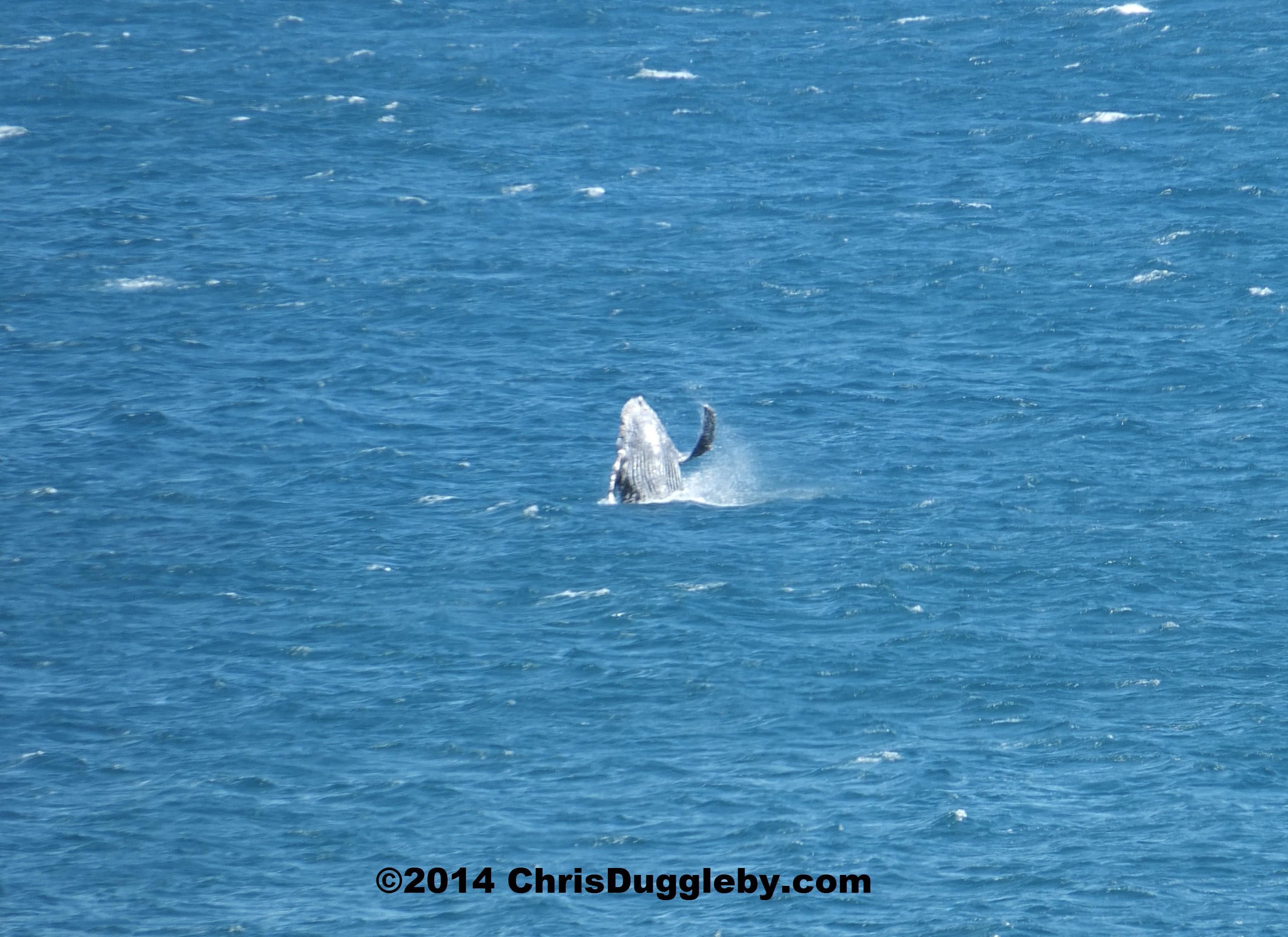
The I witnessed the whale equivalent of a high jump event. It is not just horses that provide show jumping entertainment. Wilf loves to toss himself out of the ocean and expose his sexy body to Wendy in all its glory.

Another fantastic whale picture as Wilf tries to jump over sunset rocks near Sandy Bay and Llandudno beaches

Here is a closer picture of him as he demonstrates to Wendy that the two of them can really make fireworks once she gives him a chance. If you double-click on any of these photos you can get a high definition version of the whale pictures.

Wilf the Whale jumps out of the water to impress Wendy as she chases him round Sunset Rocks

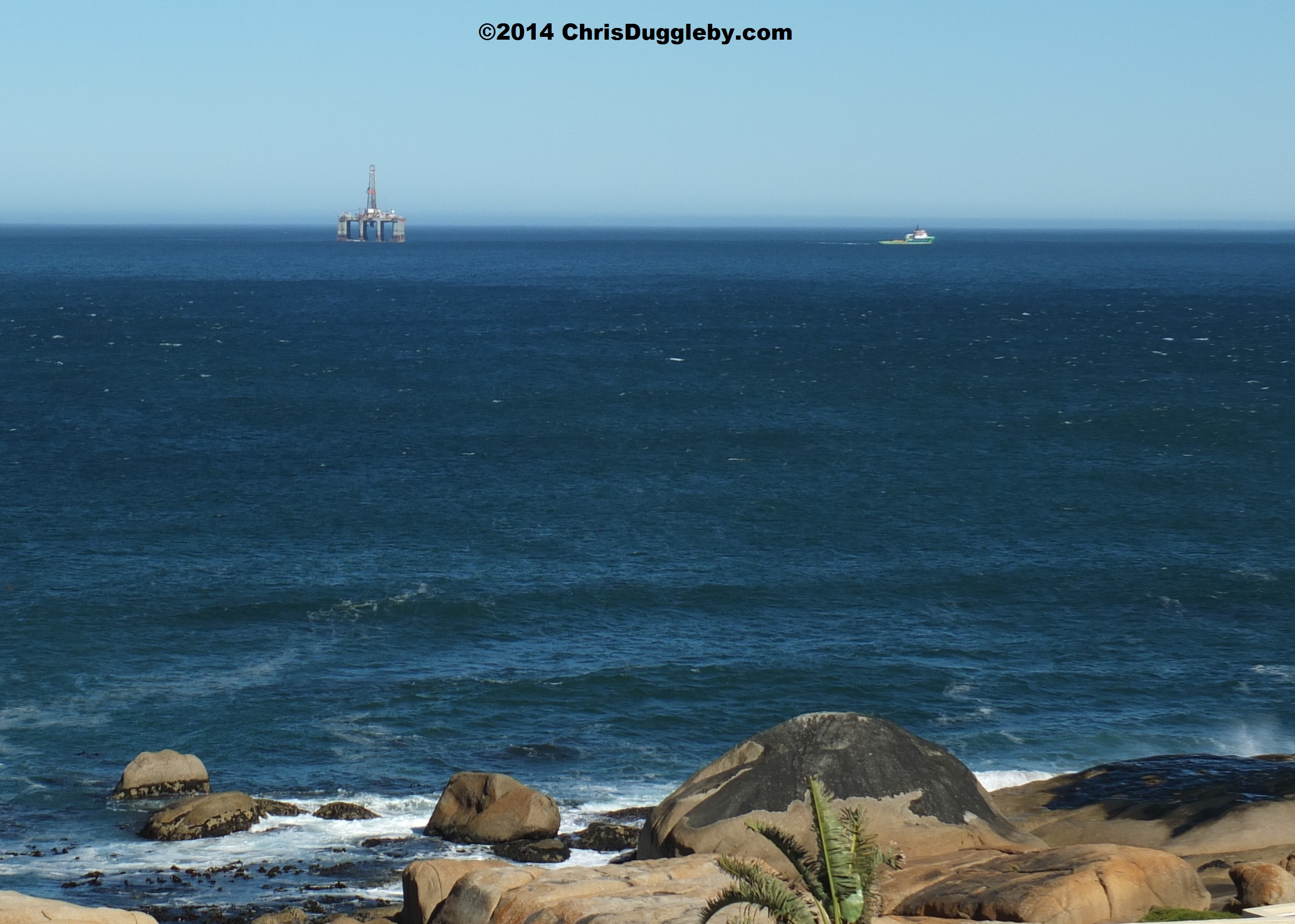
I had intended to spend most of this trip to Cape Town (and the last one) working on the Duggleby Family Tree. However when Wilf and Wendy popped by I couldn’t help being a little distracted. They were however not the only large distraction sailing past my living room window during this stay. I regularly get other passing ‘giants’ like the one in the three photos below.

Another large distraction drifts past my Llandudno balcony
...and like Wilf the Whale this large distraction was not unaccompanied as it floated past Sunset Rocks
…and like Wilf the Whale this large distraction was not unaccompanied as it floated past Sunset Rocks
Fortunately this large floating distraction (unlike others in the past) did not get too close to the rocks

As New Year’s eve drew closer I thought it would be nice to share with you a sunset shot in celebration of the end of another exciting year. There was just one problem – there was a rather inconvenient obstruction standing directly between me and the sun-set.

New Years eve is not the best time for my sunset photos due to an inconveniently positioned palm tree

Actually trees can get in the way of many good scenic photos (and mess up the auto focus if you are not careful). In addition to the palm tree standing between me and the setting sun there was another one plonked right in front of the mountains to the side of my balcony.

Actually taking the pictures needed for this week’s blog did not distract me very much from my work on the Duggleby Family Tree. They were all taken from my balcony. So with a bit of luck (and probably some bad weather now I am back in the UK) I should only need another weekend to get the tree ready so I can publish an update. Thanks to everyone for their patience – it has been something of a mega project for 2013.

Farewell to 2013 from Sunset Rocks!

If you are interested in reading my other health focused articles try the following

Torture In The Shower – Face and Body Soap Allergies – Main Suspect: Pears Transparent Soap

Poison in your Washing Machine: Allergic Contact Dermatitis from Laundry Detergents, Softeners, Conditioners and Whiteners

Is Alzheimer’s caused by the Gum Disease Bacterium P. Gingivalis – A Dementia Prevention/Treatment Breakthrough?

Toxic Chemicals in Sex Toys – 18 Vibrators, Cock Rings, Love Balls Tested – Only 3 Get All Clear

My T-shirt Made Me Sick – Textile Allergies – Sinusitis From Your Underwear
Original Duggleby (Dugleby) Settlers in the USA

********************************************************************************************

STOP PRESS!! Have you tried the YouTube Playlist featuring all of my compositions for the TRANSFORMATES? Here it is:

********************************************************************************************

Continuing with the series about the original Dugglebys (and Duglebys) who took our clan’s genes to different parts of the globe I would like to share with you this week some information about the Dugglebys who entered the USA.

The following list was provided to me by Ellen Reid (thanks Ellen) with a request to share it and encourage feedback. If you spot anything in any of these blogs which is incorrect or if you have additional information please do not hesitate to let us know using the comments box below. This will help those of us busily trying to update the global family tree (especially Ellen and Vincent).

Here is the information (listed in order of date of arrival):

1829 Bryan Duggleby

Born 17 October 1813 Patrington, Yorkshire, England and died 28 July 1885 BuckskinTownship, Ross County, Ohio.

John Shadford a widower left his 2 boys William & John and went to USA in 1828. William married Ann Duggleby and they, together with William’s brother John Shadford and Ann’s brother Bryan Duggleby went to USA in 1829.  William and Ann’s son John Collinson Shadford was born on the voyage between January and April 1830.

Shown on 1830 US Census: (all data “as of” 1 June 1830) at HarrisvilleTownship, Medina County, Ohio.

1829 Ann Duggleby

Born 2 June 1811 Patrington, Yorkshire, England and died 8 October 1888 probably Agency city, Lorain, Ohio.

Shown on 1830 US Census: (all data “as of” 1 June 1830) at HarrisvilleTownship, Medina County, Ohio.

Sister of Bryan and John Duggleby.

1833 (approx.) John Duggleby

Born 15 June 1806 Patrington, Yorkshire, England and died about 1842 Sodus, Wayne County, New York.

The brother of Bryan and Ann he went to USA with his new wife Dillah Pickering, after 1833 and before 1834 (Mary J their daughter was born 1834 New York).

Shown on 1840 US census in Sodus, Wayne County, NY, USA.

John’s wife Dilla remarried in Ohio 1844 – therefore a presumption has been made that he died after the 1840 census but before 1844.

1835 (approx.) William Duggleby (2 x Great Uncle to Ellen Duggleby)

Born 14 November 1805 Reighton, Yorkshire, England and died 2 April 1879 at Cooperstown, Otsego   County, New York.

Barber’s Marriage Notices, William DUGGLEBY married Sarah VOORHES on 14 April 1836 in SpringfieldCenter, Otsego County, New York.

1835 William Stephenson Duggleby

Born 14 August 1803 Beswick, Yorkshire, England and died 16 December 1883 Utica, Oneida county, New York.

Departed Hull on board Sir Edward Hamilton and arrived in New York 4 August 1835, aged 32, Labourer.

1852 (approx.) John Thirsk Duggleby

Born 18 July 1830 Beswick, Yorkshire, England and died 19 January 1905 Utica, Oneida county, New York.

Shown on 1851 census in Aike, Yorkshire England. Civil War Service Record: Enlisted as a Private on 07 September 1864.

Son of William Stephenson Duggleby.

1863 (approx.) James Duggleby

Born 11 November 1819 Bolton, Lancashire, England died 26 February 1889 Waco, Texas.

Shown on 1870 US Census at East Waco, McLennan County, Texas, Aged 50, a machinist, born England.

1887 John Waldby Duggleby

Born 18 July 1858 Langtoft, Yorkshire, England died 4 February 1835 Nebraska.

Departed Hull on board on SS Buffalo and arrived in Boston on 6 August 1887.

Brother of Thomas Duggleby

1887 (approx.) Thomas Duggleby

Born 12 October 1860 Langtoft, Yorkshire, England died 26 February 1922 Normandy, St. Louis County, Missouri.

Shown on 1900 US Census at 818 Duffingwell Avenue, St. Louis, Missouri, USA. Roomer, single aged 36, born Oct 1865 in England. A Hostler. Father born England, Mother born England. Emigrated 1886.

Brother of John Waldby Duggleby.

1900 (approx.) Jemima Duggleby

Born 18 July 1870 Cottam, Yorkshire, England.

Emigrated to USA about 1900 with husband George Robert Collier and son James Duggleby Collier born 1889 Skirlaugh, Yorkshire, England.  Another child, Charles Collier born 8 April 1891 Muscatine, Iowa

Daughter of Alfred Waldby Duggleby 1839 -1898 and Mary Hannah Simpson 1841 – 1922

1893 William Duggleby

Born 1 August 1875 Cowlam, Yorkshire, England.

Departed Liverpool on board Bothnia and arrived 4 January 1893 in New York.

Son of Alfred Waldby Duggleby 1839 -1898 and Mary Hannah Simpson 1841 – 1922

1893 Alfred Waldby Duggleby

Born 7 August 1871, Langtoft, Yorkshire, England died 30 May 1954 Indiana, USA.

Left London 12 Dec 1888 arrived Brisbane,  Queensland, Australia 5 February 1889 on the ship Merkara, accompanied by his elder brother Michael Waldby Duggleby. Later returned to England before settling in USA.

Departed Liverpool on board SS British Prince and arrived in Philadelphia on 10 July 1893.

Son of Alfred Waldby Duggleby 1839 -1898 and Mary Hannah Simpson 1841 – 1922

1893 Johnson Waldby Duggleby

Born 3 August 1872, Langtoft, Yorkshire, England died 30 May 1954 Indiana, USA.

Departed Liverpool on board SS British Prince and arrived in Philadelphia on 10 July 1893.

Son of Alfred Waldby Duggleby 1839 -1898 and Mary Hannah Simpson 1841 – 1922

1901 Septimus Duggleby

Born 11 December 1888 in Cowlam Yorkshire, England and died 18 April 1955 Los Angeles, California, USA.

Departed Liverpool 1901 on board Teutonic and arrived at New York 28 March 1901.

Son of Alfred Waldby Duggleby 1839 -1898 and Mary Hannah Simpson 1841 – 1922

1901 Mary Hannah Duggleby (nee Simpson)

Born 4 March 1841 Barmston, Yorkshire, England and died 8 November 1922 Davenport, Iowa.

Departed Liverpool 24 October 1901 on board Tunisian and arrived at Montreal, Canada for onward travel to USA.

The wife of Alfred Waldby Duggleby 1839 – 1898.

1901 Mary Duggleby

Born 3 December 1878 Driffield, Yorkshire, England died 16 April 1965 Iowa, USA.

Departed Liverpool 24 October 1901 on board Tunisian and arrived at Montreal, Canada for onward travel to USA.

Daughter of Alfred Waldby Duggleby 1839 -1898 and Mary Hannah Simpson 1841 – 1922

1901 Simpson Duggleby

Born 12 December 1879 Driffield, Yorkshire, England died 19 November 1966 Iowa, USA.

Departed Liverpool 24 october 1901 on board Tunisian and arrived at Montreal, Canada for onward travel to USA.

Son of Alfred Waldby Duggleby 1839 -1898 and Mary Hannah Simpson 1841 – 1922

1901 Emily Duggleby

Born 3 January 1882 in Hull, Yorkshire, England and died 7 march 1971 Iowa, USA.

Departed Liverpool 24 October 1901 on board Tunisian and arrived at Montreal, Canada for onward travel to USA.

Daughter of Alfred Waldby Duggleby 1839 -1898 and Mary Hannah Simpson 1841 – 1922

1901 Waldby Duggleby

Born 4 March 1888 in Hull Yorkshire, England and died 17 October 1952 Iowa, USA.

Departed Liverpool 24 October 1901 on board Tunisian and arrived at Montreal, Canada for onward travel to USA.

Son of Alfred Waldby Duggleby 1839 -1898 and Mary Hannah Simpson 1841 – 1922

1903 Michael Waldby Duggleby

Born 29 October 1869 Langtoft, Yorkshire, England and died 7 August 1940 Davenport, Iowa.

Left London 12 Dec 1888 arrived Brisbane, Queensland, Australia 5 February 1889 on the ship Merkara, accompanied by his brother Alfred Waldby Duggleby. Then went to New Zealand 1894, returned to England 1897 then settled in Davenport, Iowa, USA 1903.

Departed Liverpool with wife Allys, sons Alfred Francis, Archibald, Leonard and daughter Irene on board Freisland and arrived at Philadelphia, USA 10 May 1903. Copy passenger list on file

Son of Alfred Waldby Duggleby 1839 -1898 and Mary Hannah Simpson 1841 – 1922

1903 Ann Waldby Duggleby

Born 14 July 1873 Cottam, Yorkshire, England and died 8 march 1934 Iowa, USA.

Departed Liverpool on board Westernland and arrived at Philadelphia, USA 9 November 1903.

Daughter of Alfred Waldby Duggleby 1839 -1898 and Mary Hannah Simpson 1841 – 1922

1950 (approx.) James Duggleby

Born 25 January 1897 Bolton, Lancashire, England and died 1985 Kerrville, Kerr County, Texas.

Emigrated first to Mexico then went on to Texas.

The brother of William Duggleby (1895 – 1966) who also emigrated to Mexico but remained there until his death.

XXXXXXXXXXXXXXXXXXXXXXXXXXXXXXXXXXXX

I will make sure all of these people are included in the version of the global Duggleby Family Tree that I hope to soon be able to share with the World. It is taking a little longer than originally anticipated. In part this is because I am trying to make sure that every generation fits onto a single sheet (quite a challenge when some of our forbears had 18 children!). Current completion date is mid January 2014 (following the move into my new UK home and the year end vitamin D session in Cape Town).

I hope you are enjoying the beginnings of Autumn in the Northern Hemisphere (and starting to smell spring in the South). The forests here in Bavaria are just starting to show their first signs of Autumn colours.

Chris Duggleby.

Original Duggleby (Dugleby) Settlers in New Zealand (so far!) – and Updates on Dugglebys arriving in Canada, India, Mexico, and South Africa.

********************************************************************************************

STOP PRESS!! Have you tried the YouTube Playlist featuring all of my compositions for the TRANSFORMATES? Here it is:

********************************************************************************************

Following on from my last blog in which I shared with you the details of the Dugglebys who first settled in Australia (and if you missed it the link is here) I would like this week to provide an update on the New Zealand Duggleby forefathers (and mothers).

Once again our intrepid Duggleby researcher, Ellen Reid, has furnished me with the products of her latest investigations. Here are the details of those members of the clan entering New Zealand (identified from public records).

XXXXXXXXXXXXXXXXXXXXXXXXXXXXX

Original Duggleby settlers in New Zealand (listed in order of date of arrival).

1852 Richard Dugleby

Born 22 December 1816 Camberwell, London, England and died 31 January 1869 Auckland, New Zealand.

Departed 21 May 1852 Plymouth, England, on Priam and arrived 25 August 1852 Portland Bay with is wife Matilda and son Walter.

1882 Hannah Duggleby

Born 5 march 1849, Bishop Wilton, Yorkshire, England and died 14 February 1928, Eltham, New Zealand.

Married Jabez William Rowntree at Sydenham, New Zealand 18 March 1882.

1889 Edwin Duggleby

Born 8 December 1861 Beswick, Yorkshire, England and died 31 January 1897 Christchurch, New Zealand.

Emigrated to New Zealand from Australia about 1889.

XXXXXXXXXXXXXXXXXXXXXXXXXXXXX

As with her Australian Duggleby site (link via my last blog), Ellen has published the information she has gathered so far on a bespoke Dugglebys (Duglebys) in New Zealand website. Please take a look at this using the link here. There is also an e-mail link on the NZ site in case you would like to communicate with Ellen Reid directly regarding the contents of her country specific Duggleby sites or provide additional information for her to post (please also feel free to communicate via this site – we are in close touch with one another).

Not being one to rest on her laurels Ellen has also provided me in the last few days with an update on the information she has about the Dugglebys landing in Canada, India, Mexico, and South Africa. I have included the details below.

XXXXXXXXXXXXXXXXXXXXXXXXXXXXX

Original Duggleby settlers in Canada (listed in order of date of arrival).

1888 Ann Duggleby

Born 26 September 1836 Bishop Wilton, Yorkshire, England and died on date unknown in Toronto, Ontario, Canada.

Arrived in Toronto, Ontario, Canada sometime in 1888 with her husband Robert Harrison and their children.

1901 William Cecil Owston Waldby Duggleby

Born 11 July 1873 Langtoft, Yorkshire, England and died 21 June 1949 at Swan River, Manitoba, Canada.

18 April 1901 William C Duggleby left Liverpool on board Parisian bound for Montreal.

1910 Lawrence Henry Duggleby

Born 27 August 1892 Scarborough, Yorkshire, England and died 5 January 1970 in Saskatoon, Saskatchewan, Canada.

1910 Laurence H Diggleby sic aged 16 left Liverpool on board Laurentic bound for Quebec, Canada

1912 Emma Louise Duggleby (Second Cousin twice removed of International Duggleby researcher Ellen Duggleby)

Born 1881 Nether Poppleton, Yorkshire England.

1912 EMMIE L DUGGLEBY aged 30 departed Liverpool on board Virginian bound for Montreal, Canada.

1913 Claude Waldby Duggleby

Born 15 May 1899 Scarborough, Yorkshire, England and died 11 March 1959 in Unity, Saskatchewan, Canada.

12 April 1913 Claude W Duggleby aged 13 and Septes W Duggleby sic aged 44 Left Liverpool on board Megantic for Halifax, Canada.

1953 Basil Duggleby

Born 24 December 1914 Scarborough, Yorkshire, England and died date unknown in Toronto, Ontario, Canada.

1953 Basil Duggleby aged 38, Norah M Duggleby aged 43 and Frederick William Duggleby aged 34 Left Liverpool on board Empress of France bound for Montreal, Canada.

1972 Thomas Duggleby

Born 27 January 1906 Lille, France and died date 12 April 1988 in Toronto, Ontario, Canada.

XXXXXXXXXXXXXXXXXXXXXXXXXXXXX

Dugglebys in India (listed in order of date of arrival):

1905 Thomas Richard Duggleby

Born 31 May 1874 Sunderland, Wearside, England.

Left London 21 September 1900 on board Arabia and arrived in Calcutta November 1900.

He married and had at least one child in India, briefly returned to England in June 1913 and then returned to Calcutta 11 September 1913 declaring this to be his “future place of permanent residence”.

The brother of John Robert Marr Duggleby who emigrated to Australia 1901.

(Second Cousin twice removed of International Duggleby researcher Ellen Duggleby)

XXXXXXXXXXXXXXXXXXXXXXXXXXXXX

Dugglebys in Mexico

1925 William Duggleby (Dugleby)

Born 18 January 1895 Bolton, Lancashire, England and died October 1966 Mexico City.

Left Liverpool on board Adriatic and arrived in New York 26 September 1925 declaring final destination to be Santa Rosa, Mexico.

XXXXXXXXXXXXXXXXXXXXXXXXXXXXX

Dugglebys in South Africa (listed in order of date of arrival).

1820 Samuel Duggleby

Born 11 December 1787 Cottingham, Yorkshire, England and died on date unknown probably in South Africa.

Arrived Algoa bay 15 May 1820 on board HMS Weymouth. Part of Cock’s Party which formed part of the British government-assisted emigration scheme to the CapeColony, South Africa.

1894 Leonard Duggleby

Born 11 October 1868 Beverley, Yorkshire, England and died 1942 probably in South   Africa.

Arrived Capetown 24 August 1894 on NorhamCastle.

1949 John Walter Duggleby

Born 1927 Driffield, Yorkshire, England.

Arrived in Capetown 1949 on board Stirling Castle. Lives in George, South Africa – married Wilma at age 70 in South Africa. Information from his brother Richard Hardy Duggleby (thanks Richard).

XXXXXXXXXXXXXXXXXXXXXXXXXXXXX

If any visitors to the site have questions or further information regarding these people please do not hesitate to let me know via the comments box below (if you do not want your comment to be published just add the word confidential at the top). Alternatively contact Ellen Reid direct using the e-mail address provided in one of her Duggleby sites.

Over the next couple of months I will be trying to weave this information into the Global Duggleby Family Tree I am preparing. This is anticipated to be ready at the end of November (to allow me to do some appropriate QC checks – whilst also moving my UK home and holding down my day job!).

I hope you find this and the wealth of information in Ellen’s bespoke Duggleby Country sites interesting.

Greetings from a rather damp Bavaria (but fortunately the Alps look good whatever the weather!),

Chris Duggleby.

Original Duggleby Settlers in Australia (so far!)

While you read the following article why not listen to my e-baroque compositions – just click on the box below:

or if techno music is more your cup of tea here are my techno/ambient compositions:

I hope you find the information below interesting…please visit chrisduggleby.com again.

In my last blog I shared with you some of the information derived from the Chartulary of the Bridlington Priory. This described property transactions of Dugglebys living in the 1200s. If you would like to take a look at this please follow the link here.

This week I would like to jump to the other side of the globe and share with you some more recent information kindly provided by Ellen Reid, our intrepid Duggleby researcher. Ellen has prepared a list of the Duggleby first settlers in Australia which I am certain will make interesting reading.

Many of these people have links to the master Duggleby family tree that I am currently updating and hope to share on this site again before the end of November (subject to the move into my new home in England going according to plan and the demands made by my day job!).

Here is the list of Duggleby settlers in Australia that Ellen has been able to identify from public records:

Listed in order of date of arrival:

Arrival in Australia 1814: Judith Duggleby

Born 13 May 1792 Bridlington, Yorkshire, England and died 7 October 1855 in Camperdown, Cumberland, New South Wales, Australia.

Arrived in Sydney, Australia on 9th January 1814 on the ship Wanstead which departed from Spithead, England on 24th Aug 1813, the voyage taking 138 days to complete. The convicts on board included 120 females, one of which was Judith DUGGLEBY who was tried at York, England and convicted on 6th October 1812. The Master was Henry Moore. The ship weighed 253 tons and had 12 guns.

Arrival in Australia 1854: John Duggleby

Born 1823 England, and died September 25, 1860 in Perth, Western Australia.

Arrived Fremantle prison, Western Australia on 30 March 1854 on the ship General Godwin. Served in 14th Light Dragoons. Court martialled at Meerut, India 12 October 1853 and sentenced to 14 years transportation.

Arrival in Australia 1882: Matthias Piercy Duggleby

Born 8 June 1851 Beswick, Yorkshire, England and died?

Arrived in Queensland, Australia on 28 November 1882 on the ship Mairi Bhan.

There are several references in Australian newspaper articles to ‘M P Duggleby’ up to and including an advertisement in the Brisbane Courier on Saturday 23 June 1900, page 11. Matthias Piercy is the eldest brother of Alfred and John Henry.

Arrival in Australia 1884: Alfred Duggleby

Born 8 December 1861 Beswick, Yorkshire, England and died 26 February 1941 in Queensland Australia.

Arrived in Queensland, Australia on 29 April 1884 on the ship Dorunda.

Alfred was accompanied by his brother Edwin on this journey. Edwin later went on to New Zealand, died and was buried there.

Alfred is the brother of Matthias Piercy and John Henry.

Arrival in Australia 1886: John Henry Duggleby

Born 29 November 1856 Beswick, Yorkshire, England and died 14 July 1935 in Queensland Australia.

Arrived in Queensland, Australia on 9 March 1886 on the ship Dorunda.

Brother of Matthias Piercy and Alfred.

Arrival in Australia 1901: John Robert Marr Duggleby

Born 1882 Sunderland, Wearside, England, and died on 5 June 1901 at Warwick Hospital, Queensland, Australia, aged 18 years, a draper.

Arrived in Queensland, Australia on 16 January 1901 on the ship Duke of Devonshire.

Arrival in Australia 1912: John Taylor Duggleby

Born 5 December 1887 Beverley, Yorkshire, England and died 19 October 1953 in Ashburton, Melbourne, Australia.

Arrived in Victoria, Australia in October 1912 on the ship Suevic.

Arrival in Australia 1962: John Colin Duggleby

Lives in Victoria Australia.

Arrival in Australia 1970: Alec W. Duggleby

Lives in Western Australia.

Arrival in Australia 1975: Ronald George Duggleby

Lives in Queensland, Australia.

To give you an example of the linkages between some of these people and the main Duggleby family tree let’s take the first person on the list of settlers in Australia, Judith Duggleby. According to the version of the master tree I am currently updating she is believed to have the following ancestral roots in the UK:

Judith Duggleby 1792 -1855 (arrived in Australia in 1814)

Daughter of James Duggleby 1754 – 1825,

Son of Christopher Duggleby 1727 – 1769,

Son of Christopher Duggleby born 1702,

Son of William Duggleby 1660 – 1728,

Son of Christopher Duggleby 1640 – 1703,

Son of William Duggleby 1600 – 1646,

Son of William Duggleby 1575 – 1620 (mutual ancestor with myself – see the Duggleby History page here),

Son of Robert Duggleby 1535 – 1589,

Son of William Duggleby 1510 – 1561 (see William Douglebi of North Dalton at the bottom of page 2: Duggleby Family Tree – first 500 years after the Domesday book: using this link).

Although the information above was derived from public records if any of the living people mentioned prefer not to have their names mentioned on this site please let me know and I will immediately delete the information. Likewise if anyone spots a mistake just let me know via the comments box (if you wish your comments not to be published just add ‘confidential’ at the top of the message). For those who are keen to have their ancestral links published on the site please be patient with me – I am typing as fast as my aging fingers will allow.

That’s all for this blog. Big thanks to Ellen Reid for providing the information. Back now to updating the master tree ready for publication (hopefully) by the end of November.

Chris Duggleby.

For more historical information about the Duggleby family please take a look at my other blog articles:

here,

here, and

here

STOP PRESS! Here is the link to the web-site Ellen has set up to coordinate everything relating to the Dugglebys (Dugelbys) in Australia (just click on the blue text). 4 comments so far – please keep them coming.   XXXX Chris

12th and 13th Century Genealogy Research from Records of Ecclesiastical Land Transactions and Chancery Inquisitions

I hope you find the information below interesting…please visit chrisduggleby.com again.

In my research into the Duggleby family history from the reference to Difgelibi in the Domesday Book (1086) to the present day one question kept cropping up. How can we be sure that in the 12th and 13th Century Dugglebys like Sir Henry or Jollan really existed? How do we know the names of their offspring and their relationships to one another?

If you take a look at the first four pages of the Duggleby Family tree you will find these people and their immediate families described on pages one and two. Just double click on the light blue text below to download a PDF document of the family tree from 1086 to the 1600s:

130707 First 4 pages of Chris Duggleby Family Tree from 1086

For these earliest known Dugglebys I have included on the tree the various spellings of their surnames found in documents from the 12th and 13th centuries. Much of this information has come either from ecclesiastical texts or records of inquisitions.

In addition to playing an important role in chronicling early British history the monasteries and churches of the time where very careful to ensure that details about transactions like ‘gifts’ of land from medieval land-owners were carefully documented. The early Dugglebys in our family tree had land in Yorkshire. One of their favoured local religious institutions, the Bridlington Priory, played a key role in our understanding of the early family structure .

The Bridlington Priory, located in the East Riding of Yorkshire was established between the years of 1114-1124 by Walter de Gaunt for the Canons Regular of St. Augustine. Walter de Gaunt was a member of the council of King Henry I who reigned England from 1100 until his death in 1135. Henry I was the fourth son of William the Conqueror. Bridlington Priory was one of the first Augustinian houses in England and also had an adjoining convent. Its formation was confirmed in charters of King Henry. Before this time the site of the Priory had been occupied by a Saxon church and nunnery.

In the four centuries before it was suppressed in 1538 by Henry VIII (in his dissolution of English monasteries) the priory acquired considerable estates of land which provided it with valuable income. Fortunately a record or ‘Chartulary’ was kept to document these land transactions. This Chartulary still exists. It was written on 352 leaves of vellum, a fine quality parchment prepared from mammalian skin (typically calf skin). The leaves were enclosed in wooden boards, covered in deerskin and secured using two leather clasps.

Over 100 years ago W. T. Lancaster produced, for private distribution, a limited edition book (60 copies) containing abstracts and charters from the Chartulary. The ecclesiastical documents I refer to below were translated from the original Latin as part of this work. The author was given access to the Chartulary by Sir Henry D. Ingilby, Bart., of Ripley Castle whose family appeared to have been in possession of the original document since the 1600s.

There are several grants of land and related documents in the Bridlington Priory Chartulary which refer to members of the early Duggleby family, either as grantors (‘givers’ of gifts), as witnesses to grants made by others, or to confirm the release of rights over land formally in their possession. Documents on pages 278 and 279 of W. T. Lancaster’s book help us to confirm both the existence of Sir Henry de Duggleby, his son, grandson and great grandson. They also provide a good indication of the dates when these people lived. In the family tree we have estimated that Sir Henry Duggleby lived from circa 1145:

Sir Henry Duggleby (b 1145) > Adam Duggleby (b 1195) > Adam Duggleby (b 1250)

The following translation of one of the Grants mentions both Henry and his son Adam [my additions/clarification are in square brackets. Where I have provided definitions to words these are highlighted the first time they occur using red font]:

GRANT by Adam, son of Henry de Diuegelby, knight (militis), to Robert Ingelbert of Beverly and his heirs or assigns, of a toft [a farming village] in Clocton [now called Cloughton] with all the appurt. [appurtenance: rights, privileges, equipment] within and without the vill [inside or near the village or hamlet], which Henry Raimlayn sometime held from him [Adam Duggleby], lying next (propinquius) to his [Adam’s] great garden there towards the east. To have and to hold in fee and inheritance, freely, etc., rendering to the grantor and his heirs one clove [presumably of garlic – a nominal ‘rent’] yearly at Christmas, at Beverley, for all secular service and exaction. Warranty [a standard guarantee clause in Latin was included here]. Testimonium [another standard Latin clause was added to seal the grant]. Test., [an abbreviation indicating the names of the witnesses were as follows:) Gilbert de Atun, William Briscel, J. de Thorneton, brother William Wale, Henry de Flixton, William son of Eva, Geoffrey the clerk, Simon at bec, Hugh Thorphun, Walter at the Church (ad ecclesiam), Adam Haldan of Scardeburg, Huctred de Wiuerthorp, Simon Toli, Robert Farman.

The significance of this gift to the priory will become apparent in the documents below. The next entry in the Chartulary is a confirmation of this and related transactions in favour of Robert Ingelbert and indicates the approximate timing of the gift (This transaction is also referred to in the Calendar of Charter Rolls for this period where Robert’s surname is spelt Ingelberd and the name Diuegelby is spelt Dungilby).

CONFIRMATION by King Henry (III) to Robert Ingelbert, burgess [Freeman] of Beverly, of the donation which the Chapter of St. John of Beverley made to him of all their part of the new land (de nona terra) which is called Brakenwait and Storthes, with the appurt., in Clocton, and all right and claim which the Chapter had in those places by the gift of Adam son of Henry de Diuegelby. To hold and to have to Robert and his heirs or assigns well and in peace, freely and quietly, as the charter which he has from the Chapter witnesses. Test., the venerable fathers R. of Durham, J. of Bath, W. of Carlisle, and W. of Exeter, bishops, W. de Fer(rers), Earl of Derby, J. de Lascy, Earl of Lincoln and Constable of Chester, Roger le Bygot, Earl of Northf(olk), Ralph son of Nicholas, J. son of Phi(lip), Amaury de St. Amando, G. Despenser (dispensatore), Bartholomew Pech, H. de Capella and others. By the hand of the venerable father R. bishop of Chester, chancellor, at Westminster, 30th April, in the nineteenth year.

Since King Henry III ruled from 1216 – 1272 I would presume this Confirmation to have been made on the 30th April 1219. In the Duggleby family tree we have estimated that Adam son of Sir Henry Duggleby (the Grantor) was born around 1195 so he would have been in his mid-twenties. The next entry in the Chartulary explains why this transaction was of importance to the Canons at the Bridlington Priory. This was because the land refered to above was granted to them by the son of Robert Ingelberd (who was also called Robert).

GRANT by Robert son of Robert Ingelberd of Beverley to the Canons, in free and perpetual alms, all his land with a toft which he had by the gift and quitclaim of Beatrice his sister in the territory and vill of Clocton, of the fee [a fief or fiefdom: heritable lands or revenue-producing property and associated rights granted by an overlord to a ‘vassal’ in return for feudal allegiance and service, potentially on the battlefield] of St. John of Beverley, and which Beatrice had by gift of his father, and all that of the new land (noue terre) of Clocton which is called Brakenwait and Storkes, and that toft which his father had by the gift of Adam son of Henry de Dugelby, with all manner of appurt., etc., within and without the vill. To have and to hold to the Canons and their successors or assigns freely, etc., rendering yearly to the grantor and his heirs seven pence for all service, etc. Warranty, and acquittance from service, etc. He has delivered to the Canons the feoffment [the subject of the fee] of the Chapter of St. John of Beverley, and the King’s confirmation respecting the said holding, and the charter of Adam de Dugelby respecting the said toft. Testimonium. Test., Sirs (dominis) Robert Constable, William de Bozhale, T. de Heselerton, kts, Dom. Richard de Vescy, parson, Walter de Bucton, Bartholomew de Scalleby, Thomas de Morpath and others.

In the document above, which was presumably added later than the first two it is interesting to see the evolution of the spelling of the Duggleby name from Diuegelby to Dugelby. The next document (an Acknowledgement), in addition to providing an indication of the value provided by the land in Cloughton, has a date (17th June 1285) and also mentions Adam de Dugelby. However the Adam here is most likely ‘Adam the son of Adam de Dugelby’ referred to in the document below it which was dated 1299.

ACKNOWLEDGMENT by Adam de Dugleby [presumably son of Adam and grandson of Henry, knight] that he is bound to acquit and defend the Prior and Convent and their tenants against all men from all suits, services, customs, and demands, arising from the tenements which they hold from him in Clocton; and if it should happen that he fails to defend or acquit he grants that the Prior and Convent may distrain on all the ferms [rents] of his tenants in Clocton for all damages, costs and expenses occasioned by such default. The names of his tenants in Clocton and their annual ferms are these, the Prior and Convent of Bridl(ington) twelve pence, Stephen Pye 2s 6d [2 shillings and 6 pence or 30 old English pennies – an English pound comprising of 20 shillings and each shilling having 12 ‘old’ pennies], Ann Burger, 2s 6d, Ivo de Clocton 15d, Lambert de Clocton 3d, the same Lambert 4s, after the term contained in a chirograph [this is a document, written in duplicate, triplicate or quadruplicate on a single piece of parchment, having the word “chirographum” written across the middle, and then cut through. Thus both parties were able to possess a written record of an agreement, which could be verified as genuine by comparing whether the parts matched each other. Forgeries could be reduced by using a wavy line when cutting through the copies] made between him and the present grantor, William son of Ivo 1d, Peter de Bradelay 1d, John son of Henry 6d, whose ferms and tenements or yearly ferms may not be transferred to anyone except under this charge (onere). Testimonium. At Bridel(ington), 17th Cal. June, 1285. Test., Dom. Walter de Bucton, J. de Marton, Geoffrey son of Bartholomew de Scalleby, Lambert de Clocton and Ivo of the same, and others.

The following document supports the view that the last Acknowledgement was by a later Adam who was actually the son of Adam (and grandson of Henry de Duggleby, Knight). It provides another indication of the timing of the end of this sequence of transactions.

To all, etc., Roger son of Andrew de Grimeston, greeting. Whereas Gerard, Prior, and the Convent of Brid(lington), formerly (quondam) held in free and perpetual alms from Adam son of Adam de Dugelby their capital messuage [dwelling house with outbuildings] in Clocton and three bovates of land [a bovate is the amount of land tillable with one Ox during a ploughing season. Depending upon the land fertility this could be between 15 and 20 acres] with four crofts and the appurt. in the same, by service of twelve pence yearly for all services and the same Adam granted the said service to me, Roger, and my heirs, and the Prior attorned himself [assigned] to me and my heirs of the said service of twelve pence, I grant for myself and my heirs that for the said service we are bound to acquit and defend the said tenements to the Prior and his successors and Church from all suits of Court and other secular services for ever. Testimonium. At Brid(lington), on Sunday after the feast of the Purification B.M., 1299. Test., William de St Quintin, John de Heslarton, Robert de Bouington, Kts Arnald de Bucton, Robert de Wyern, Robert de Place, Thomas de Poynton, and others.

The precise date when these two Adam Dugglebys lived is also indicated in documents from the Chancery Inquisitions conducted at the time of King Henry III (1216-1272) and King Edward I (1272-1307). The following information is from a 1892 book edited by WILLIAM BROWN, B.A., a member of the Council of the Yorkshire Archaeological and Topographical Association ( YORKSHIRE INQUISITIONS OF THE REIGNS OF HENRY III. and EDWARD I. VOL. I.).

Inquisitiones post mortem were, strictly speaking, surveys made by an officer of the Crown, usually the Escheator, of the estates held by tenants in chief at the time of their death. The object of this survey was fiscal, to ascertain the annual value of the deceased’s property, so as to enable the Exchequer to calculate the amount payable by the heir on succeeding to his ancestor’s estate, or as it was called his ‘relief’. The age of the heir was another subject of inquiry, because if he was a minor the king would be entitled to retain the property and receive the rents until such heir came of age.

The following text was taken from part 6 of the Yorkshire Inquisitions (P256 of the book): ….Ralph de Gaugi, Walter Rispaud, John Brun, Walter de Lutton, and Adam de Diuelkeby [Duggleby – referred to in the Domesday book as Difgelibi and Dighelibi], who say upon their oath that after the death of Robert de Chancy there fell into the King’s hand in fifteen days after the Annunciajtion of Blessed Mary in the 30th year of the King’s reign (8 April 1246) a dower, in which a lady named Matilda Murdoc had in demesne ten bovates of land, 16 acres of meadow (2s.), in bondage six bovates, in rents marcs by the year, and in rents of cottars with the capital messuage of the same lady, 23s.6d. [I think] She also had in Toraldeby [Thoraldby, in the parish of Bugthorpe, near Pocklington] of farm by the year 6s.

This Chancery Inquisition is most likely to be referring to Adam the son of Sir Henry de Duggleby wereas a later entry contained another reference to an Adam Duggleby but at a later period:

Writ dated at Rhuddlan [Wales] Oct., of the 10th year [of the reign of King Edward, therefore 1282, followed by the recording of the…]….INQUISITION made at Poclington [Pocklington], on Sunday after the feast of S. Edmund (22 Nov., 1282) before Sir Thomas de Normanville, by Adam Arundel, William de Yedingham, Adam de Dugelby…….[and others] , who say on their oath that Agnes de Athewike held nothing of the King in chief; but she held for the term of her life, in the town of Bugethorp, one messuage and seven bovates of land of Sir Waller de Grey ; and after his death she did the service appertaining to the land to Sir Thomas de Chauncy, as chief lord. The messuage is worth by the year lis. 40′., and every bovate, [?] s. She held the land of the said Sir Thomas de Chauncy by the service of scutage, and died without an heir of her body, because she held of the aforesaid Sir Walter de Grey for the term of her life.

This reference here, being nearly 40 years after the one above, most probably referred to Adam the son of Adam and grandson of Sir Henry de Duggleby. The use of the spelling Dugelby by the younger Adam is also consistent with the same simplified version of the name used in the later documents from Bridlington Priory. It may indicate that the younger Adam had started to use this spelling of his surname in official documents.

With the help of the Bridlington Priory Chartulary it is possible to identify the next generation of the direct line from Sir Henry de Duggleby, namely his great grandson Ralph. The next Grant not only names Ralph as the later Adam’s son but also indicates a linkage to other Dugglebys living at the same time. To see the linkages visually I recommend you refer to the first page of the family tree. The Grant mentions that (the younger) Adam is the uncle of (another) Henry, son of Thomas de Duggleby. Thomas appears to be directly descended from Jollan Duggleby (see below) who lived around the same time as Sir Henry de Duggleby. The use of the term ‘avunculi’ (uncle) in this Grant can lead one to assume that Sir Henry and Jollan were brothers. The Latin word avunculus can be translated as maternal uncle (mother’s brother, mother’s sister’s husband) or great uncle. In our family tree we have assumed the meaning to be great uncle.

GRANT by Henry, son of Thomas de Dugelby to Ralph son of Adam [son of Adam, son of Henry, knight] the Grantor’s uncle (avunculi) [from the Latin word avunculus: maternal uncle, mother’s brother, mother’s sister’s husband; or great uncle] and his heirs, for his homage and service, of 7 1/2 roods [a rood is one quarter of an acre] of land in the territory of Clocton in the culture which Hugh Carpenter formerly held, and one plot of land and meadow lying between Marewath and the land which Walter the weaver held, with the toft and croft which Hawisa held which lies between the town beck and the toft which Richard Hallem(an) held……[a further Grant was then made of this land by Ralph de Dugelby to the Canons of Bridlington Priory]

As mentioned above the Bridlington Chartularies can also be used to identify the names of family members who are probably the forbears of Thomas Duggleby (great nephew of the second Adam Duggleby) mentioned in the last Grant. In the text below Henry is probably the great Nephew of Sir Henry de Duggleby described above (see page 1 of the family tree). Page 276 of W. T. Lancaster’s 100 year old book describes the following grant:

GRANT by Henry son of Thomas son of Jollan de Diuegelby and his heirs to Geoffrey de Staint(on) and his heirs of a bovate of land in the territory of Clocton, with toft and croft and all other appurt., for his homage and service for seven marks of silver which Geoffrey has given him in his great need; namely that bovate which lies between Walter de Bouington and Beatrice, sister of said Henry. To hold from the grantor and his heirs freely, etc., rendering to them yearly twelve pence for all services; doing foreign service as belongs to a bovate of land where twelve carucates [the area of land that eight oxon could till in a single season – a carucate is usually considered to be about 120-160 acres – it is therefore equivalent to 8 bovates – defined above] make a knight’s fee [the amount of land the king or a Baron would provide to a knight for his services on the battlefield – approx. 1500-2000 acres]. Warranty. Test., Gilbert de Atun, Baldwin de Auuerstain, Ralph de Bolebech, Alan Buscel, J. de Atun, Gervase de Preston, Ralph de Bolebech the younger, W. Buscel, W. de Angoteby, Robert de Irton, G. de Gedding, William brother of Henry de Diuegelby, Alan de Diuegelb(y), Roger son of Aldan, Adam his brother, T. de Flixton, Ralph son of Walter, G. his brother, William on the hill (super montem), Fulk de Clocton.

In this Grant we can identify the line Jollan Duggleby (born circa 1135), his son Thomas (born circa 1160) and grandson Henry (born circa 1185). The use of the ‘older’ spelling Diuegelby may be taken to indicate that this is of a similar period to the references to Sir Henry and his son Adam in the first Grant (see above). In the Grant by Henry, grandson of Jollan, reference is also made to his brother William and his sister Beatrice (both are included on page one of the Duggleby family tree). Another Duggleby is mentioned among the witnesses, Alan, although there is no direct family connection mentioned. We have further confirmation of a land holding Adam Duggleby around the time of Henry grandson of Jollan due to the Grant described below. This is most probably Adam the son of Sir Henry de Duggleby.

GRANT by G. de Stainton son of Nigel de Aldetoftes to the Canons, in free and perpetual alms, of a bovate of land in the territory of Clocton, with all appurt., etc., within and without the vill, without any retention except the toft; namely the bovate which he had by the gift of Henry son of Thomas son of Jollan de Diuegelby. to hold and to have freely, etc. from all secular service, etc. Rendering yearly to Adam de Diuegelby and his heirs 12 pence, and doing foreign service as belongs to one bovate of land where twelve carucates make a knight’s fee. Warranty. Testimonium. Test., Henry de Flixton, Geoffrey the clerk of Cloct(on), Stephen his son, Simon Birier, Simon Albec, T. Son of Ralph de Clocton, William son of Eva, Walter le Teler, Robert de Redenesse, Walter his brother, Stephen Calf, Stephen de Merflet, Simon de Kippais, Gilbert Siluer, Thomas son of Thomas le mercer, Reginald the porter (portario) and others.

Hopefully this description has helped to explain how some of the pieces of the mediaeval jigsaw puzzle have been assembled to create the early parts of the Duggleby family tree. Clearly this is not a precise science but because the Duggleby name is so unusual there were only probably a handful of people with the name in the 12th century. Therefore if your name is Duggleby, Dugleby or Dugelby there is a good chance that you may be descended from people mentioned here. The evolving family tree may also help you to find some of the more recent connections. Over the next few months I will be adding the rest of the UK names and also extending the tree with more international Duggleby links (thanks to much appreciated help from Ellen Reid). I also hope to review some of the early results from the DNA analysis.

Although the documents described here focus mainly on Clocton (now called Cloughton) and Pocklington, there are other references to land transactions mentioning the Duggleby family (for example in Croom near Driffield which was then called Crohum, and Acklam which was then spelt Acclum). The documents also confirm that these early Dugglebys actually did own land around Duggleby village itself (offering it, for example, as surety in case other transactions did not deliver the expected value). This seems to indicate that the gifts referred to here were only a fraction of the total land that this core Duggleby family had available to it.

The significant number of gifts made to the priory in Bridlington can also be taken to indicate that these Dugglebys were not geographically limited to their own village. Actually Bridlington had a strong link with the village of Duggleby stretching back to prehistoric times. The magical stream called the Gypsey Race starts in the village of Duggleby and enters the North Sea at Bridlington. As I have described in the Duggleby History page that the intermittent and irregular watercourse of this stream is thought to be due to the siphoning action in underground reservoirs. As a result it can come into flood apparently regardless of any recent rainfall in the vicinity.

Due to these ‘strange occurrences’ the Gypsey Race has had important symbolic significance since Neolithic times. This is why there are many Neolithic sites along its course including the large Neolithic burial mound at the village of Duggleby itself. This mound, called Duggleby Howe, is one of the largest Neolithic round barrows in the UK (for more information see my Duggleby history page). About half way along the path of the Gypsey Race, from Duggleby to Bridlington, is the Rudston Monolith which is the tallest megalith or standing stone in the United Kingdom (it is over 25 feet/7.6 metres tall weighing approx. 40 tonnes). It was probably erected around 1600 BC and has fossilised dinosaur footprints on one side which probably contributed to its ancient mystical qualities.

Through this geographical connection via the Gypsey Race it is perhaps not surprising that the early Dugglebys developed religious ties with Bridlington. However the Bridlington Priory was not the only recipient of early Duggleby gifts. The Chruch of St. Peter in York and the Hospital of Jerusalem also received land gifts as described in the Demesne Charters of the Percy Fee:

229: Gift by Thomam filium Joellani de Diuegelby [Thomas son of Jollan de Duggleby] to the church of St. Peter, York, and the hospital of Jerusalem in equal shares of two tofts in Cloughton and 3 acres of his demesne [ land retained by the Lord of a manor for his own use and support, under his own management, as distinguished from land sub-enfeoffed by him to others as sub-tenants ] there………… [Circa 1180-1200 taken from the Early Yorkshire Charters: Volume 11: the Percy Fee. P.299]

If your family’s origins are in Yorkshire you may also find references to them in these mediaeval land transactions. Keep in mind however that, as with the Dugglebys the names of your ancestors may be different to the spelling you use today.  If you are interested in reading more from the Bridlington Priory Chartulary I have found copy number 10 of W. T. Lancaster’s 1912 limited edition book in the University of Toronto Library. You can read it online or download a PDF copy using the link here. The Duggleby references can be found in the name index at the back of the book.

Happy ancestor hunting!

Chris Duggleby.

If you are interested in reading my other health focused articles try the following

Torture In The Shower – Face and Body Soap Allergies – Main Suspect: Pears Transparent Soap

Poison in your Washing Machine: Allergic Contact Dermatitis from Laundry Detergents, Softeners, Conditioners and Whiteners

Is Alzheimer’s caused by the Gum Disease Bacterium P. Gingivalis – A Dementia Prevention/Treatment Breakthrough?

Toxic Chemicals in Sex Toys – 18 Vibrators, Cock Rings, Love Balls Tested – Only 3 Get All Clear

My T-shirt Made Me Sick – Textile Allergies – Sinusitis From Your Underwear

The Duggleby Family Tree Grows

While you read the following article why not listen to my e-baroque compositions – just click on the box below:

or if techno music is more your cup of tea here are my techno/ambient compositions:

I hope you find the information below interesting…please visit chrisduggleby.com again.

I am just writing a short blog this week to let regulars know that I have uploaded a new update to the evolving Duggleby Family Tree. You can get to it by using the link on the Family Tree page (part of the Duggleby History section of this blog). Alternatively just click here.

There are a few changes to the previous version. The main one is that there are now a lot more entries (48 pages worth) and there is still plenty to do. I am now included on the left of page 47: the male line from Sir Henry to myself is indicate using dark blue shading (other males are in light blue and the females are in red).

On the first few of pages which cover the Dugglebys living between 1115 and 1600 I have added the different spellings of the name from the various ancient documents. In a future blog I will provide some more information about some of the earliest documents I have found. If you are interested in historical Duggleby documents that I have already described please take a look at the blog entries here and here.

As the tree has grown I have identified a number of Dugglebys (or Duglebys and Dugelbys) who are still alive (or at least I think they could be). In order to stay in compliance with the European Data Privacy laws I have protected the information about these people in the version published here. If you are one of these individuals your name and other private information should have been removed. However if you know the name of your most recent relative who has died you should be able to find out where you are on the tree. If you send me updated details (names, births, deaths, spouses and wedding dates) I can send you a private copy by e-mail with the appropriate boxes uncovered and where necessary corrected. All you need to so is send me the information using the comments box on this site (adding the word ‘private’ if you do not wish the comments to be published). I will respond to your e-mail address as soon as I am able to prepare an update for you (or check with you if I have any specific questions).

At first glance it appears that there are not too many Dugglebys alive today despite a huge number of the family who lived in the past. This is partly due to our ancestors propensity to give birth to girls. The records are more difficult to trace as the ladies married and changed their names. I know that there are a number of examples where family members have left the UK and started Duggleby offshoots around the globe. My own nearest and dearest living in Germany, Austria and Spain are typical examples. Once again if you can spot one of your grandparents or great grandparents on the tree and you can provide more detail about a specific non-UK part of the family I would be happy to add your information and send you back an updated private version. Names of living Dugglebys will be protected on the master version published here.

If you spot someone on the tree where I have protected the information but that person has now died please let me know the date and I will correct the entry and unblock the information on the published version of the tree.

For anyone who is interested in the data privacy regulations I will try and provide an explanation of my interpretation in a future blog (my priority at the moment is to try and capture as much information into the tree as possible).

If you are a Duggleby and your details are missing from the tree it is possible that you are part of the family that I have simply not yet got to so please keep checking this site for progress.

As always I am grateful for any information provided by visitors to the site. Please do not hesitate if you have any feedback, recommendations or corrections. More to follow in the coming months…..

Have a great week!

Chris Duggleby

Transformation, Risk & Lifestyle