Schloß Neubeuern: A fairy tale castle in the Alps near the Bavarian/Austrian border

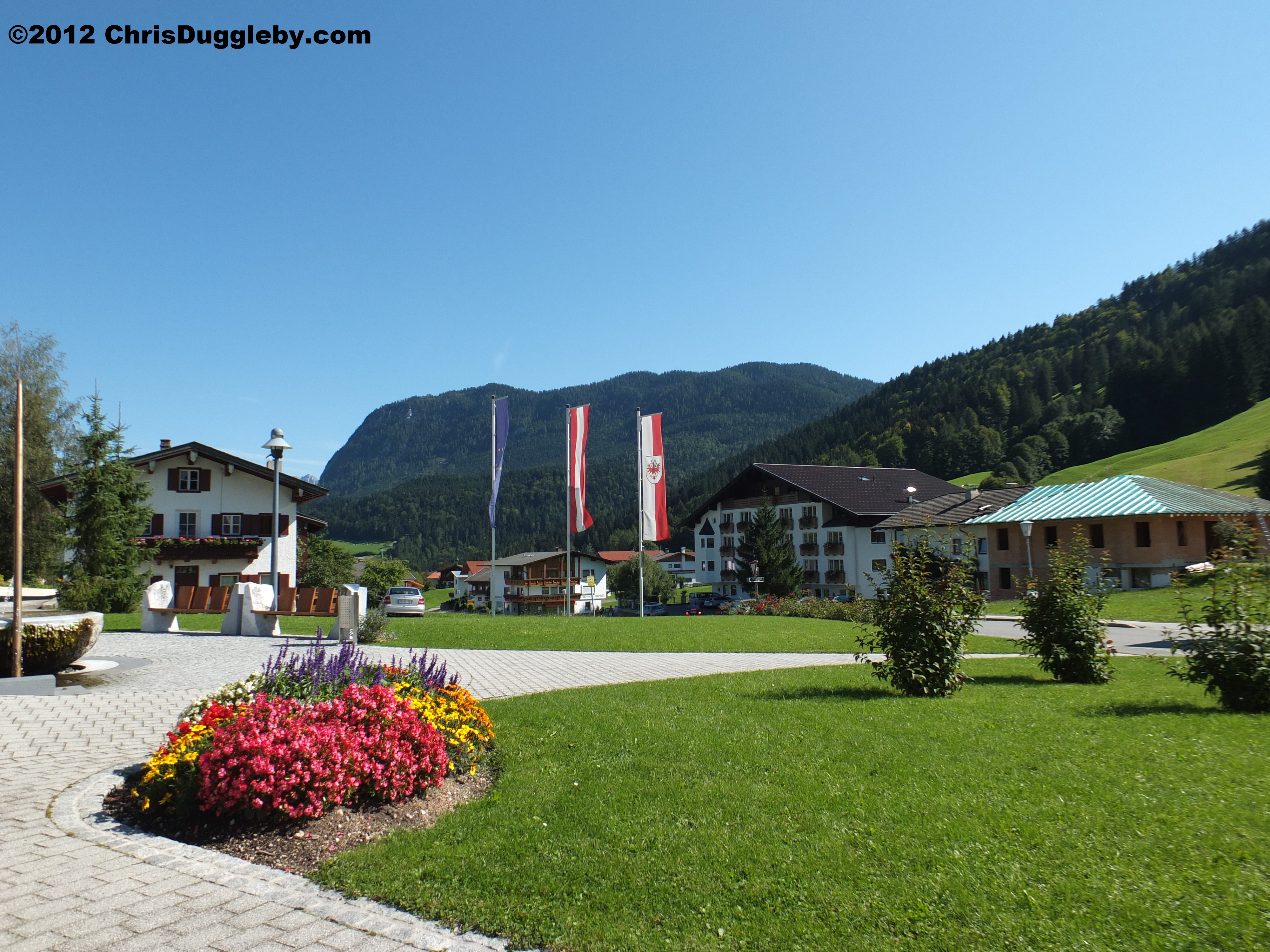
This week I would like to introduce you to the Bavarian market village of Neubeuern with its impressive castle or schloss (Schloß Neubeuern). Neubeuern is a particularly picturesque village and was voted as Germany’s most beautiful village in 1981. The village is built around a hill, which has an amazing back-drop of the Austrian/German Alps. I have a particular affiliation with Schloß Neubeuern because my son, Pascal, went to the Gymnasium (Grammar school) there. This is a well-known German mixed-sex boarding school and being based in a castle has something of a ‘Hogwarts‘ feel to it. Any young ‘Harry Potter‘ fan will not need to be asked twice to become a student there!

Pascal jumped at the opportunity to leave home for the Neubeuern castle at the age of 12. Coincidentally his brother Alex, 6 years earlier, had attended another castle school, Schloß Traunsee, in the Austrian Lake district – I will try to feature this in a forthcoming article. OK so J.K. Rowling may have had a titsy bit of influence on the selection of the boy’s educational establishments. I featured the boys in last week’s blog which can be found here).

Let me explain where Schloß Neubeuern is. The castle sits upon a hill which is surrounded by the pretty village of Neubeuern in the south of Bavaria not far from the border which leads into the Austrian Tyrol. It lies about half way between Munich and Salzburg. Here is the Google map which you can expand to find the nearest Autobahns and Towns:

Driving from my weekend retreat I crossed over the river Inn on the short journey from Bad Feilnbach to Neubeuern. The river Inn runs parallel to the Inntall Autobahn which is one of the key transit routes through the Alps between Bavaria and Italy.

View of Austrian Alps from bridge near the Inntal autobahn over river Inn

Wherever you travel in this region you are not far from staggering alpine views.

View of Austrian Alps from the river Inn on the way to Schloss Neubeuern

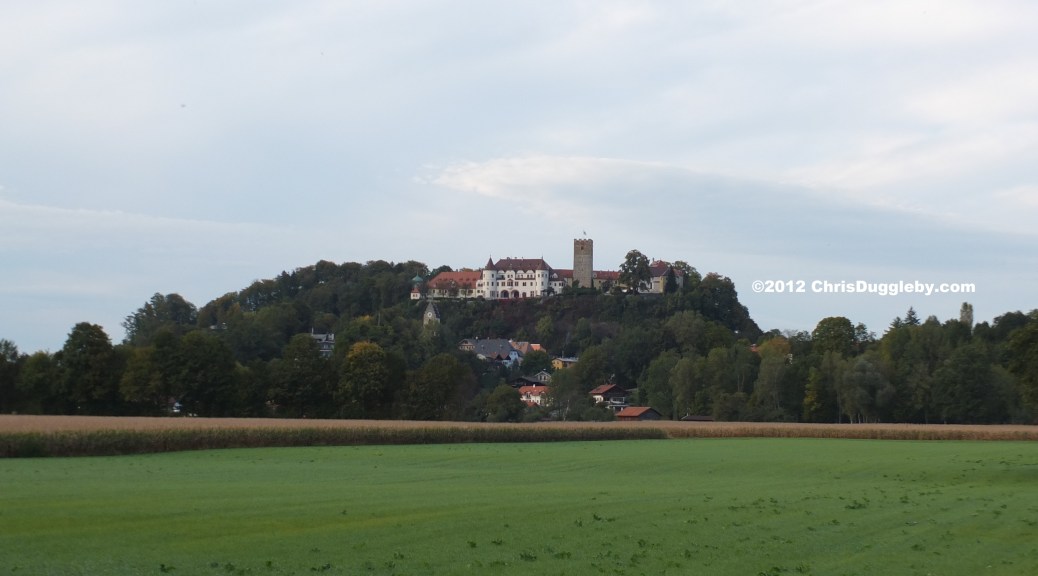
Some of the best views of the castle ‘Schloß Neubeuern’ can be enjoyed by driving towards Neubeuern from the Austrian direction. It stands proud at the top of its own hill surrounded by the immediate countryside which is relatively flat. All of my photographs are prepared in high-definition so if you would like to see more detail just click your mouse with the cursor over the picture. After viewing the photograph use the backward arrow on your search machine to return to this article.

View of Schloss Neubeuern coming from the Austrian border

In order to enter the village square at Neubeuern you must drive through one of two villages gates or ‘Tors‘. This only allow traffic to pass in one direction at a time so drive slowly. These small gates ensure that large lorries do not enter into the village square.
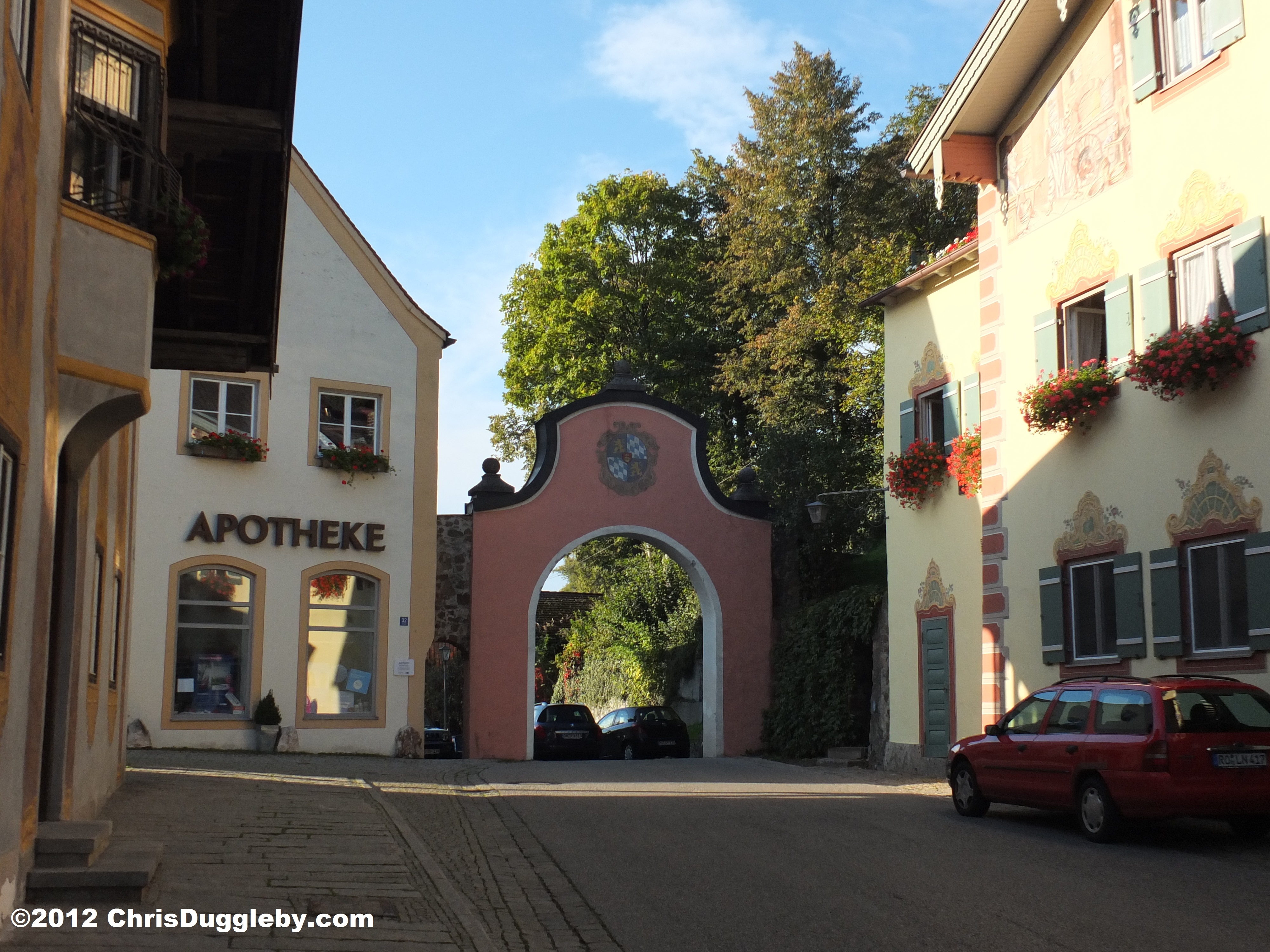
One of the two gateways (Tors) leading into the historical market village of Neubeuern in Bavaria

As soon as you enter the gate you will be struck by the impressive old buildings with their colourful Frescos.
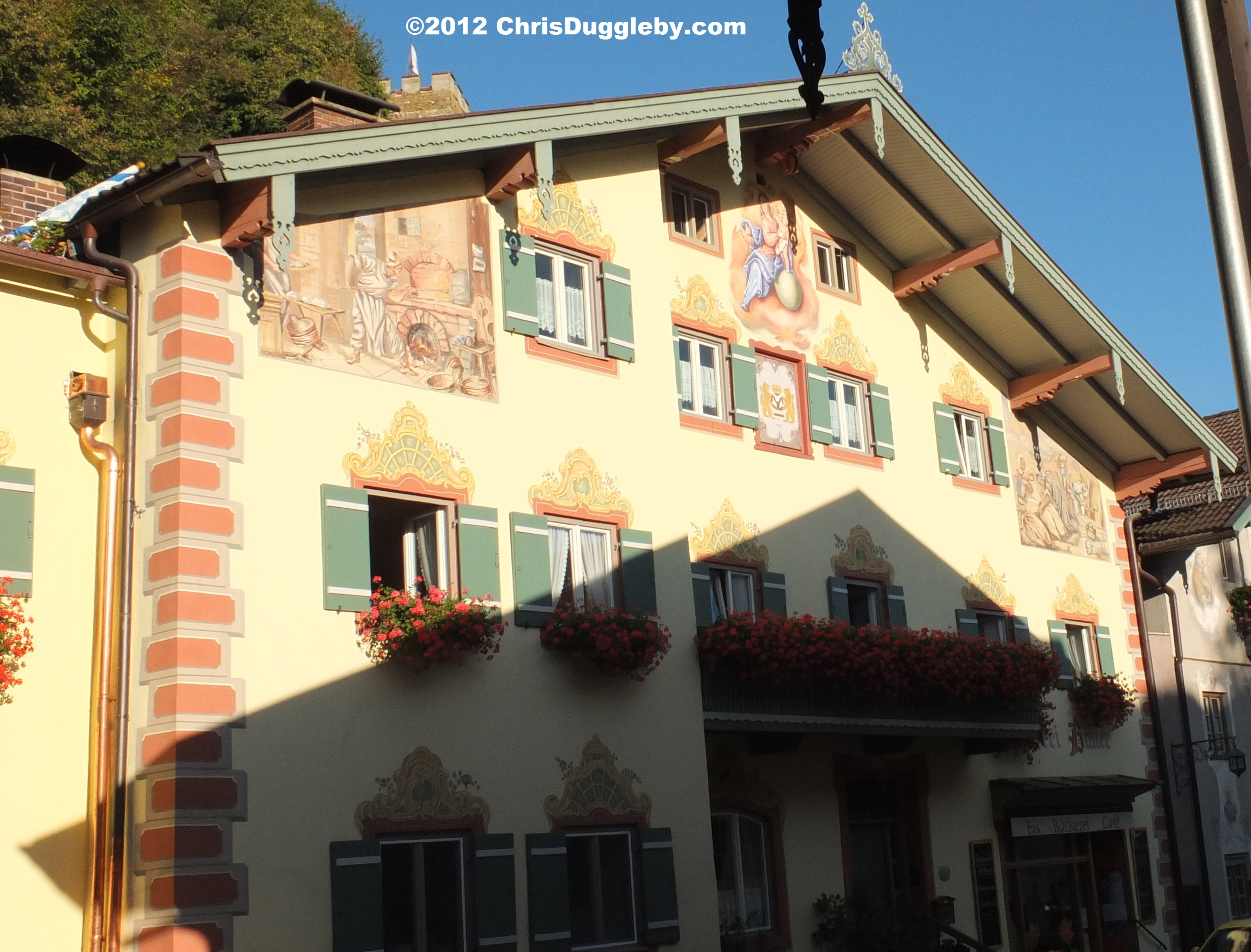
House with impressive wall paintings just inside the gate leading to Neubeuern village (southern Bavaria)

Once you arrive at the market square you get a view of the castle towering over the village. It is possible to park in the square and the town council is currently considering how they can increase the number of parking spaces. This has caused quite a heated debate because one of the proposals would involve removing two old trees from the square; an issue that has divided the residents of the village. If you would like to read more (in German) about this subject a local press article can be found here (don’t let it be said that http://www.ChrisDuggleby.com doesn’t bring issues of major environmental importance to the World stage!).

View of the square of Neubeuern market village overlooked by the castle or schloss

From the market square you can get a close up view of the beautiful hanging gardens which flow down the cliff face from Schloß Neubeuern to the village.
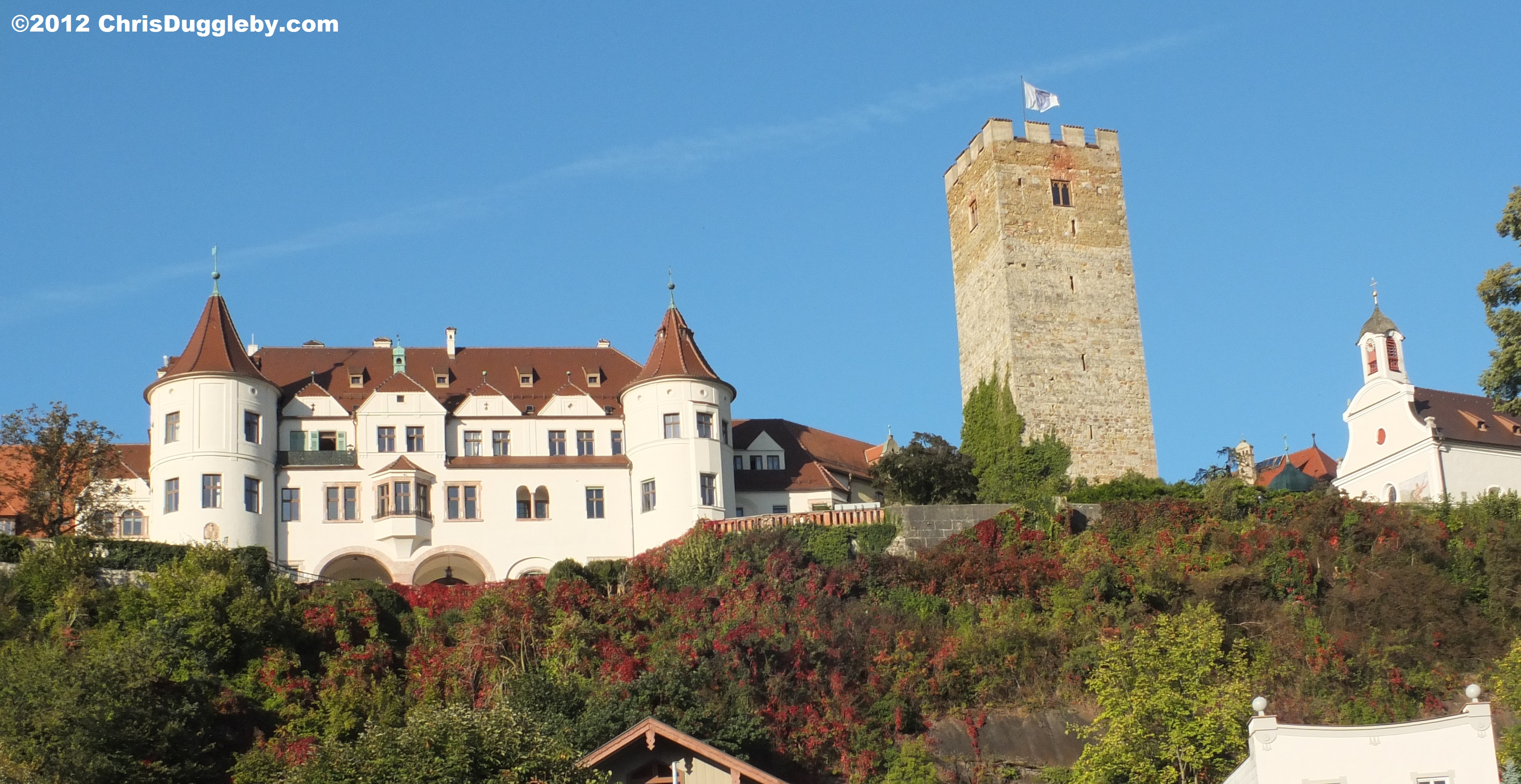
Schloss Neubeuern with its beautiful hanging gardens as seen from the market village square

The colours of the hanging gardens are complemented by the well stocked window boxes of the many individually painted buildings below.

The pretty hanging baskets match the colour from Schloss Neubeuern's hanging gardens
The pretty hanging baskets match the colour from Schloss Neubeuern’s hanging gardens

Even the buildings without flower baskets are artistically painted. Some of the paintings depict historical events or stories like the one below.

Many of the Neubeuern buildings have interesting frescos

At the opposite side of the square to the castle is the village church. In addition, the castle has its own church which is also worth a visit. This ‘Schlosskapelle St. Augustin‘ has fine examples of Bavarian late Baroque Rococo architecture. If you would like to see a 360 degree sight-seeing tour of the schloss and the staggering sights from its grounds please visit the interactive tour from the school’s website which can be found here. (it can take a while to load!)
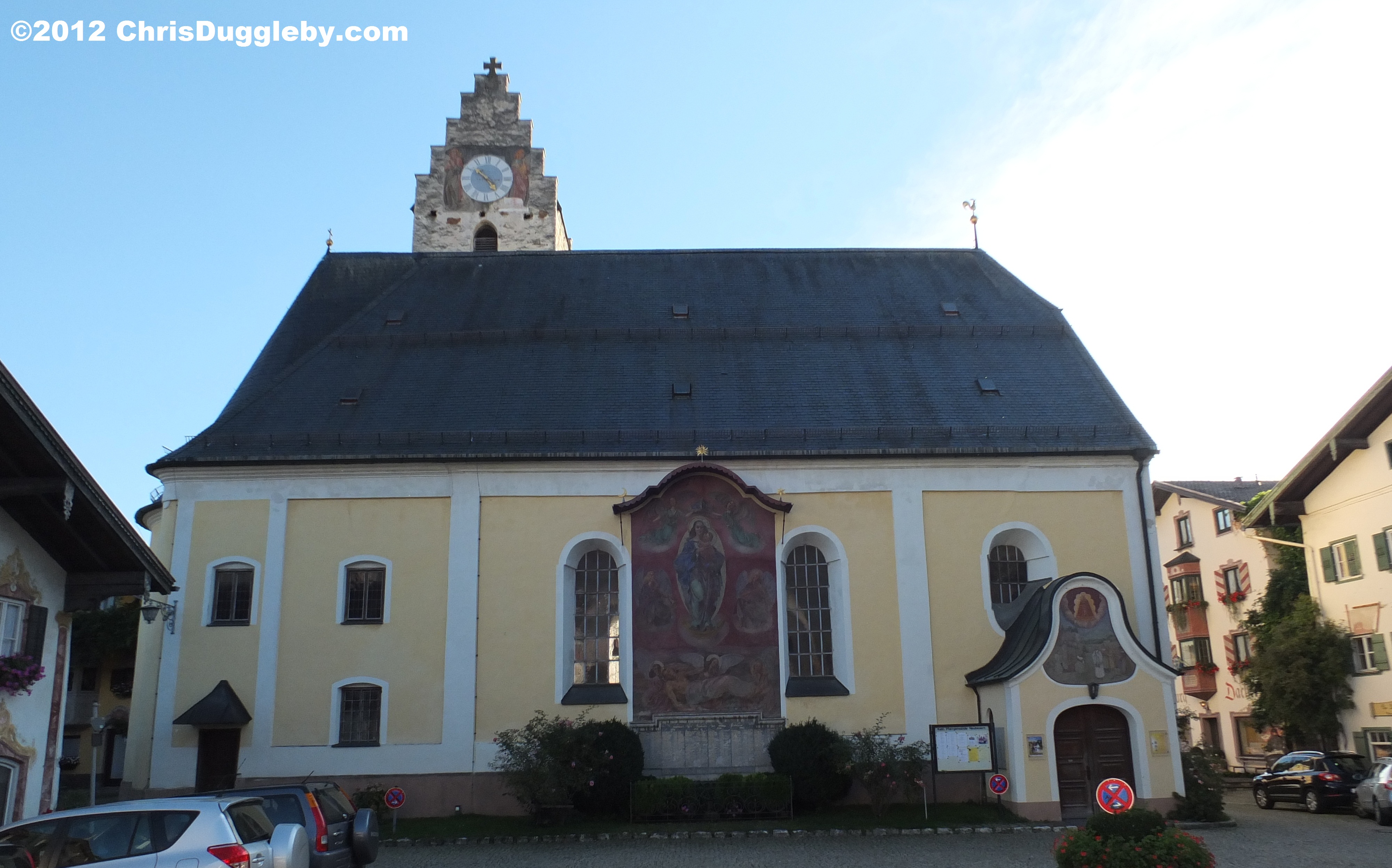
The Neubeuern village church sits at the opposite side of the square to the schloss

Just to the back of the church you will find a couple of the village’s picturesque restaurants. Many of the restaurants have garden terraces which allow customers to enjoy the amazing sights of the mountains and local countryside.

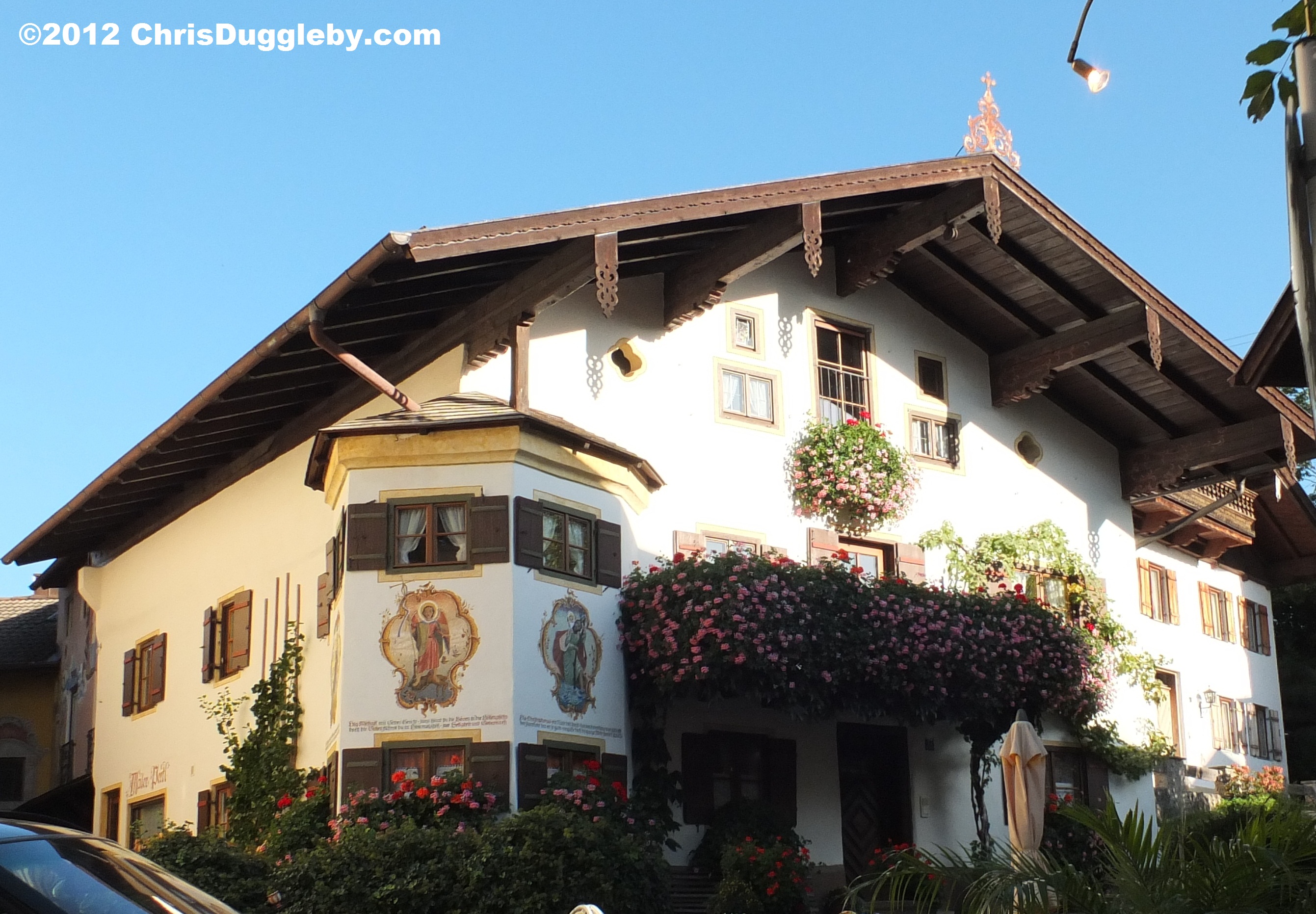
In between Neubeuern's many picturesque cafes and restaurants you can catch glimpses of the Alps
In between Neubeuern’s many picturesque cafes and restaurants you can catch glimpses of the Alps
Turning the corner I discover yet another pretty restaurant in Neubeuern

All around the village it is possible to catch views of the Alps which provide the perfect back-drop to this scenic masterpiece.

Take a look at the Alpine backdrop: In 1981 Neubeuern was elected as Germany's most beautiful village
Take a look at the Alpine backdrop: In 1981 Neubeuern was elected as Germany’s most beautiful village

It is difficult to find a building without pretty hanging baskets and impressive fresco work.

Next to the church another ornate Neubeuern building in bloom

The next one is one of my favourites.
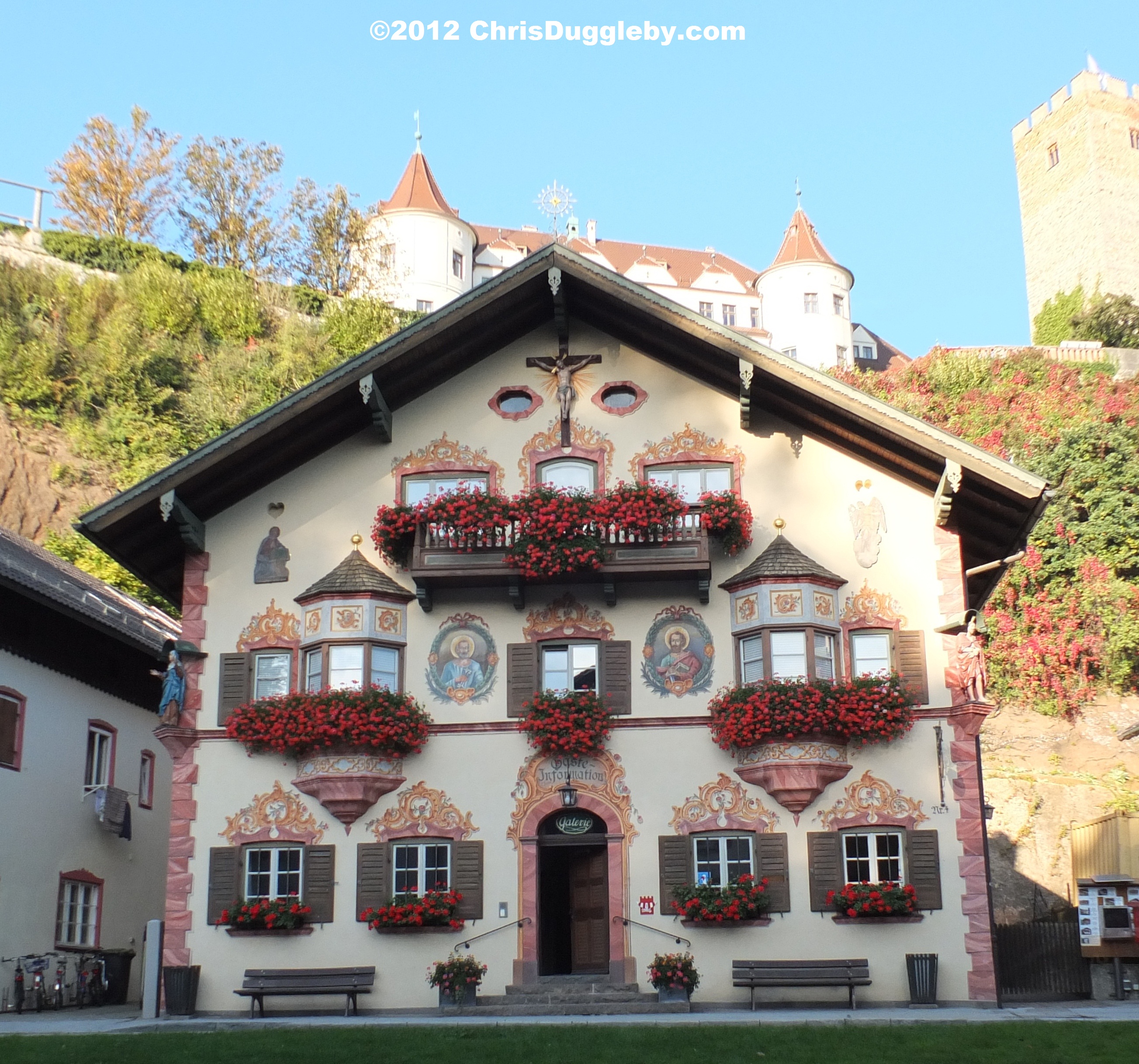
Anyone surprised why Neubeuern was voted as Germany's most beautiful village?
Anyone surprised why Neubeuern was voted as Germany’s most beautiful village?

After a great day enjoying one of Germany’s most beautiful villages I departed through the old village gate, but not before sampling some of the delights from the village baker.
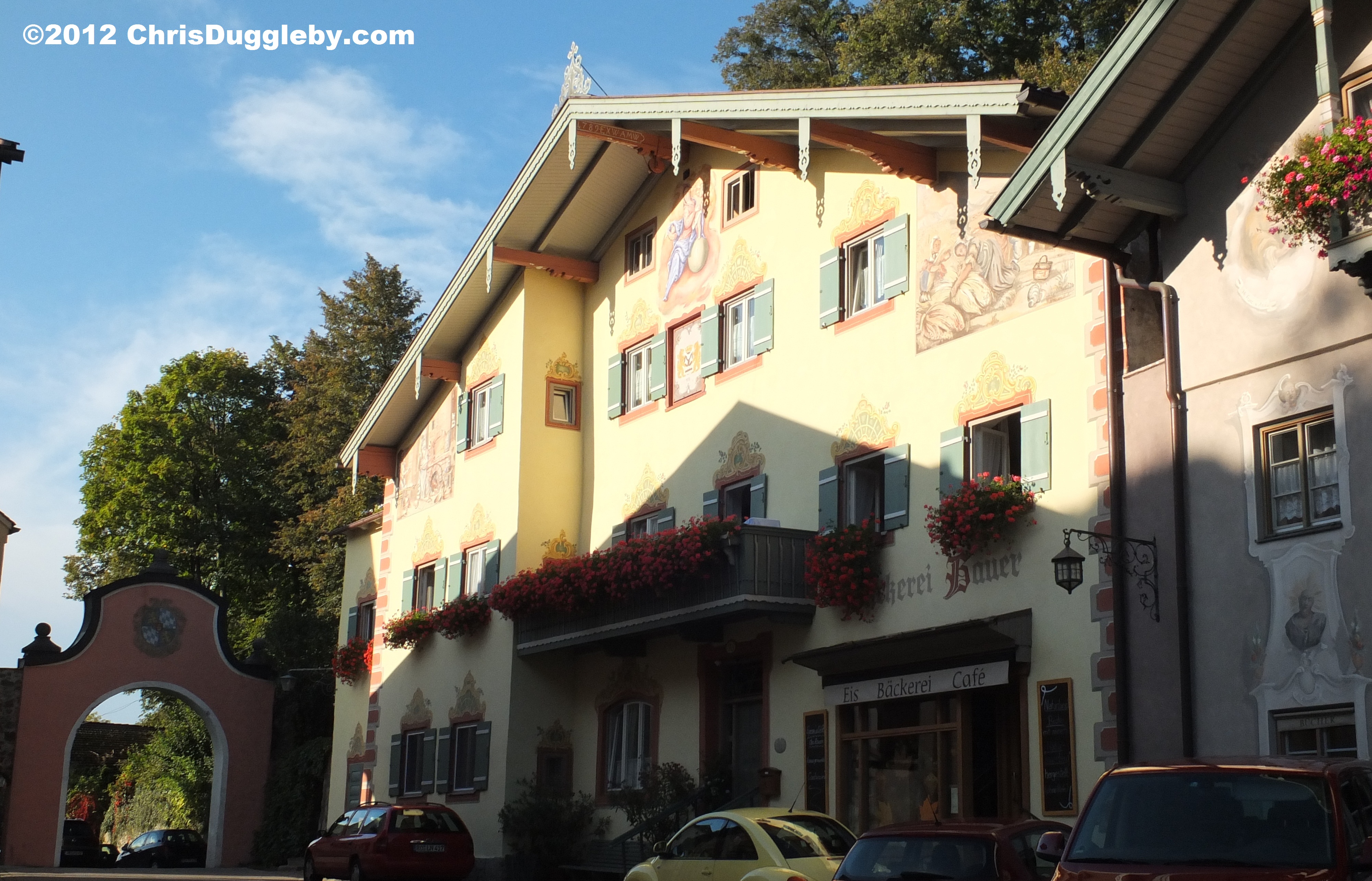
Neubeuern's village baker with beautiful frescos next to one of the village gates
Neubeuern’s village baker with beautiful frescos next to one of the village gates

In my view Neubeuern with its Schloß is well worth a visit and I will certainly be coming back. I hope you like the pictures and please do not hesitate to let me know if you have any suggestions or recommendations using the comments box below.

Chris Duggleby.
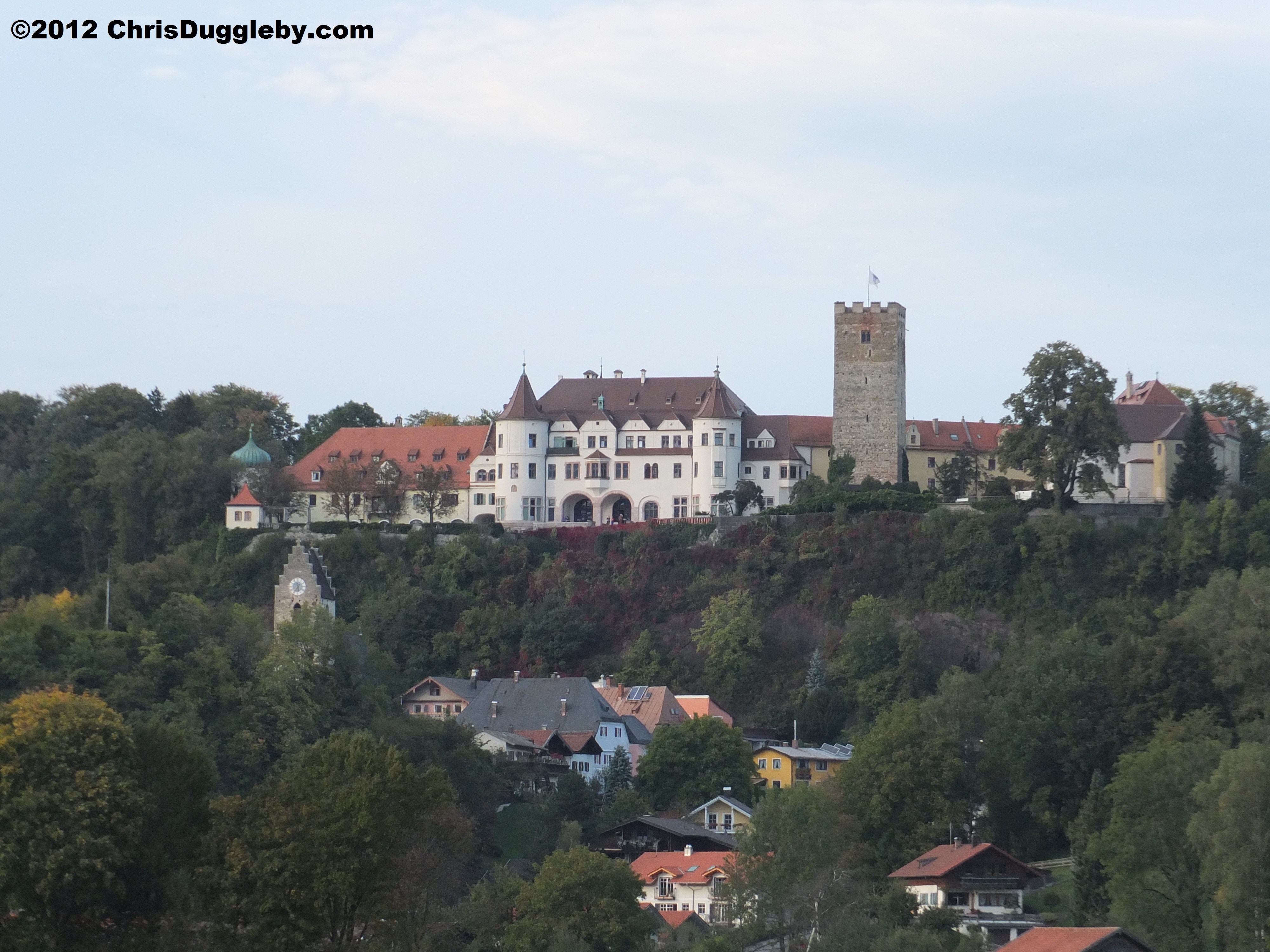
Close up full-frontal view of Schloss Neubeuern from the direction of the Austrian Tyrol

If you are interested in reading my other health focused articles try the following

Torture In The Shower – Face and Body Soap Allergies – Main Suspect: Pears Transparent Soap

Poison in your Washing Machine: Allergic Contact Dermatitis from Laundry Detergents, Softeners, Conditioners and Whiteners

Is Alzheimer’s caused by the Gum Disease Bacterium P. Gingivalis – A Dementia Prevention/Treatment Breakthrough?

Toxic Chemicals in Sex Toys – 18 Vibrators, Cock Rings, Love Balls Tested – Only 3 Get All Clear

My T-shirt Made Me Sick – Textile Allergies – Sinusitis From Your Underwear
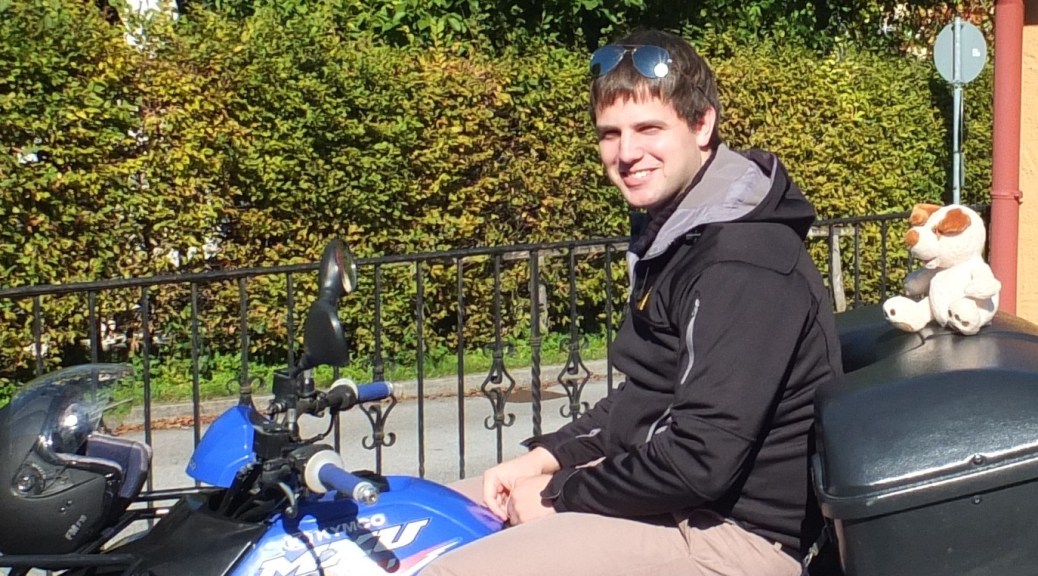
My boy’s new wheels, early Christmas lunch and a close shave with a forest bear

While you read the following article why not listen to my e-baroque compositions – just click on the box below:

or if techno music is more your cup of tea here are my techno/ambient compositions:

I hope you find the information below interesting…please visit chrisduggleby.com again.

Alex and Pascal Duggleby in a Bad Feilnbach beer garden

My two sons in a Bavarian beer garden

This week I am reserving a little space in the blog for a small family reunion. My son Alex, who lives in Vienna popped over to Munich on the way to Gmunden, in the Austrian lake district. More observant readers will know that going from Vienna to Gmunden via Munich is not the most direct way of travelling but it does allow one to drop in on one’s parents on the way. Gmunden is a very pretty town on the Traunsee or Traun Lake next to the Traunstein mountain (the Austrian one!). We were fortunate enough to live there many years ago while Alex went to school in Schloß Traunsee.

As most of our family meetings tend to be via Skype, and we could be separated by rather large distances in December, we decided to bring forward Christmas lunch by about two months. So Pascal came over from Rosenheim on his Quadbike and we all popped over to the Bärenstub’n, a very nice restaurant in Bad Feilnbach where you can sit outside on a sunny day and enjoy the Alpine views. If you do happen to visit Bad Feilnbach we can highly recommend the excellent food and friendly service of this local restaurant. Their website can be found here.

View from restaurant garden of Baerenstubn in Bad Feilnbach
View from restaurant garden of Baerenstubn in Bad Feilnbach
The boys get ready for duty at the next rock festival

As you will see from the picture above our faithful guard dog RISKKO jumped at the opportunity to have a ride on Pascal’s new Quadbike. Following on from this there is a serious risk that our four-legged friend may give up spending his time riding in luxury convertible sport’s cars with beautiful ladies and take up the life of a beach bum on a quad bike (for Bavarian guests instead of ‘beach bum’ please read ‘Baggersee Po’) . Watch this space.

Pascal works in Event Management and a quad bike can be a pretty effective way of getting round the large Bavarian music festivals – especially once the mud arrives! It was very nice to have the boys together and I am including a snap shot of them at the restaurant so that their extended family and international fans (well mainly my niece Estela in Spain!) can share in the occasion.

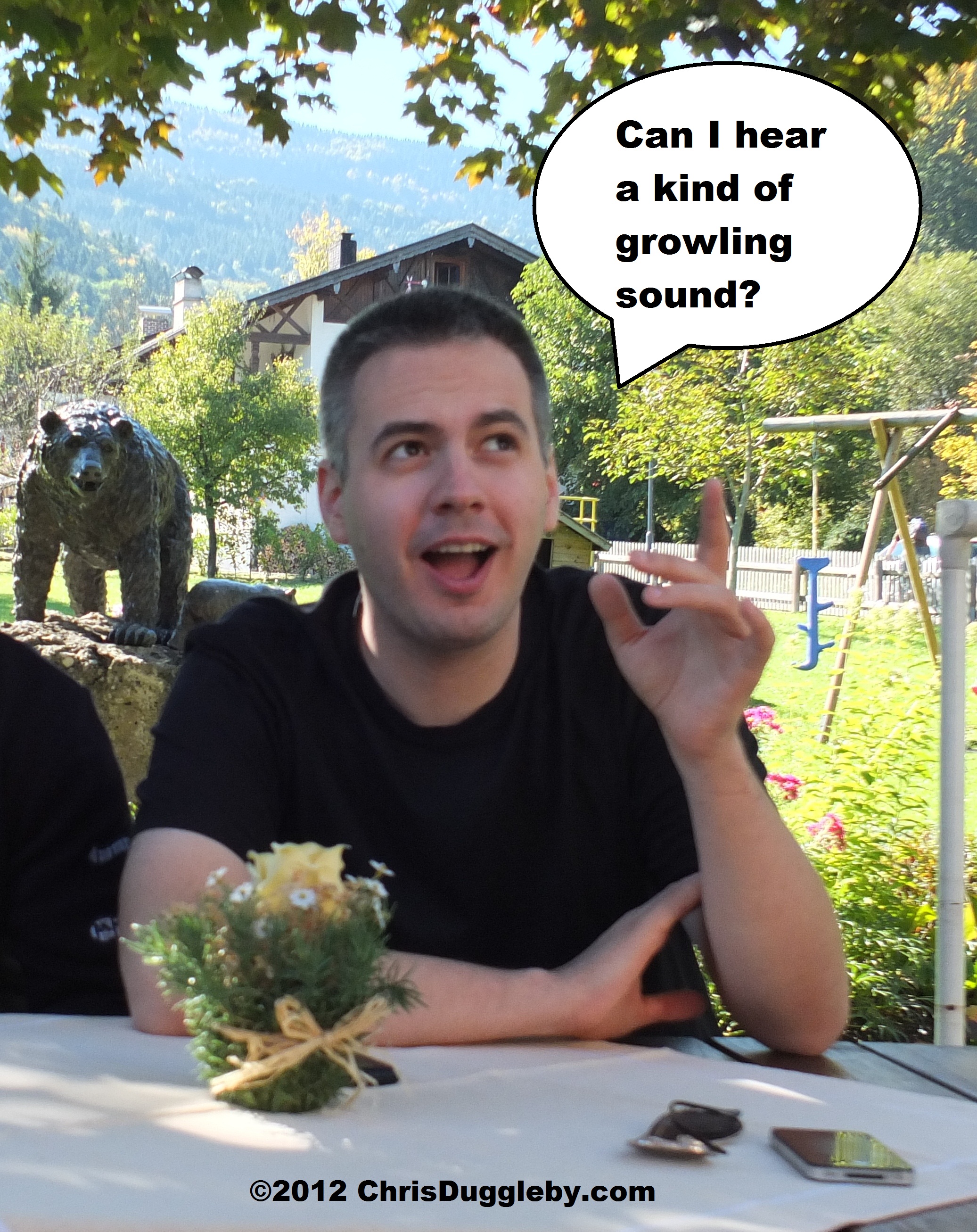
Alex and Pascal Duggleby and the Bad Feilnbach Forest Bear
The next generation of Dugglebys and the Bad Feilnbach Forest Bear

RISKKO particularly likes this restaurant because the chef is one of his best friends and always prepares a special treat for him.

RISKKO exchanging views on cuisine with the Chef at the Baerenstubn Bad Feilnbach Bavaria
RISKKO exchanging views on cuisine with the Chef at the Baerenstubn Bad Feilnbach Bavaria
RISKKO gets some tips from the Chef at the Baerenstubn in Bad Feilnbach Bavaria
RISKKO gets some tips from the Chef at the Baerenstubn in Bad Feilnbach Bavaria

While we were in the kitchen something else caught my eye – the restaurant was selling some of Bad Feilnbach’s excellent honey. During my many trips up the Schwarzenberg mountain I have always been impressed by the large number of the bees at the top of the mountain. Like the cows grazing on the mountain pastures the bees are clearly very happy and therefore the honey they make is especially delicious (more information about the Schwarzenberg can be found in my article here). I have to say I have never seen a sad or depressed bee up there.

On the Schwarzenberg Mountain near Bad Feilnbach a happy cow making especially tasty milk
On the Schwarzenberg Mountain near Bad Feilnbach a happy cow making especially tasty milk

Honey has been in the press quite a lot recently. To be precise blue, green and chocolate-brown honey produced by some rather naughty French bees who were more interested in M&M’s than they were in pollen. If you would like to find out more please read my article which can be found here.

Local guard dog RISKKO protects the Bärenstub'ns golden treasure from baddies
Local guard dog RISKKO protects the Bärenstub’ns golden treasure from baddies

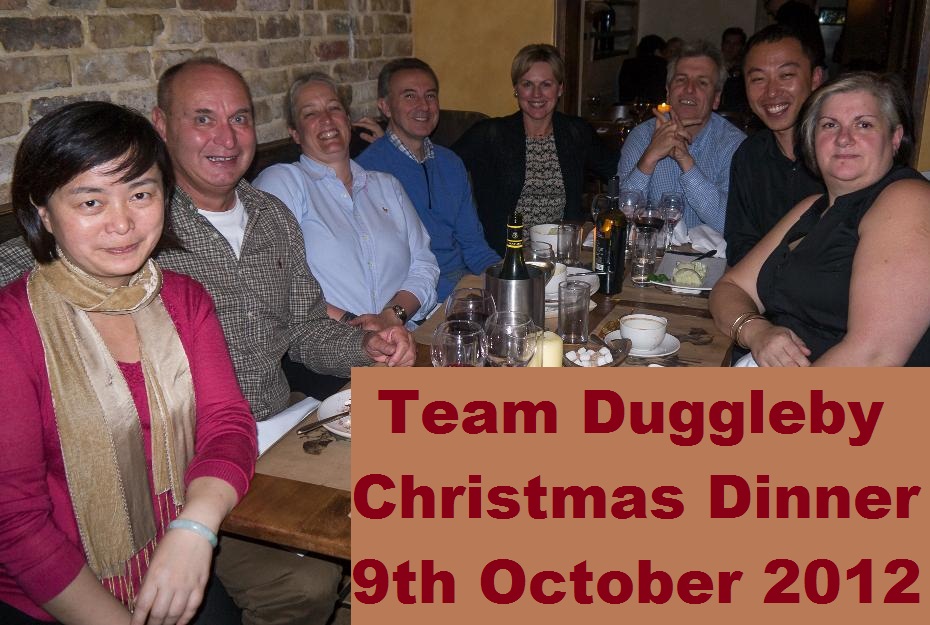
In addition to the family Christmas lunch in Bavaria the RiskBusters’ ‘Team Duggleby’ also managed to find a night when we were all in the same country (England). This meant that we could finally have the team dinner we have been promising ourselves for many months. We found a nice Italian restaurant in Twickenham near the Thames and I did my best not to whinge the whole night about the cost (coming from Yorkshire anything more than £5 a head can cause severe psychological trauma – I am still undergoing therapy!). The restaurant was Osteria Pulcinella and the food was so good that, although we were only 8 people, we seemed to get through 12 deserts!

Getting maximum value out of the Christmas entertaining budget and avoiding the rush

It was quite an international evening as the team was made up of representatives from South Africa (Michele), Germany (Ulrike and Klaus), China (May), Australia (Tong), France (Vincent), Lancashire (Nikki) and Yorkshire (guess who). Clearly the last two represent two of the culturally most distant races, especially linguistically.

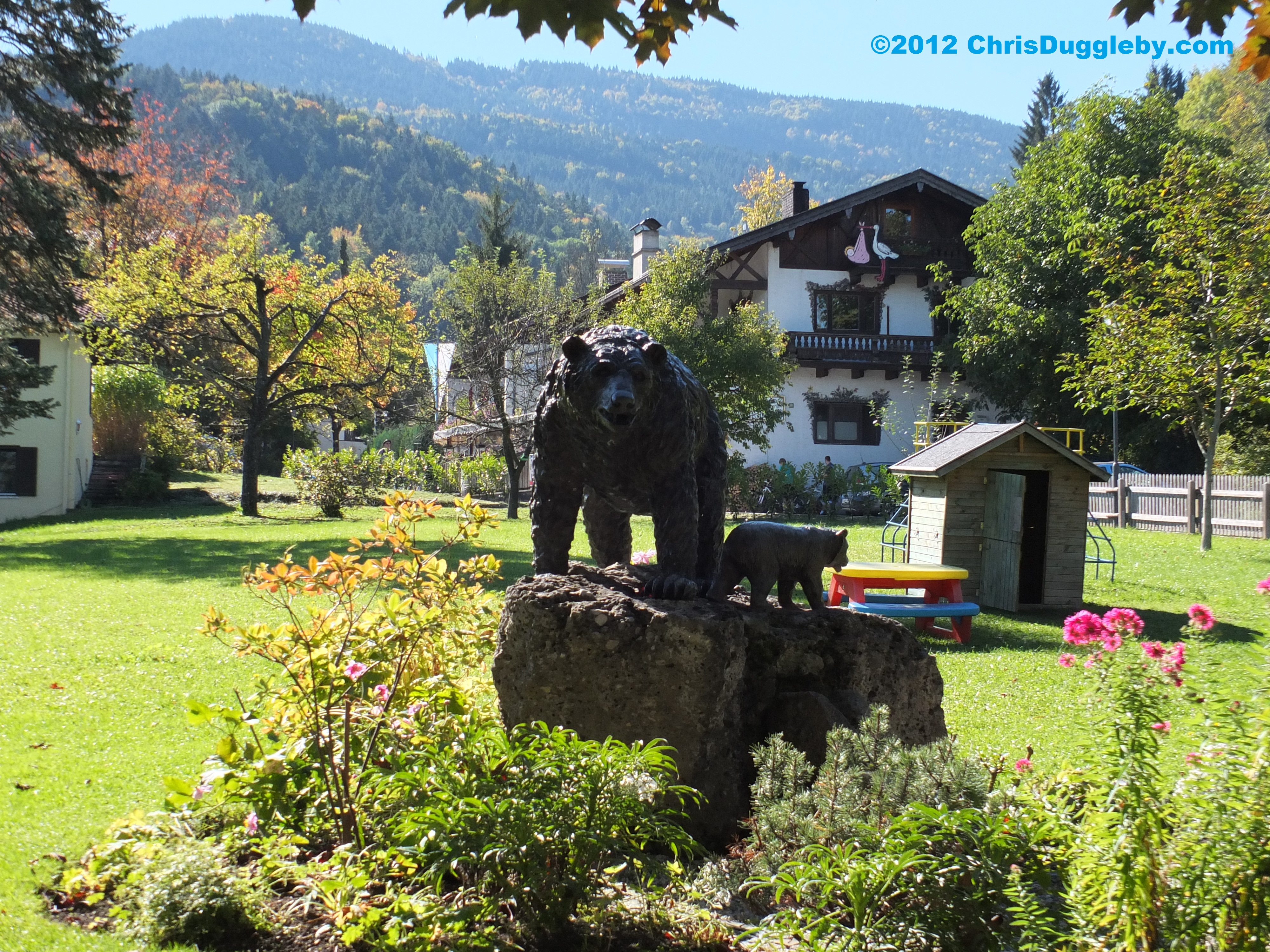
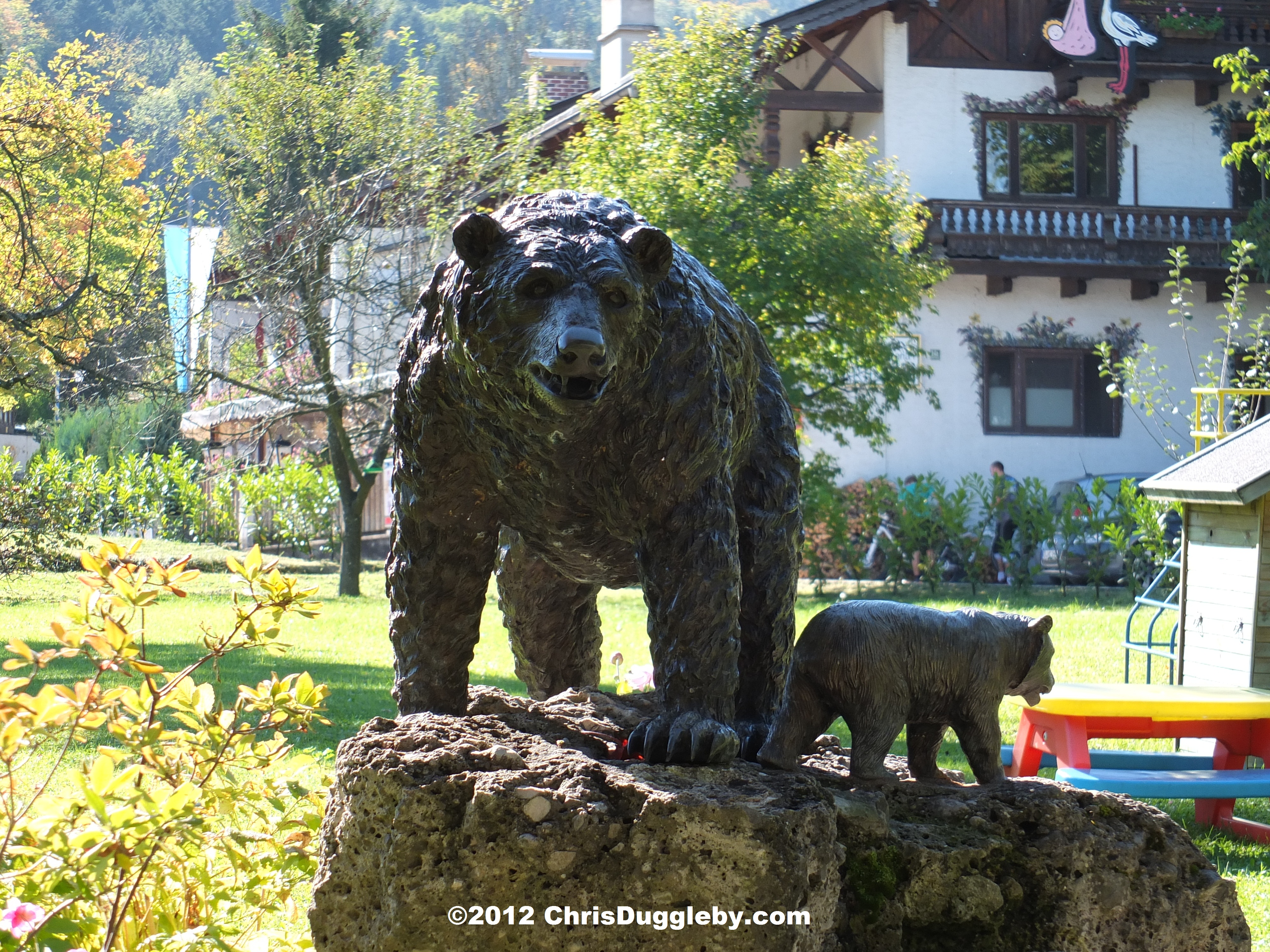
So after a strong focus this week on food I promise in next week’s blog to have some more scenic photographs. There will be a special focus on a Bavarian hilltop-castle and its beautiful town. By the way here is a close-up of the Forest Bear we saw on the Schwarzenberg Mountain – fortunately it was preoccupied with its cub. Don’t say you don’t get exciting wildlife pics on the Chris Duggleby website!

Bavarian Forest Bears in the garden of the Baerenstubn near the Schwarzenberg Mountain
Bavarian Forest Bears in the garden of the Baerenstubn near the Schwarzenberg Mountain

Happy eating and remember to keep an eye out for any bees showing early signs of obeesity.

Chris Duggleby.

Pascal Duggleby having fun with RISKKO on the Quadbike
My youngest having fun with RISKKO on the Quadbike
Alex Duggleby gets the impression he is not alone in Bad Feilnbach
The older one has the impression he is not alone in Bad Feilnbach

Achensee or Lake Achen: The largest lake in the Austrian Tyrol (and one of its best kept secrets)

While you read why not listen to my album ‘Electro Baroque‘ (all tracks are also available on iTunes using the link here)? Classical music using modern instruments:

or if you prefer to listen to my electro/techno album ‘Studio Valiumm‘ here are the videos (also on iTunes using the link here):

More info about my music is at the dedicated website www.TRANSFORMATES.com

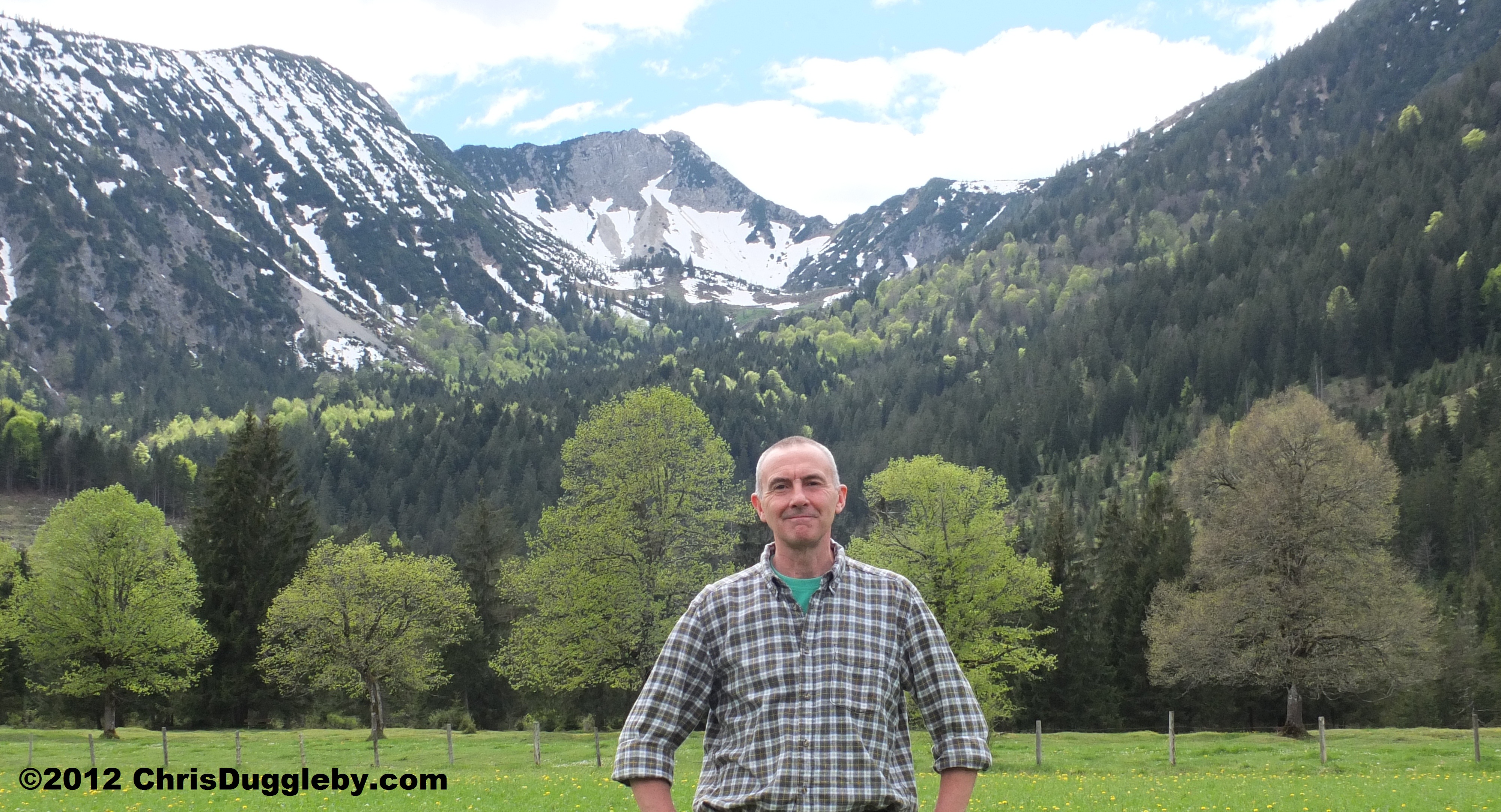
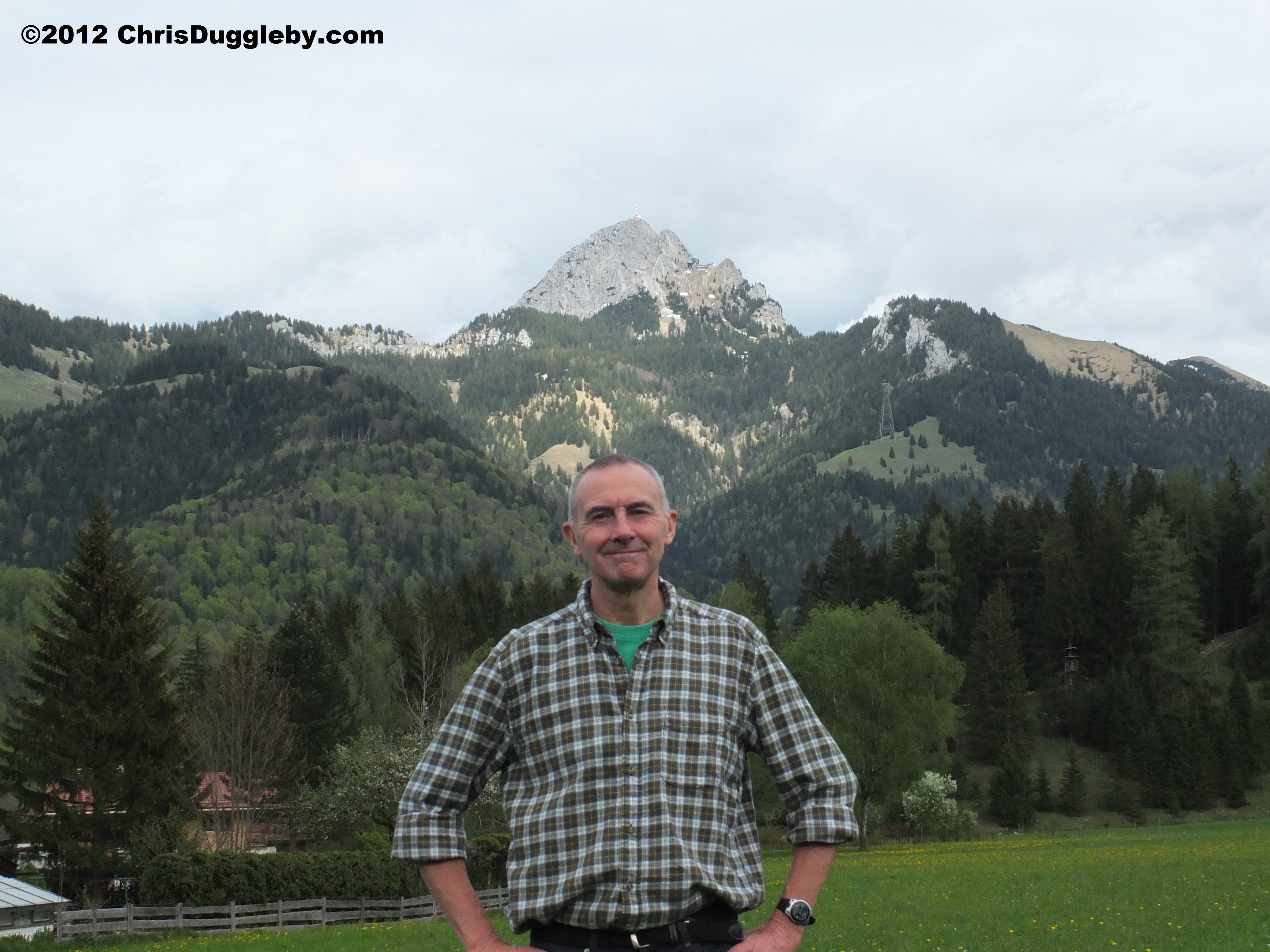
Author about to set of in the direction of the Austrian Tyrol and the Achensee

Today it is raining and therefore a perfect day to test my conviction that the Alps can cheer you up on even the most dismal of days – you just need to get off your butt, go outside and open your eyes.

I decided to visit a lake which quite frankly I had never heard of before; this is how most of my sightseeing trips start off. Those of us who have lived in this region are very familiar with lakes like the Chiemsee and the Tegernsee. Both are beautiful locations but because of their close proximity to the A8 Autobahn which connects Munich with Salzburg they are very popular with city dwellers and can get very crowded. They are also therefore rather commercialised and just finding a parking space can be a challenge. Although you can see the alps in the distance the immediate countryside around these lakes is rather flat so if, like me, you have a mountain fetish they can be a bit frustrating.

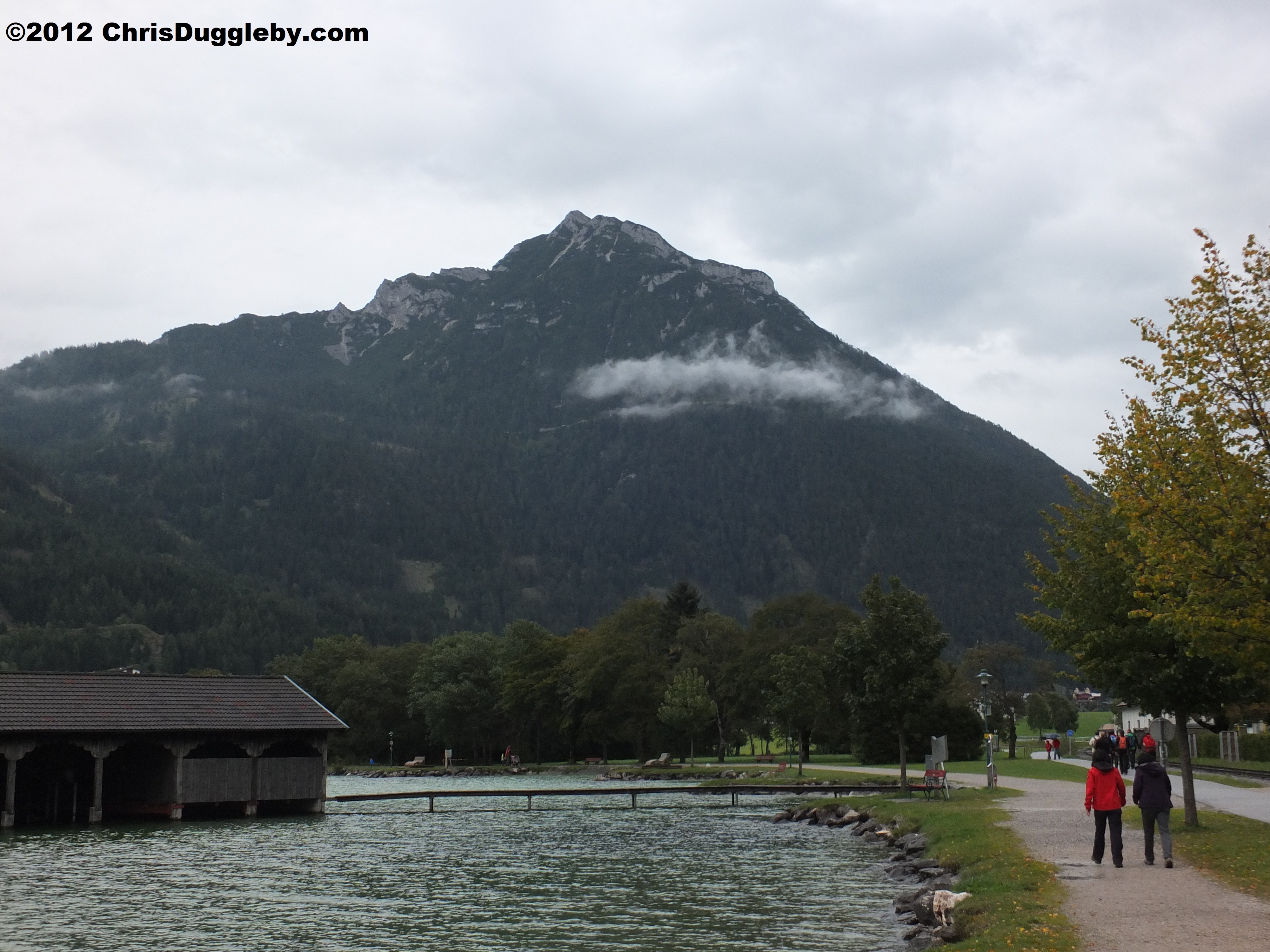
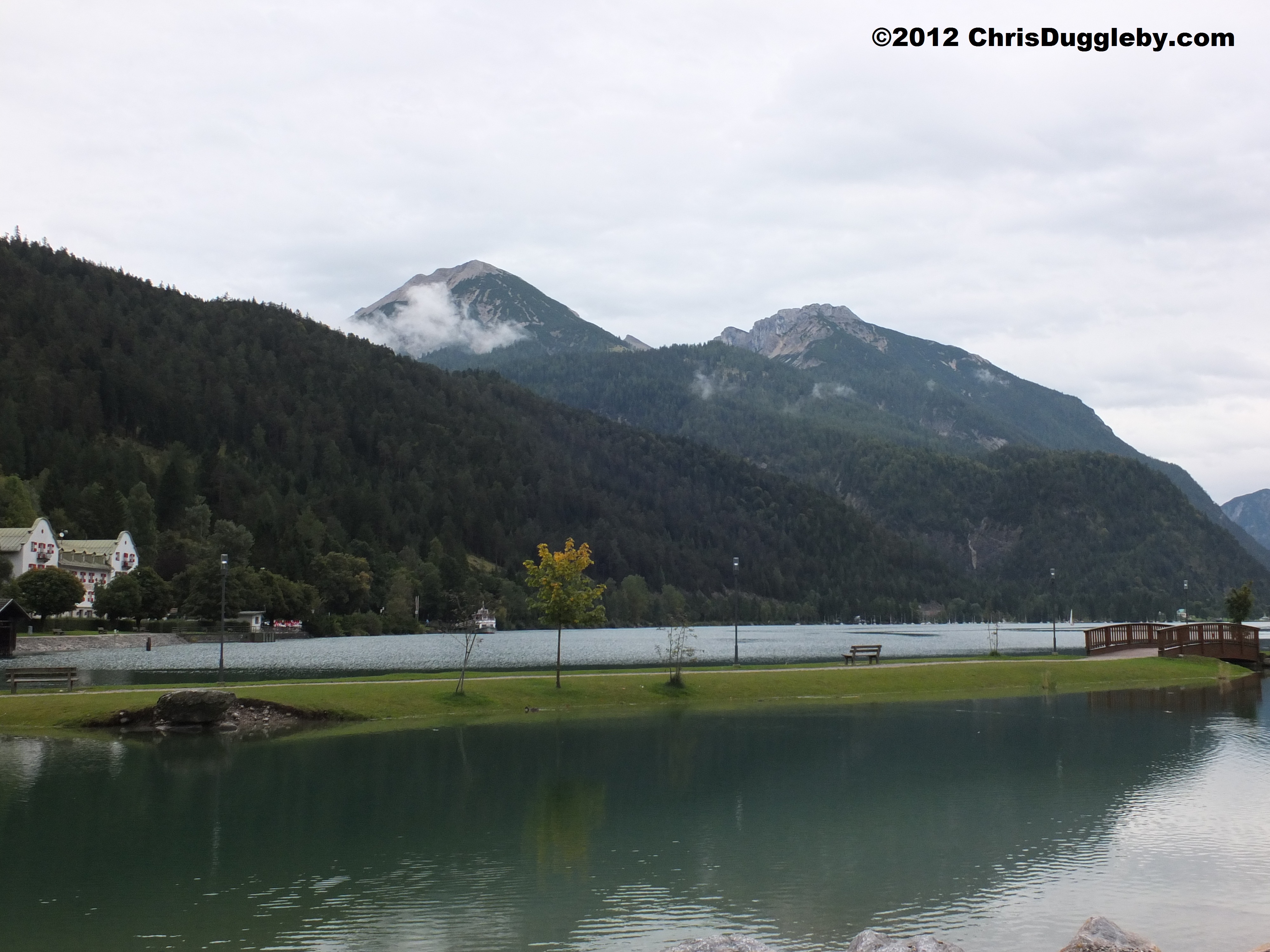
Achensee Lake landscape view from the south shore footpath on a rainy day

So on this rainy day I headed down the Deutsche Alpen Straße (B 307) in the direction of the Achensee. From my alpine hideaway in Bad Feilnbach this route took me past the Schliersee and then the Tegernsee. So before I had reached my ultimate destination I had already had a chance to see two very scenic lakes and, since the (kind) rain had kept most of the tourists indoors, the roads were relatively free. As the photographs in this blog will show the rain did not prevent me from enjoying some fantastic mountain views.

In fact the clouds, together with the mountains, can often help to create some very dramatic images like the one below. As all of my photographs are in high-definition you can get a much more detailed version by clicking your mouse over the picture. In particular this will help to bring the wider panoramic landscape pictures to life.

The clouds creep over the mountains from Germany in the North into the Achensee valley

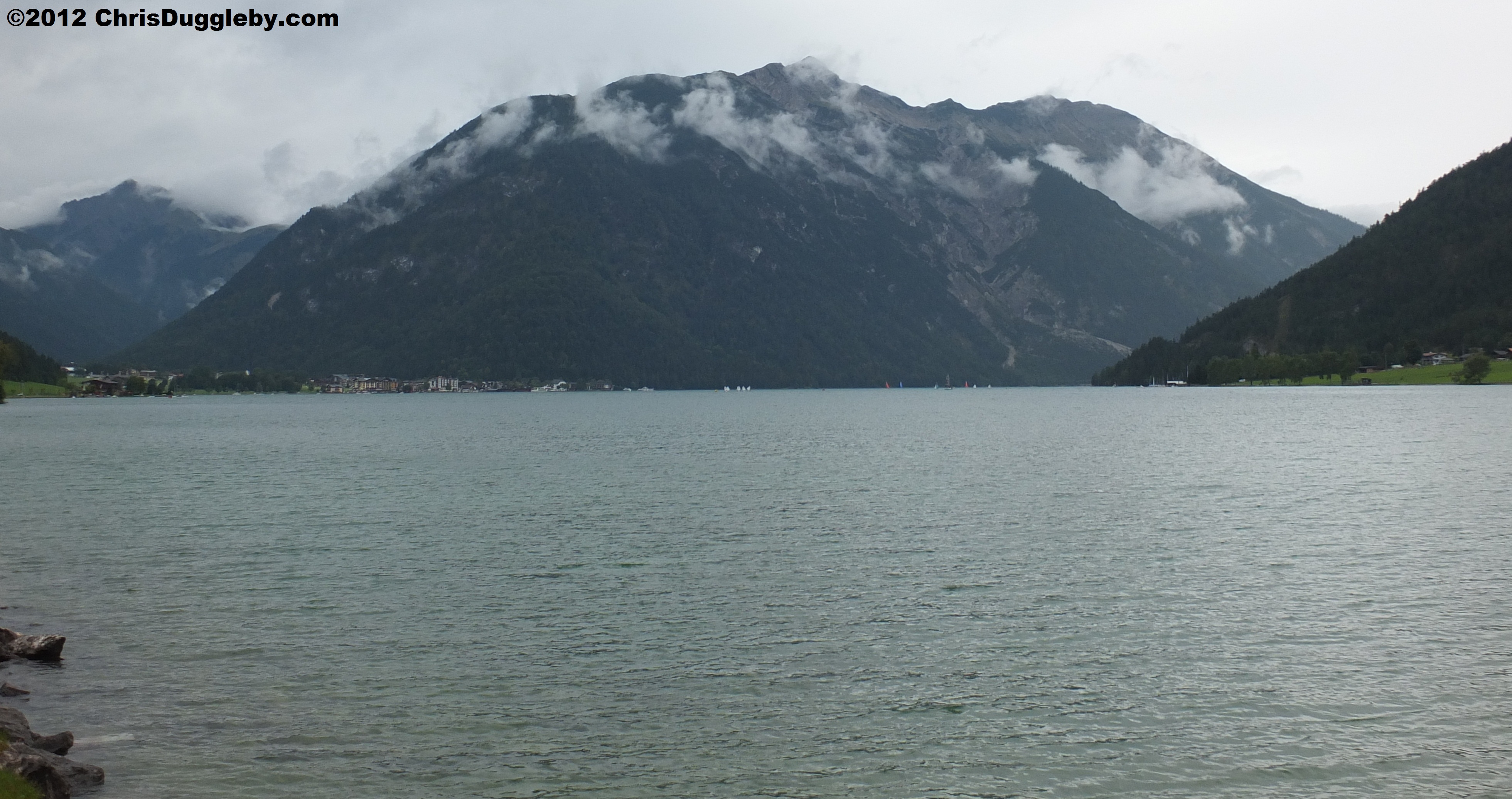
One of the things that impressed me most about the Achensee is that it is surrounded on all sides by incredible mountain scenery. It sits in the Achental valley which divides the Brandenberg Alps to the east from the Karwendel mountain range in the west.

The Tyrolean Achensee - whereever you look you see mountains: the Brandenberg range to the East and the Karwendel range to the west
The Tyrolean Achensee – wherever you look you see mountains: the Brandenberg range to the East and the Karwendel range to the west

Sometimes lakes in this region have waterfront properties which go right to the shore-line preventing visitors from walking round the lake. This is not the case with the Achensee which has very pleasant made-up walking paths around its perimeter. Clearly on a rainy day it is advisable to bring an umberella. Because this is the largest lake in the Tyrol a stroll around the edge can be something of a challenge; the lake is 1 km wide and 9.4 km long!

The southern Achensee lakeside walk is impressive even on a rainy day

Wherever you go along the side of the lake you will be able to enjoy splendid alpine views like the ones in the photos below.

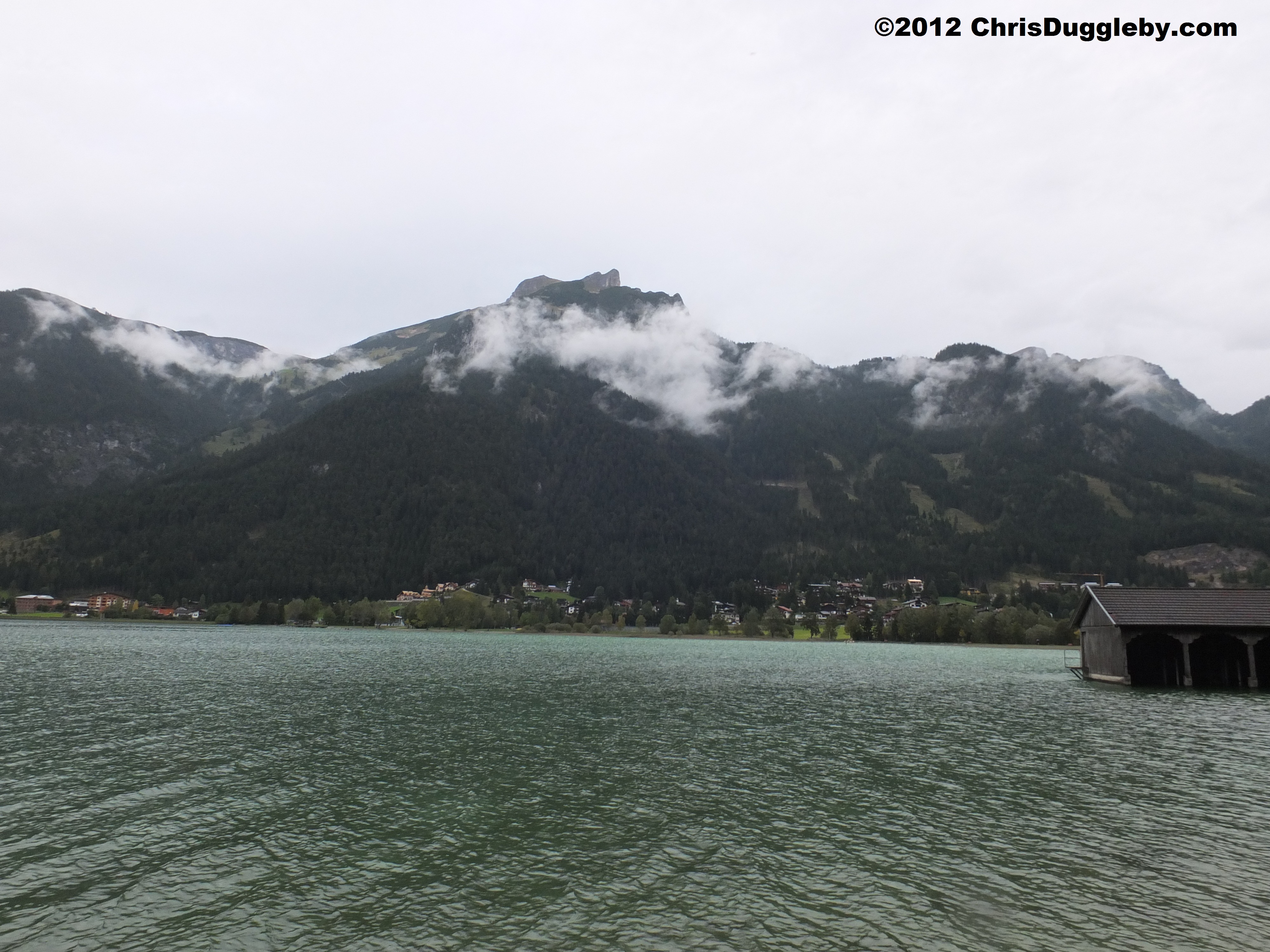
Brandenberg moutains to the north-east of the Achensee Lake in the Austrian Tyrol
Brandenberg mountains to the north-east of the Achensee Lake in the Austrian Tyrol
Dramatic views of the Brandenberg Mountain range to the east of the Achensee Lake
Dramatic views of the Brandenberg Mountain range to the east of the Achensee Lake

On the north side of the lake there are sporting facilities. These include a swimming area with a huge wooden platform. The water of the lake is almost of drinking quality and it is so clear you can see down to a depth of up to 10 metres. There are many sailing activities on the lake due to its large size and the winds created along the valley. It is therefore very popular with windsurfers.

Achensee Lake northern shore's swimming area (on a rather quiet day)
Achensee Lake northern shore’s swimming area (on a rather quiet day)

Among the sporting facilities there are also beach volley-ball courts which thanks to this rainy day did not challenge my blood pressure with a preponderance of lightly clad volley-ballettes (today the only naked surface in view was that of the volley-ball court itself!).

Moutains to the north of the Achensee Lake with a somewhat 'naked' looking beach volley-ball pitch in the foreground
Mountains to the north of the Achensee Lake with a somewhat ‘naked’ looking beach volley-ball pitch in the foreground

The mountain scenes at the beginning of the blog were taken from the South side of the lake. Moving 10 kilometers to the North I took the photographs here and those below which show a totally different alpine perspective.

Moutain view from the Achensee northern shore: Tyrolean beauty of southern Austria
Mountain view from the Achensee northern shore: Tyrolean beauty of southern Austria

If you are interested in reading about, and seeing photographs of other scenic ‘secrets’ from the alpine region please take a look at some of my other blog entries. These can be found using the links below:

here (Spitzingsee or Spitzing Lake in the Bavarian Alps)

here (Bavarian Schwarzenberg or the Black Mountain in the Voralpen region)

here (Thiersee or Lake Thier in the Austrian Tyrol), and

here (Bayrischzell: a Bavarian village with an impressive background)

Here’s looking forward to the next rainy day!

Chris Duggleby

Achensee Lake landscape view from the north shore. This is the largest lake in the Tyrol

Bayrischzell: Pit-stop on the way from the Deutsche Alpen Straße to the peak of the Wendelstein Mountain

While you read why not listen to my album ‘Electro Baroque‘ (all tracks are also available on iTunes using the link here)? Classical music using modern instruments:

or if you prefer to listen to my electro/techno album ‘Studio Valiumm‘ here are the videos (also on iTunes using the link here):

More info about my music is at the dedicated website www.TRANSFORMATES.com

The Wendelstein its cable car and fantastic countryside on the German Alpine Strasse near Bayrischzell
The Wendelstein its cable car and fantastic countryside on the German Alpine Strasse near Bayrischzell

This week I would like to introduce you to a little village on the German Alpine Road called Bayrischzell. It is very close to the Wendelstein Mountain and is often used as a base for people visiting the mountain or as a stopping off point for travellers along the German Alpine Straße. I have to admit I have a special affinity towards the Wendelstein because I can see it from my Bavarian bed – cloud permitting. So you will see it feature regularly in my blog. Bayrischzell is on the opposite side of the mountain to my bed which gives me a chance to see my bed-friend from a less familiar vantage point.

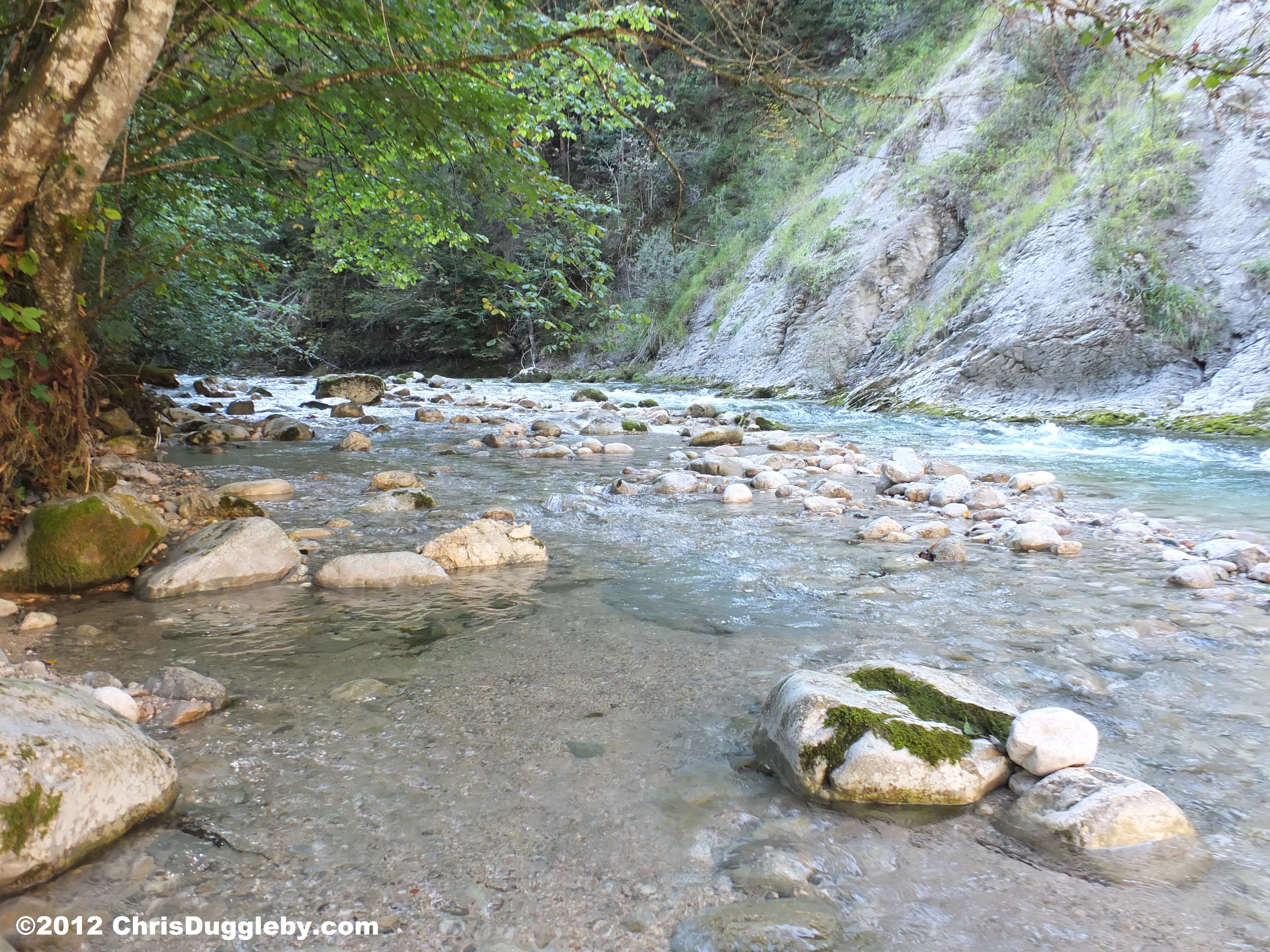
On the day I took the photographs below I approached the German Alps from the direction of the Austrian Tirol (more on that in a future blog). In addition to having lots of splendid peaks the area is full of pretty (and on a hot day very refreshing) streams many of which are good for paddling like the one below.

Countryside stream in the Austrian Tyrol not far from German Bayrischzell

Like the mountains these streams have been in existence for millions of years. I am often fascinated by the shapes and patterns created as a result of erosion by the flowing water. The stream in the photograph below has cut into the rock face creating some really interesting structures.

Impressive rock erosion next to a Stream in the Tyrolean countryside near Bayrischzell

The route I took over the Austrian border towards Germany passed through a valley which pointed all the way back to my beloved Wendelstein. In the picture below you can see the mountains gradually parting to reveal its magnificent 1,838 meter high peak.

Southerly view of the Wendelstein taken from the Tyrol just over the Austrian border

Further along the valley in the direction of the Wendelstein I came to a junction which was the German Alpine Straße. On the opposite side of this junction was Bayrischzell. One of the first things that strikes you when you visit the village is its beautiful fire station. Just take a look at the photograph below.

A Fire station with a difference in Bayrischzell on the German Alpine Strasse in Bavaria
A Fire station with a difference in Bayrischzell on the German Alpine Strasse in Bavaria

I have never come across a fire-station with such beautiful frescos on the walls. The following two photos show close-up views of a couple of areas from the frescos. The first is the emblem of the local fire brigade (Feuerwehr).

Feuerwehr Bayrischzell: The emblem on the Firestation wall.....serious jobs need serious art
Feuerwehr Bayrischzell: The emblem on the fire station wall…..serious jobs need serious art

The second photograph from the fresco is of a countryside scene including a milk maid and cows (with cow-bells of course – if you would like more pictures of cows with cow bells you can find them here)

Wall fresco above the entrance to the Fire Brigade (Feuerwehr) in Bayrischzell off the Alpine Strasse
Wall fresco above the entrance to the Fire Brigade (Feuerwehr) in Bayrischzell off the Alpine Strasse

To the right of the fire station a road leads into the village and past the old catholic church. Of course the Wendelstein is never far from view as shown in the next photograph.

Road leading into Bayrischzell with the Wendelstain mountain in the background
Road leading into Bayrischzell with the Wendelstain mountain in the background

The church has a long history. Although it was built in its present form in 1733 the altar and tower are from its period as a monastery dating back to 1075 (around the same time that the village of Duggleby was first recorded in the Domesday book – more on that here). Both the outside and inside features of the church date back to the early baroque period. Inside the church are also several beautiful frescos and Rococo stucco works from the 18th century.

St Margareth's Church at Bayrischzell built in 1733 with tower and altar from 1075
St Margareth’s Church at Bayrischzell built in 1733 with tower and altar from 1075

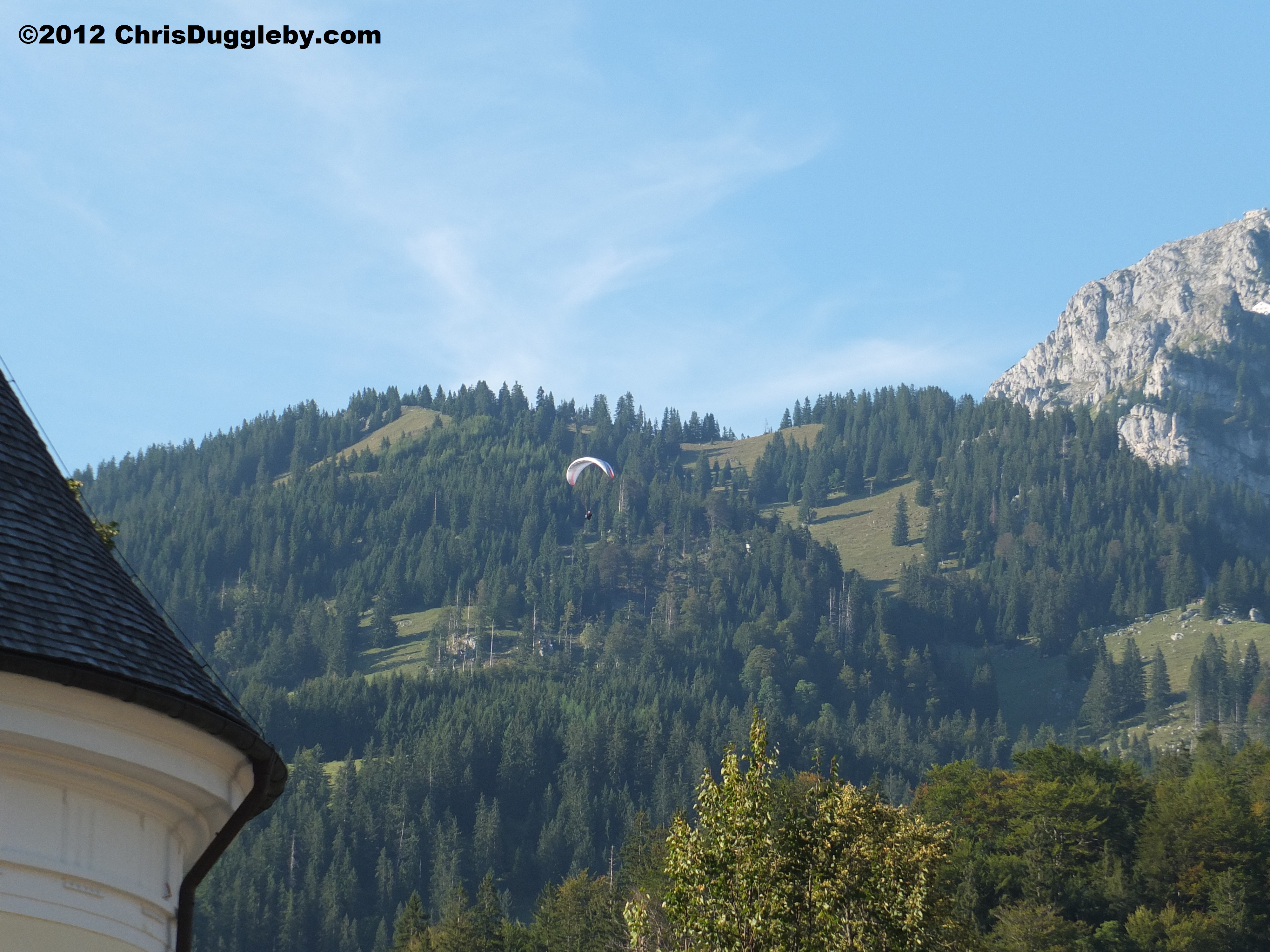
As I was admiring the church something caught the corner of my eye. At first I thought it was a bird but I quickly realised it was a person gliding across the sky having presumably jumped off the Wendelstein.

A novel way of getting from the Wendelstein mountain to St Margareth's Church Bayrischzell
A novel way of getting from the Wendelstein mountain to St Margareth’s Church Bayrischzell

There are a number of ways of getting up and down the Wendelstein but I have to admit the travel guides had not mentioned paragliding as one of them. For those interested in more conventional forms of transport there is the Wendelstein Rack Railway, the oldest rack railway in Bavaria and one of only four in operation in Germany. The train leaves from the station in the village of Brannenburg and takes 20 minutes to reach the peak (and 30 minutes to come down). From Bayrischzell there is also a cable car which was built in 1970.

Paragliding (or hanggliding) one of many ways to get down from the Wendelstein to Bayrischzell
Paragliding (or hanggliding) one of many ways to get down from the Wendelstein to Bayrischzell

There is of course another way of getting up the wendelstein; you can walk all the way. This is something the Bavarian King Max II did in three hours and as a result in 1858 a tree was planted in Bayrischzell to commemorate his royal achievement.

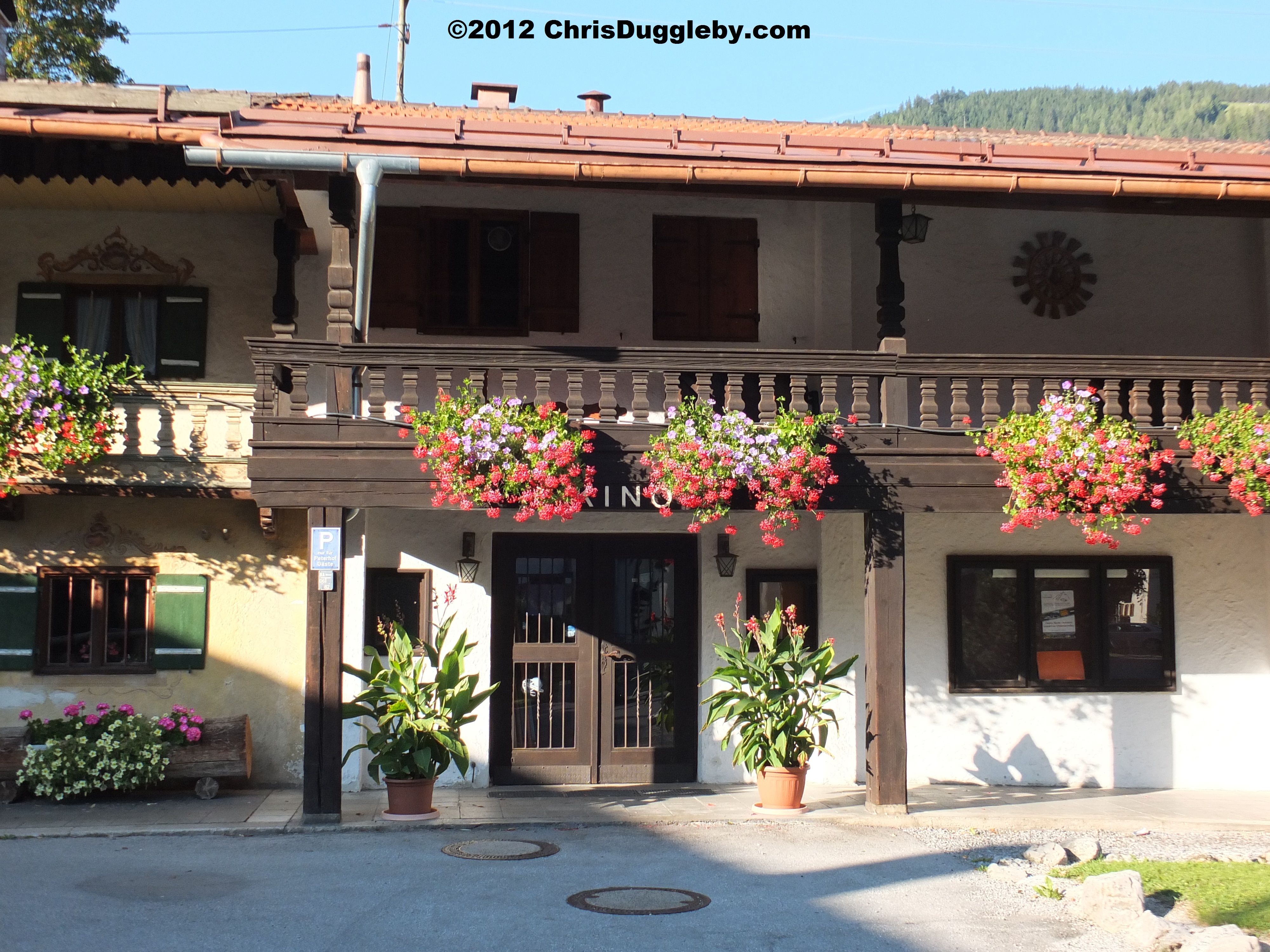
After going up the mountain why not relax upon your return with a visit to the village cinema? There is a really pretty cinema which, when I visited, was decorated with beautiful hanging flower baskets.

Colourful flowers inviting guests to the local Cinema at Bayrischzell

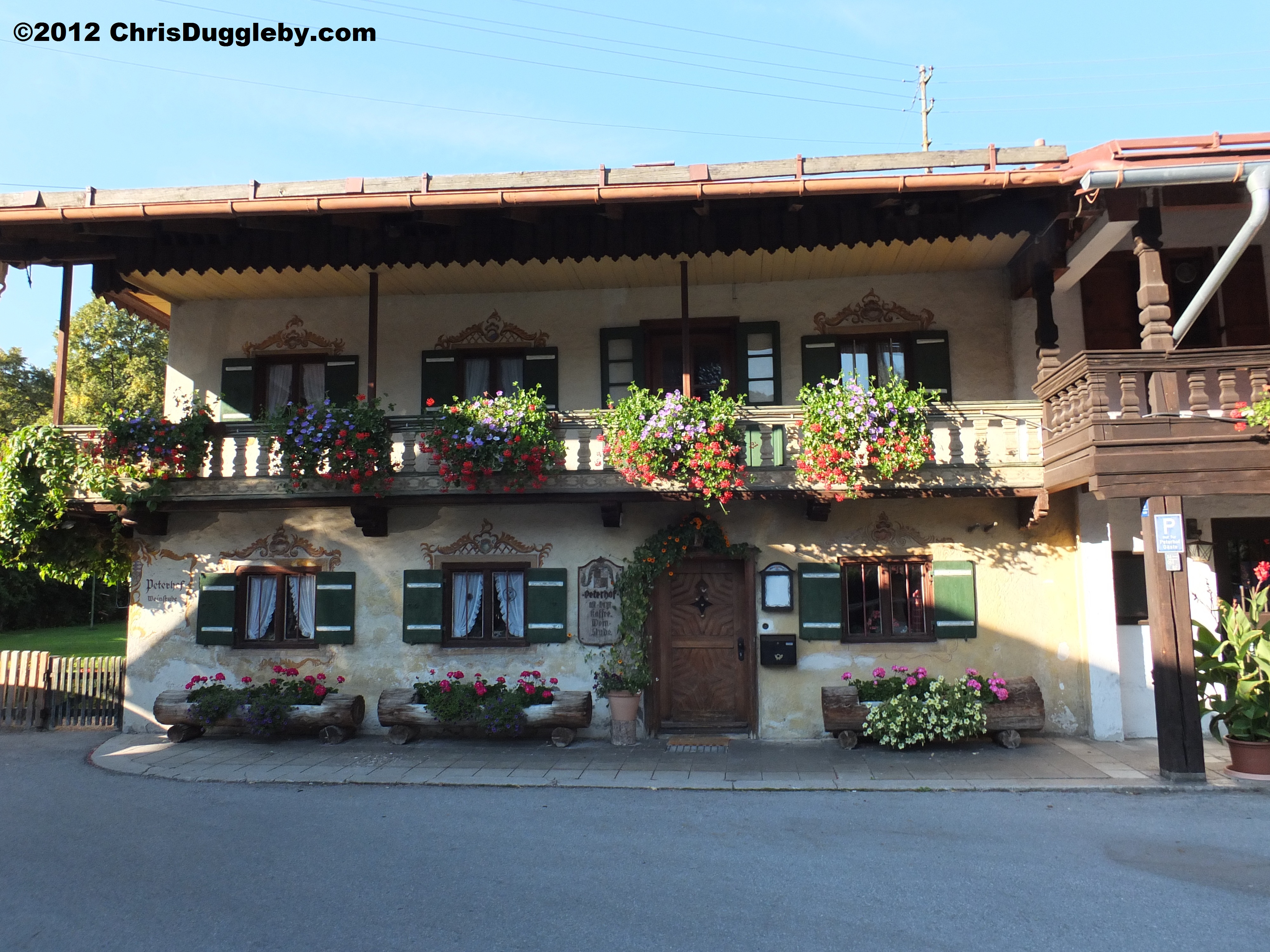
If the cinema is not your thing then there are plenty of cafes and restaurants to visit like the one below.

Peterhof Weinstube one of the many colourful cafes in Bayrischzell on the Deutsche Alpen Strasse
Peterhof Weinstube one of the many colourful cafes in Bayrischzell on the Deutsche Alpen Strasse

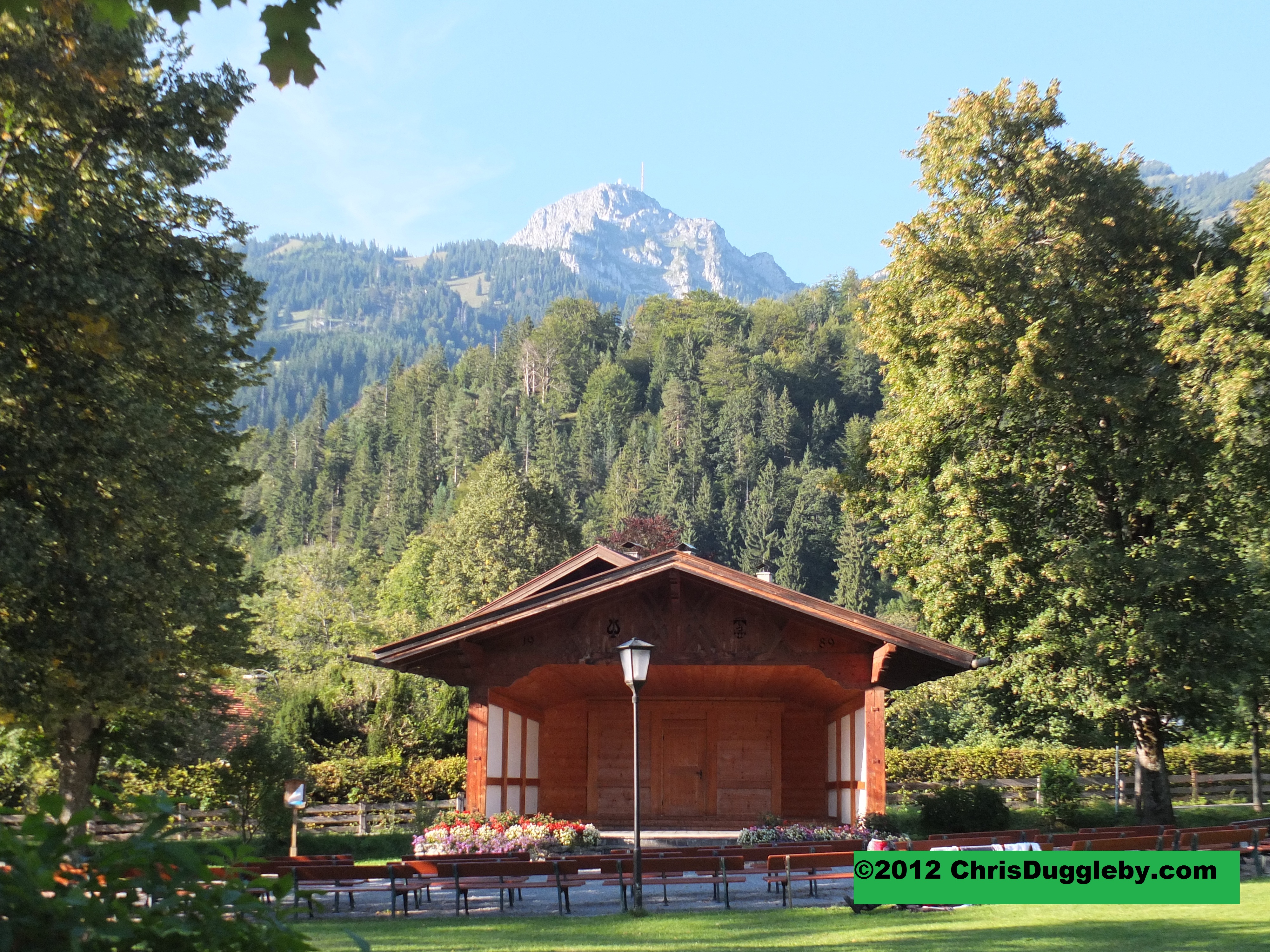
For special occasions every Bavarian village needs to have its own bandstand. However few have a mountain backdrop as impressive as the one below.

A fantastic mountain backdrop for the bandstand at Bayrischzell

Hopefully I have managed to wet your appetite for paying a visit to this beautiful part of the world. Below I have included a Google map so you can easily see where Bayrischzell is in relation to other towns and transportation routes.

Servus

Chris Duggleby

PS. For those interested in finding out more about the Oktoberfest (including lots of photos and a useful Bavarian-English dictionary) the ‘official’ site can be found here.

St Margareth's Church at Bayrischzell with its frescos, early Baroque features and fine 18th century Rococo art
St Margareth’s Church at Bayrischzell with its frescos, early Baroque features and fine 18th century Rococo art

Now prepare for an uplifting experience! 

Thiersee: a delightful Austrian lakeside walk surrounded by beautiful Tyrolean countryside (also Pink Lips goes topless in Mercedes with RISKKO the dog)

While you read why not listen to my album ‘Electro Baroque‘ (all tracks are also available on iTunes using the link here)? Classical music using modern instruments:

or if you prefer to listen to my electro/techno album ‘Studio Valiumm‘ here are the videos (also on iTunes using the link here):

More info about my music is at the dedicated website www.TRANSFORMATES.com

Have you ever heard of the Thiersee Lake? It is hidden in the Austrian Tyrol not far from the border with Germany. The lake is surrounded by some of the most beautiful countryside in Europe and is within an hours drive of Munich or Salzburg. To help set the scene here is a Google satellite map (if you want to check the way from one of the major towns or airports you can expand the map using the minus sign) :

The objective of this week’s blog is to highlight yet another of fantastic little lake in the Austro/German Alps which is only known to insiders. Regular readers may remember my article about the Spitzingsee lake on the German side of the alpine border. If you would like to take a look at this earlier blog entry you can find it here.

Now let’s get back to the Thiersee Lake. It is in the Austrian municipality of Thiersee which until 1504 belonged to Bavaria. The transient nature of the country borders helps us to understand how the communities in these German and Austrian regions feel a special ‘alpine’ bond. They share similar dialects, clothing, customs and sports. If you would like to learn more about their special sporting links you might find my article on Fingerhakeln (Finger wrestling) interesting: the link (with videos) is here. In addition to pulling each other over a beer table with their middle finger the alpine people also like to race each other on their Bullocks. I have also prepared an article on the local Oxenrennen Olympics (Bullock Racing – again with videos) which can be found here.

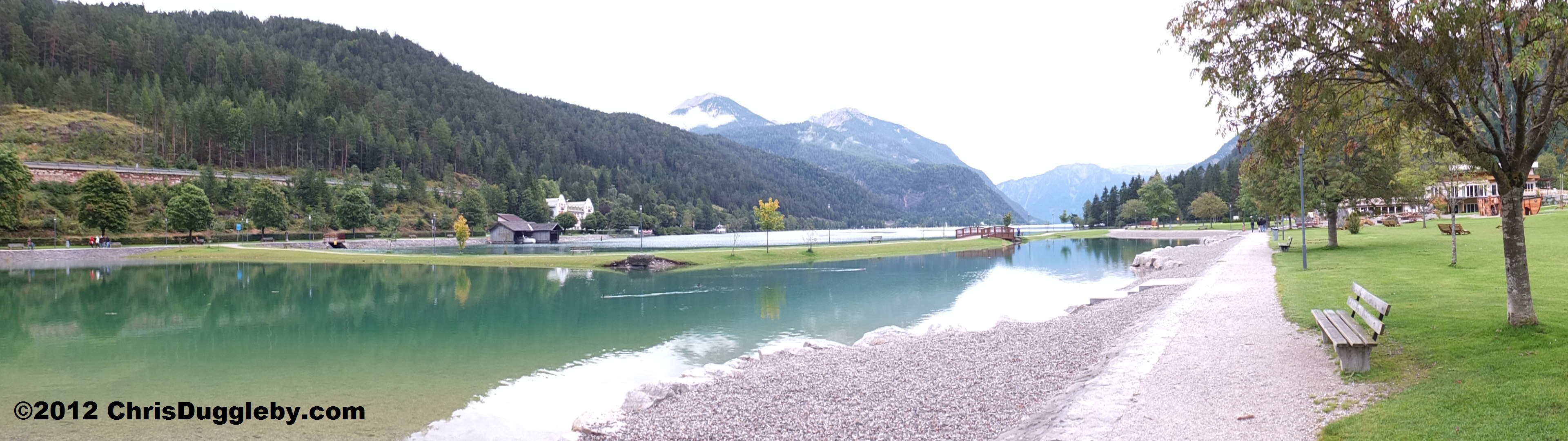
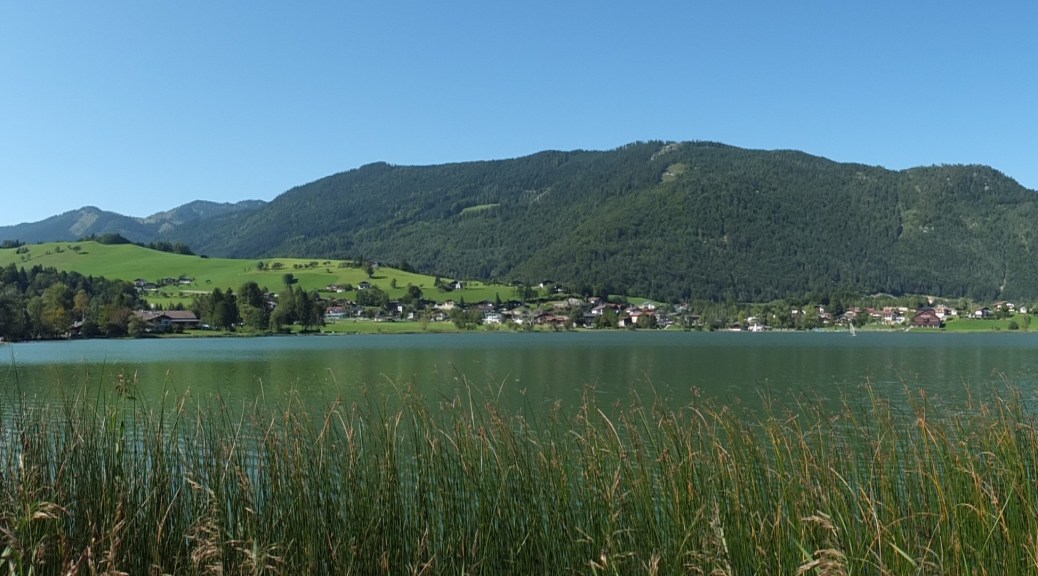
If you are fortunate enough to visit Thiersee the lake has a path which allows you to walk around the perimeter. There is also a well tended, grassed, bathing area near a car park which includes showers and (clean!) toilets. By the way all of these photos have been taken using high definition so if you want to see more detail just click your mouse over the picture (this will help to enhance the panoramic ones which were made using a special ‘panning’ technology).

Panoramic View with lakeside path of Thiersee in the Austrian Tyrol

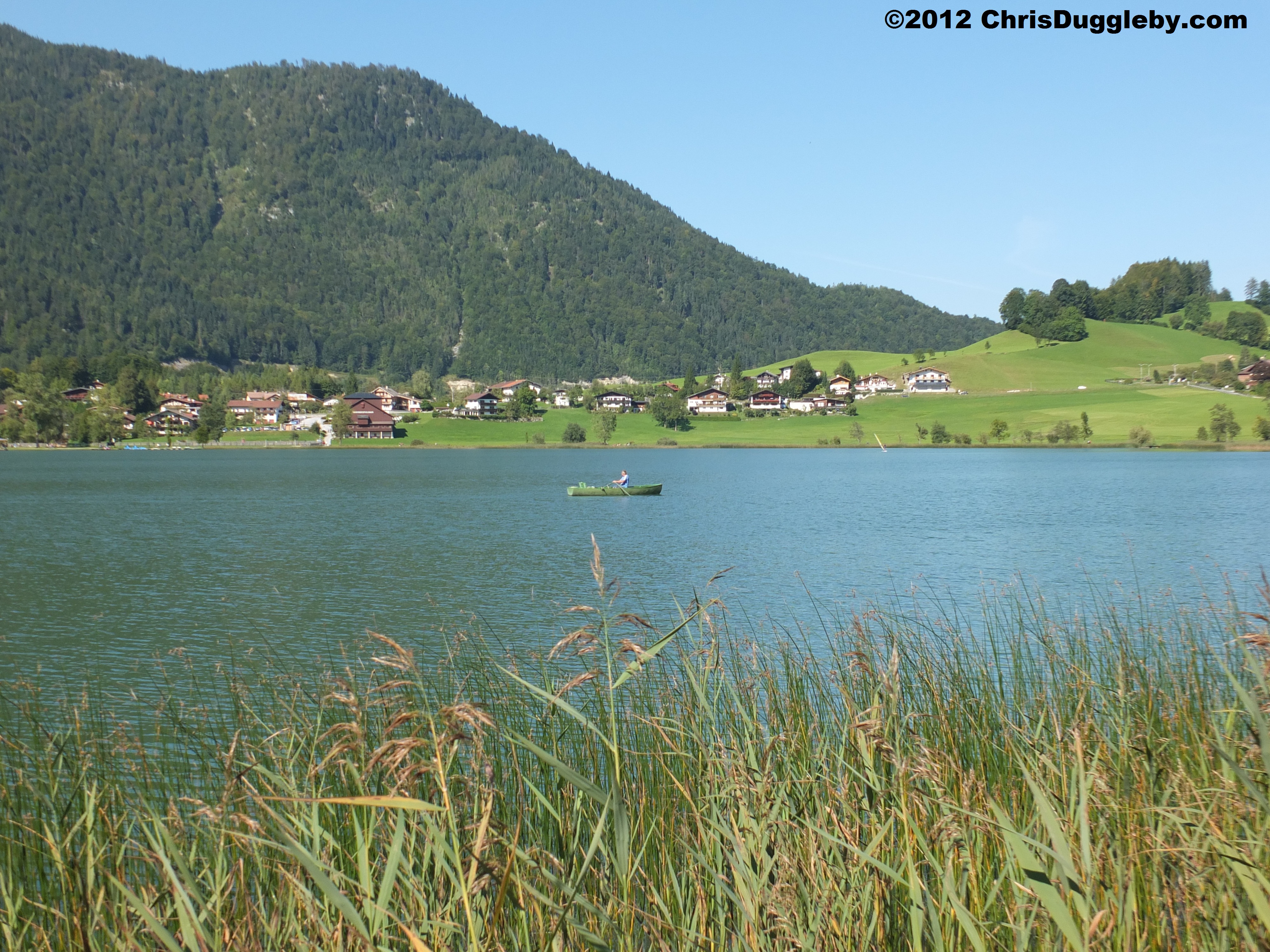
In addition to offering a beautiful location for pleasant walks and bathing the lake also can be used for fishing, sailing and paddle boats. Not surprisingly there are lots of very inviting cafes and restaurants in the village to the north side of the lake.

Rowing Solo on the Thiersee Lake in the Austrian Tyrol

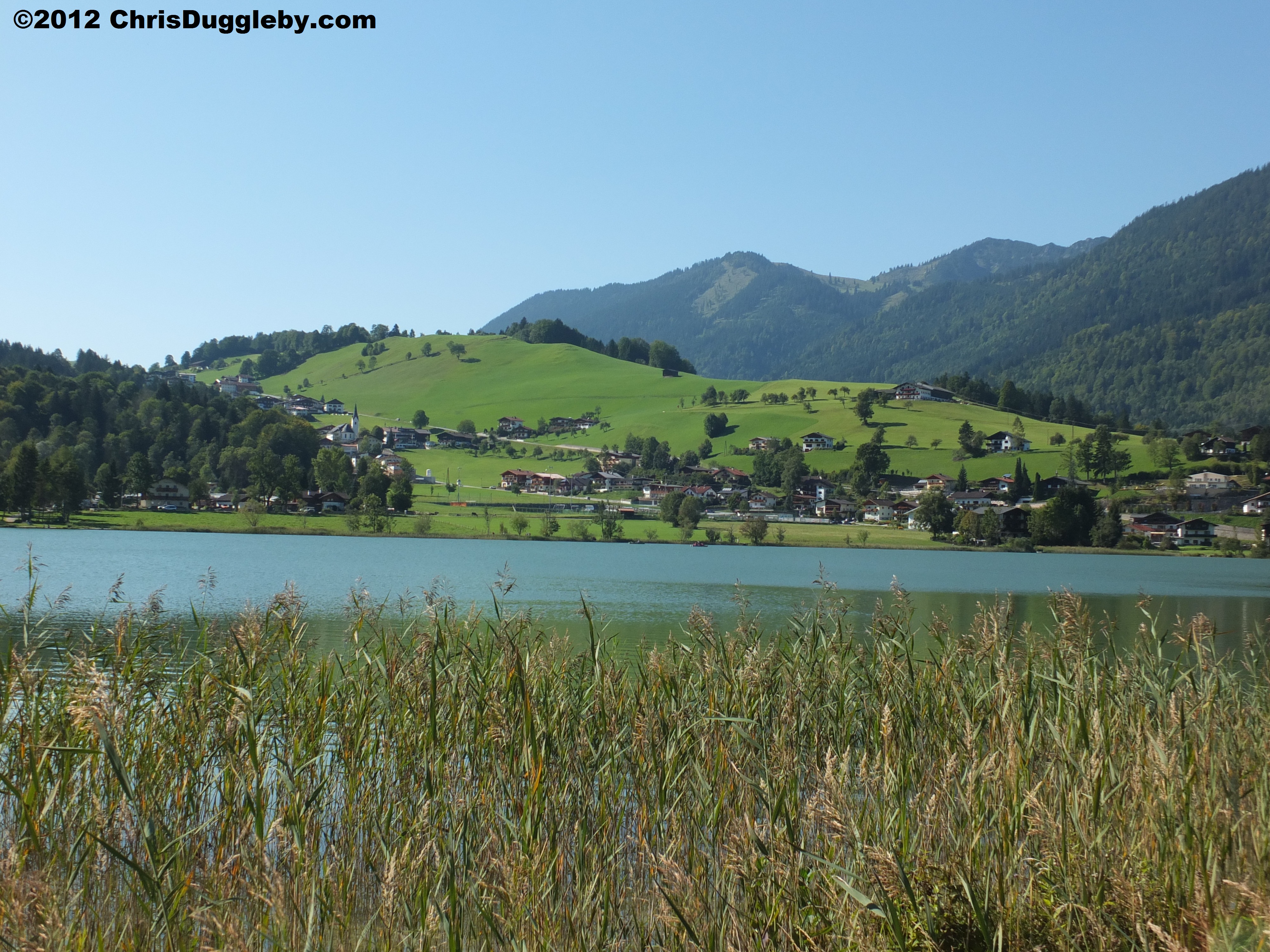
If you are well disposed you might even consider buying or building your home overlooking this alpine paradise. In the post war period this area was used as the setting for 18 Austrian feature films

Tyrolean hillside-living overlooking the Austrian Thiersee Alpine Lake

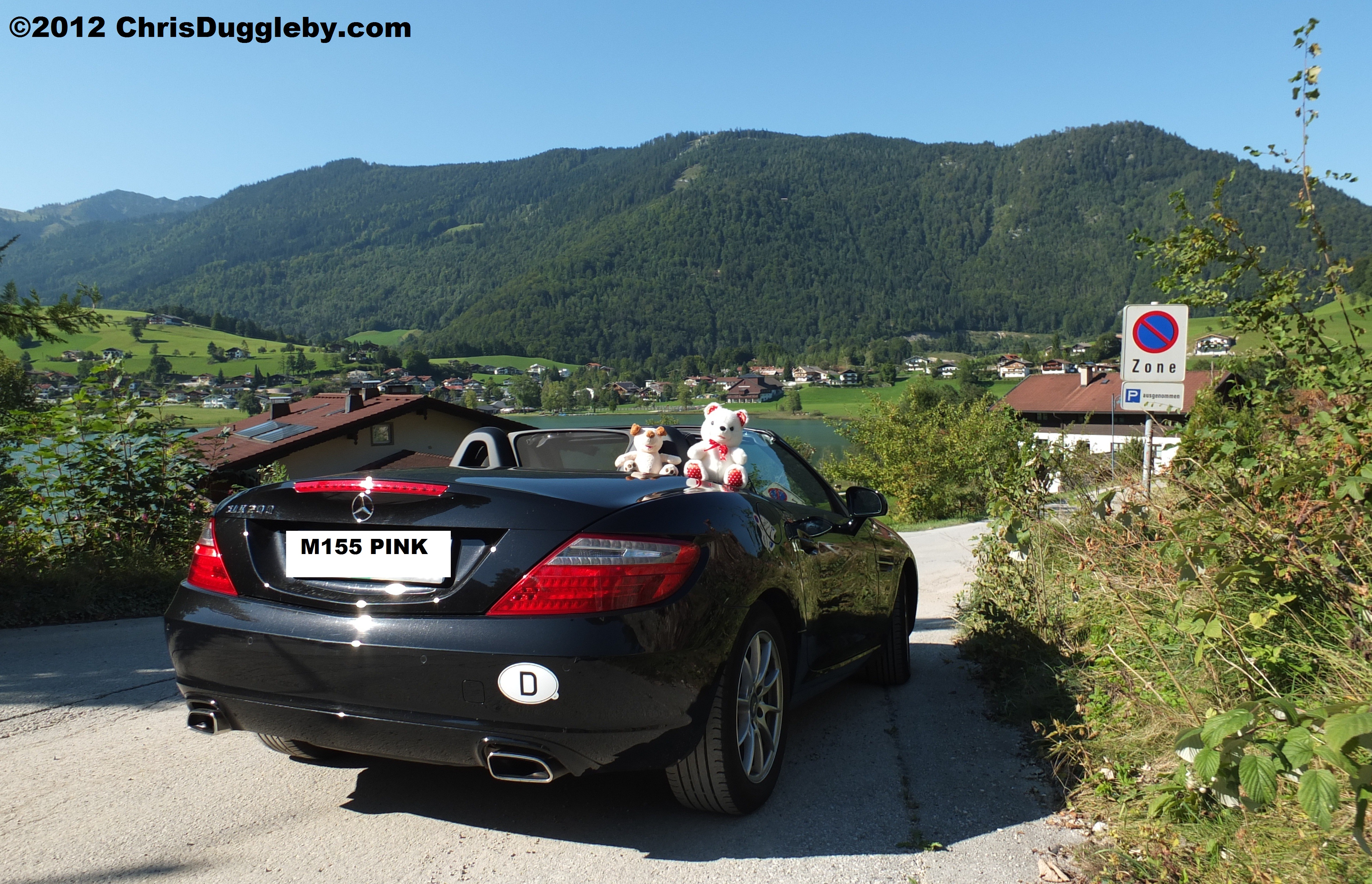
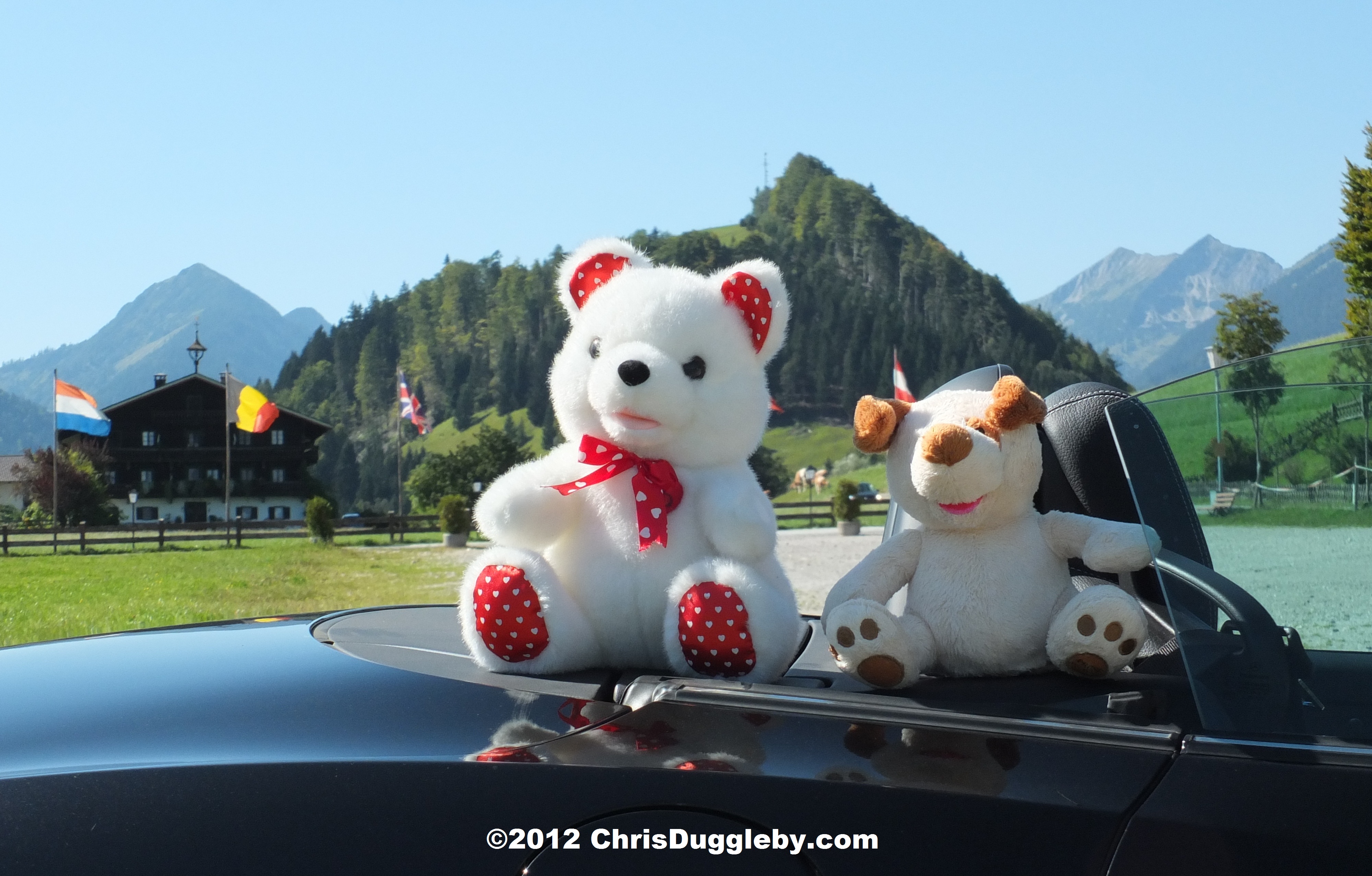
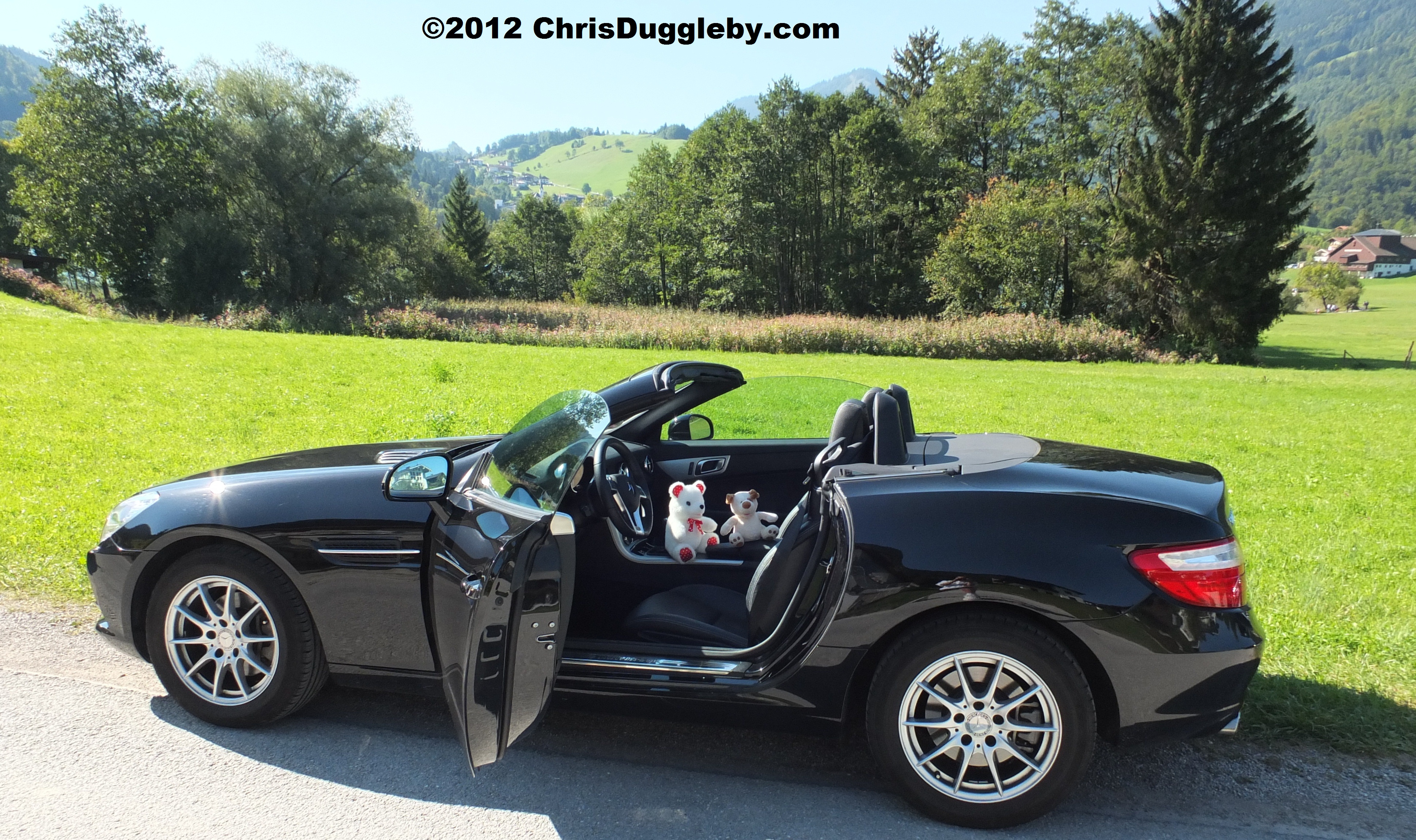
During my visit I was also accompanied by a couple of film stars. Pink Lips just couldn’t resist trying out her new convertible with her faithful guard dog RISKKO. You probably wont find these topless (Mercedes) bathing photos of our royal princess bear in the French press! Thiersee provides a discrete location for the rich and famous to have fun.

Pink Lips with guard dog RISKKO in her Merc SLK above the Thiersee near the Kufstein Mountain
Pink Lips with guard dog RISKKO in her Merc SLK above the Thiersee not far from Kufstein

In addition to the lake there are lots of very pleasant Austrian villages in the surrounding countryside. The one featured below is called Hinterthiersee (on the L30).

2012 Village Scene in the Austrian Tyrol
Village Meeting Point in the Austrian Tyrol
Pink Lips and RISKKO get some Tyrolean mountain sun in her topless convertable Merc
Pink Lips and RISKKO get some Tyrolean mountain sun in her topless convertable Merc

….and finally another widescreen photo taken from the lake……

Panoramic View of Thiersee Lake in the Austrian Tyrol

If you would like me to post more articles of photos from other ‘lesser known’ gems around the Alpine region please do not hesitate to let me know in the comments box below. By the way there is another rather famous event taking place in Bavaria at the moment – but I guess I do not need to introduce readers to the Oktoberfest (which always occurs in September!). After you have purchased your Lederhosen and Dirndl to attend the World’s largest Beer Festival you can bring them with you when you go for a walk around the Thiersee. They are prefered attire in this region.

Chris Duggleby

Pink Lips and RISKKO testing out the topless Merc SLK in the Austrian Tyrolean countryside

Infection from Japanese singer introduced to the West, soil involved in hospital deaths and bavaria’s ‘Call a Kondom’ service in Giesing

********************************************************************************************

STOP PRESS!! Have you tried the YouTube Playlist featuring all of my compositions for the TRANSFORMATES? Here it is:

********************************************************************************************

This week I think most of the Alpine journalists have gone on holiday (well we do have 26C this weekend) so exciting local press articles are a bit thin on the ground. The only thing that caught my eye was an article entitled ‘Call a Kondom’ in the Süddeutsche Zeitung (for our German readers it is here). For the non-german speakers this has nothing to do with finding condominiums in Munich. It describes a ‘Alternative Delivery Service’.

Call a Kondom is the description given to a service offered by the managing director of a Bavaria Petrol service station in Giesing, near Munich. The boss of this establishment, Thomas Piduch, found that he was regularly getting visits from taxi drivers who had been asked to pick-up supplies of urgently needed articles for local residents and hotel guests. He decided to cut out the middle man and now offers his ‘Alternative Lieferdienst’ (= alternative delivery service) directly to consumers. You can order any of the articles normally stocked in the service station including toilet paper, disposable underwear, other ‘personal’ items and various alcoholic beverages, ranging from Dr Pepper to Champagne. These are then promptly and discretely delivered to your door (I think this means ‘Call a Kondom’ is not written on the carrier bag). Service times are from 10:00-20:00 Monday to Friday (well this is Germany!). Apparently he already has had a number of very satisfied clients.

Now let me introduce this week’s cultural item. I would like to share with you something  that I picked up from a japanese singer when I lived in Taipei; I like to refer to this as my unforgettable asian infection. ‘Infection’ is a very moving song which is typical of the quality and emotional offerings of this beautiful Japanese singer/songwriter. Sadly, here in the west we know too little about some of the excellent artistic products coming out of Asia. Having lived and worked in a number of asian countries I hope I can help to rectify this by introducing some of my personal ‘discoveries’ to western audiences.Therefore I have added a fan page for Onitsuka Chihiro the Japanese lady who wrote and sang the song Infection. I have also managed to find some videos of her work to wet your appetite. Most of the lyrics are in Japanese but this does not detract from the power of the music and her lively performances. The fan page can be found here.

The final subject for this weeks blog has a medical flavour (sorry but I spent a very formative part of my youth in the Bacteriology and Virology Department of the Manchester University Medical School). One of the big themes in modern medicine is multiple antibiotic resistance which is rapidly spreading among the killer bugs found in our hospitals. Recent work indicates that this resistance is transferred between the killer bugs in hospitals and the harmless bacteria found in soil. If you would like to read more about this revelation please refer to my article which is here (but be warned the article mentions the potential role of bacterial sex in this process).

Well that’s it for this week. Regular readers probably thought that last week’s blog featuring my collection of assorted tree fungi photos was the pinnacle of web-based excitement and intellectual stimulation. I hope that my Japanese infection, soil bacteria (and their intimate exchanges) and the ‘Call a Condom’ service also live up to your high expectations. By the way if you missed out on the tree fungi they can be found here.

It is time now to watch the Bavarian sun go down and pack my bags for the weekly trek to blighty. Enjoy the week (and watch out for those nasty bugs – especially the Hantaviruses – more info on them here)

Chris Duggleby

Fungi: Max Planck scientist identifies their role in causing rain and fighting climate change in Brazilian Rain Forests (Photos of Pizza Trees in Alpine Forests)

While you read why not listen to my album ‘Electro Baroque‘ (all tracks are also available on iTunes using the link here)? Classical music using modern instruments:

or if you prefer to listen to my electro/techno album ‘Studio Valiumm‘ here are the videos (also on iTunes using the link here):

More info about my music is at the dedicated website www.TRANSFORMATES.com

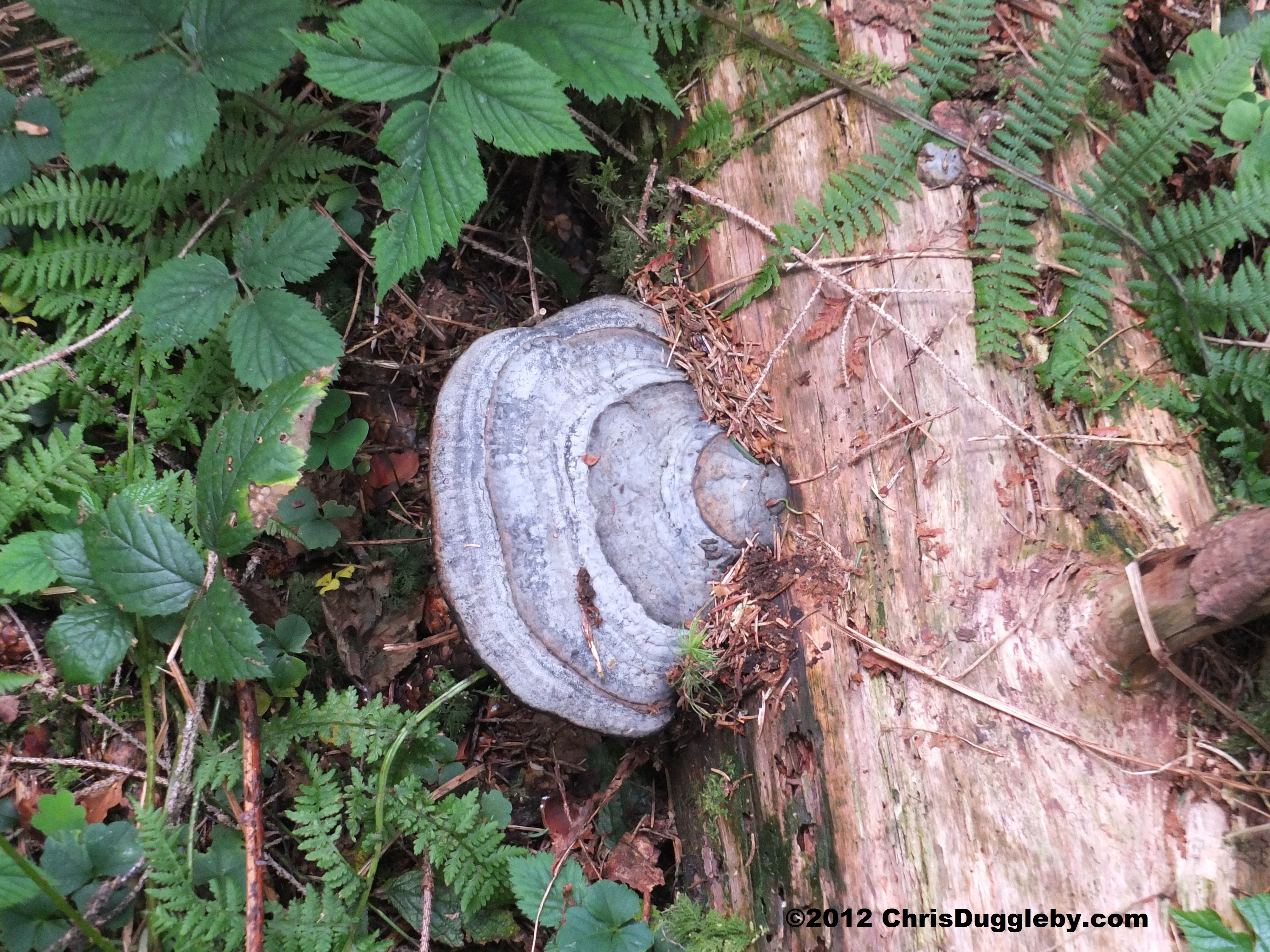
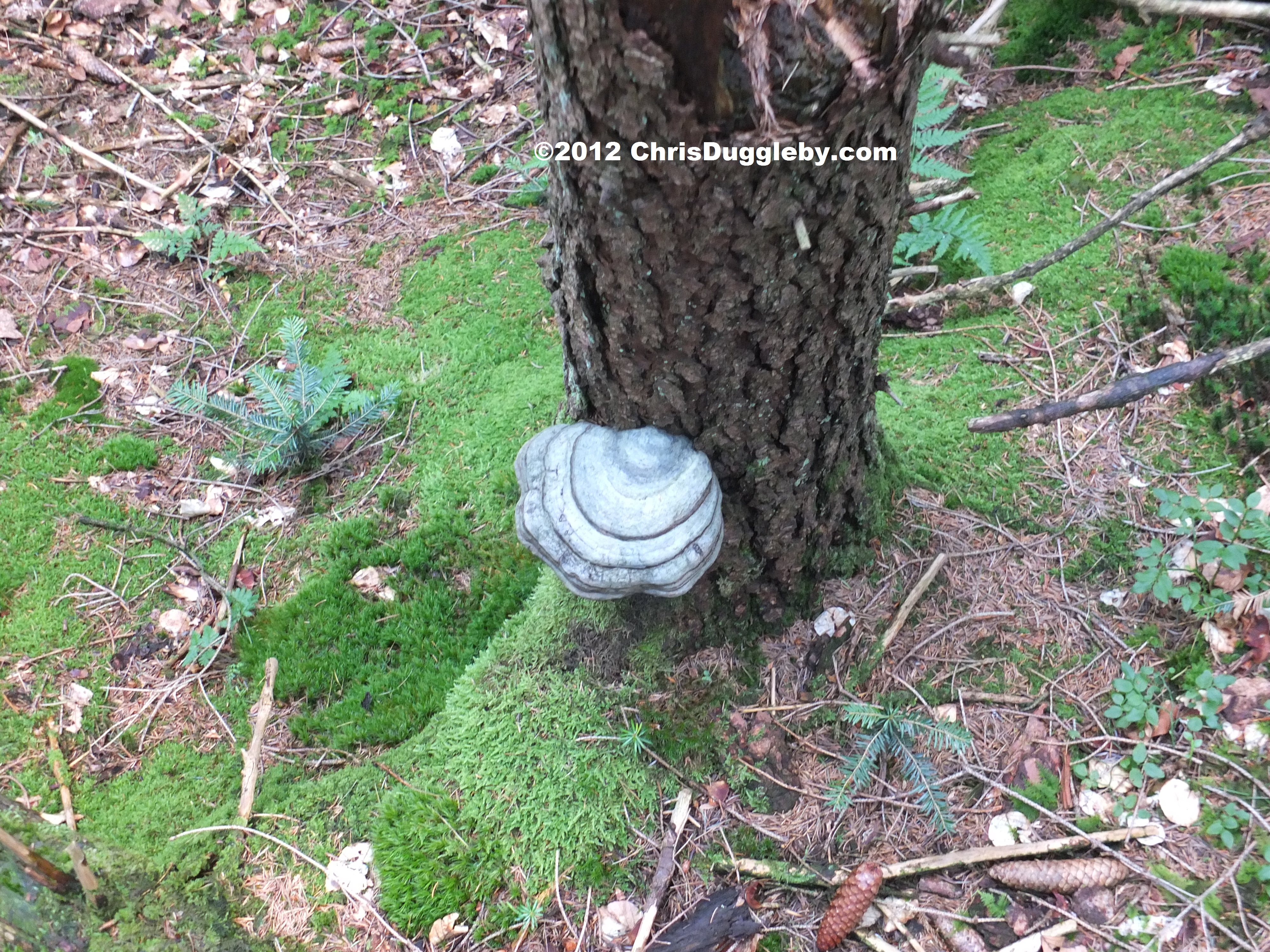
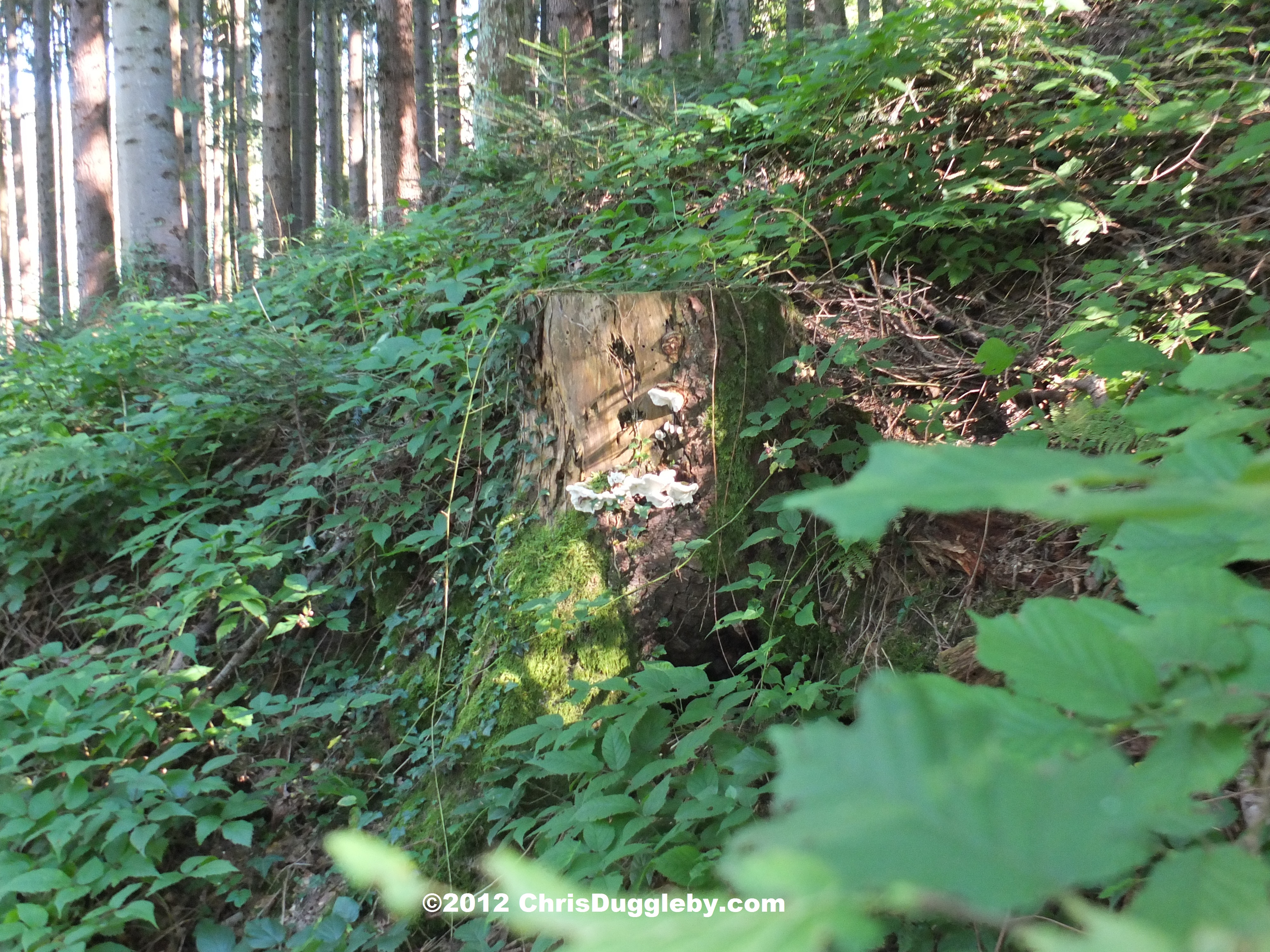
Tree Fungus 1 in the Schwarzenberg forest near Bad Feilnbach, Bavaria
Tree Fungus 1 in the Schwarzenberg forest near Bad Feilnbach, Bavaria

Rain Forests get their name because of the high level of rain they receive. It is generally understood that it is the location of the rainfall that determines the location of the rain forest. However, research published in Science this weekend by the Max Planck Institute for chemistry in Mainz, Germany, provides evidence of the opposite. This research highlights the role played by the forest vegetation, and especially its fungi, in determining where it will rain.

Fungi, as part of their reproductive process, emit potassium salts into the atmosphere when they launch their spores. These potassium salts combine with organic compounds which are also given off by the forest vegetation to create minute atmospheric particles, or aerosols, which provide a surface upon which water vapour can condense and create rain droplets. This condensation is similar to the process that turns water vapour into dew drops on the grass at sunrise or leads to condensed water ‘misting’ on a cold window pane.

Those of us fortunate enough to live near forests are well aware of the wonderful smells and refreshing atmosphere we enjoy walking through these woodlands, especially after it has rained. This comes from a combination of factors including the many organic compounds given off by plants and the high concentration of oxygen created when vegetation removes carbon from carbon dioxide as part of the process of harnessing energy through photosynthesis.

Christopher Pöhlker, a graduate researcher at the Max Planck Institute has been evaluating the emissions from vegetation in the Brazilian Rain Forests near Manaus as part of his PhD studies. Using an 80 meter high tower over the forest he obtained three different kinds of aerosol samples from the air. It is these aerosols which are believed to play a key role in converting the moisture in the atmosphere into mist or droplets of rain. They are, in effect, acting as tiny rain ‘catalysts’.

The aerosol samples were analysed by Pöhlker and his coworkers using the new technique of Scanning Transmission X-Ray Microscopy with Near Edge X-Ray Absorption Fine Structure (STXM-NEXAFS). He expected to find out which volatile compounds, like isoprene, were given off by the plants in the rain forest and wanted to understand their composition. These organic compounds were predicted to be mainly made up from carbon, oxygen and nitrogen. However, to the researcher’s surprise, he found a high percentage, up to 20%, of potassium in the aerosol samples taken from above the rain forest.

This potassium is believed to come from the spore releasing mechanism of the forest fungi. It creates nanometer to micrometer sized condensation ‘nuclei’ to which the other organic molecules in the forest biosphere can stick. These aerosols formed by combining potassium salts with the organic gel-like substances are very effective in converting water vapour to mist and droplets of rain. As a result fungi and plants can have a direct influence on the number and properties of aerosol particles in the air and thereby on the formation and composition of mist and clouds: they are able to influence the amount of precipitation occurring over the rainforest

So next time you take a walk through the forest and admire the beautiful flowers and butterflies (photos featured in some of my recent blogs here and here) take some time to also consider the important role of the humble fungus. This research underscores the crucial part fungi play in maintaining the balance and health of our ecosystem. They may even help us to avoid the worst effects of climate change by ensuring the forests of the world get enough rain to carry out their vital carbon dioxide purging role.

As a tribute to these heroes of the forest biosphere I have added some photos taken over the last couple of weeks of some of the beautiful fungi decorating my local alpine forests (when there was a break in the rain!).

If you are interested in other similar forest and wildlife news issues please either visit my blog archives here or check out the Alpine News archive which I use to bring important news items to the attention of the non-german speaking international community. These articles can be found here.

Enjoy the fungus (and treasure it),

Chris Duggleby.

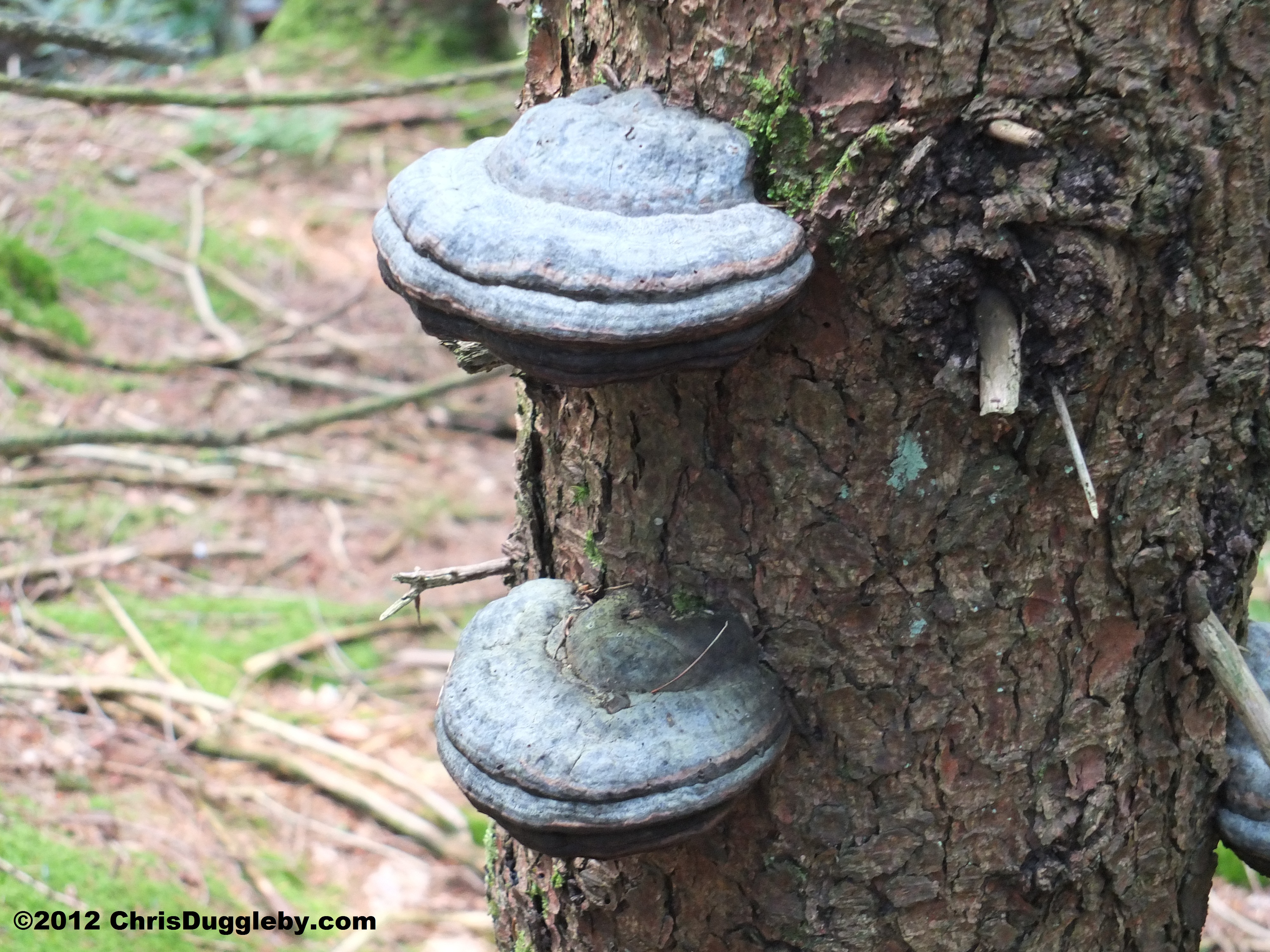
Tree Fungus 2 or natural Schwarzenberg Forest 'Pizza' from the Bavarian Mountains
Tree Fungus 2 or natural Schwarzenberg Forest ‘Pizza’ from the Bavarian Mountains
Tree Fungus 3: More Black Mountain Pizza from the Schwarzenberg Forest in Bavaria
Tree Fungus 4 from the Schwarzenberg Forest above Bad Feilnbach in Bavaria
Tree Fungus 4 from the Schwarzenberg Forest above Bad Feilnbach in Bavaria
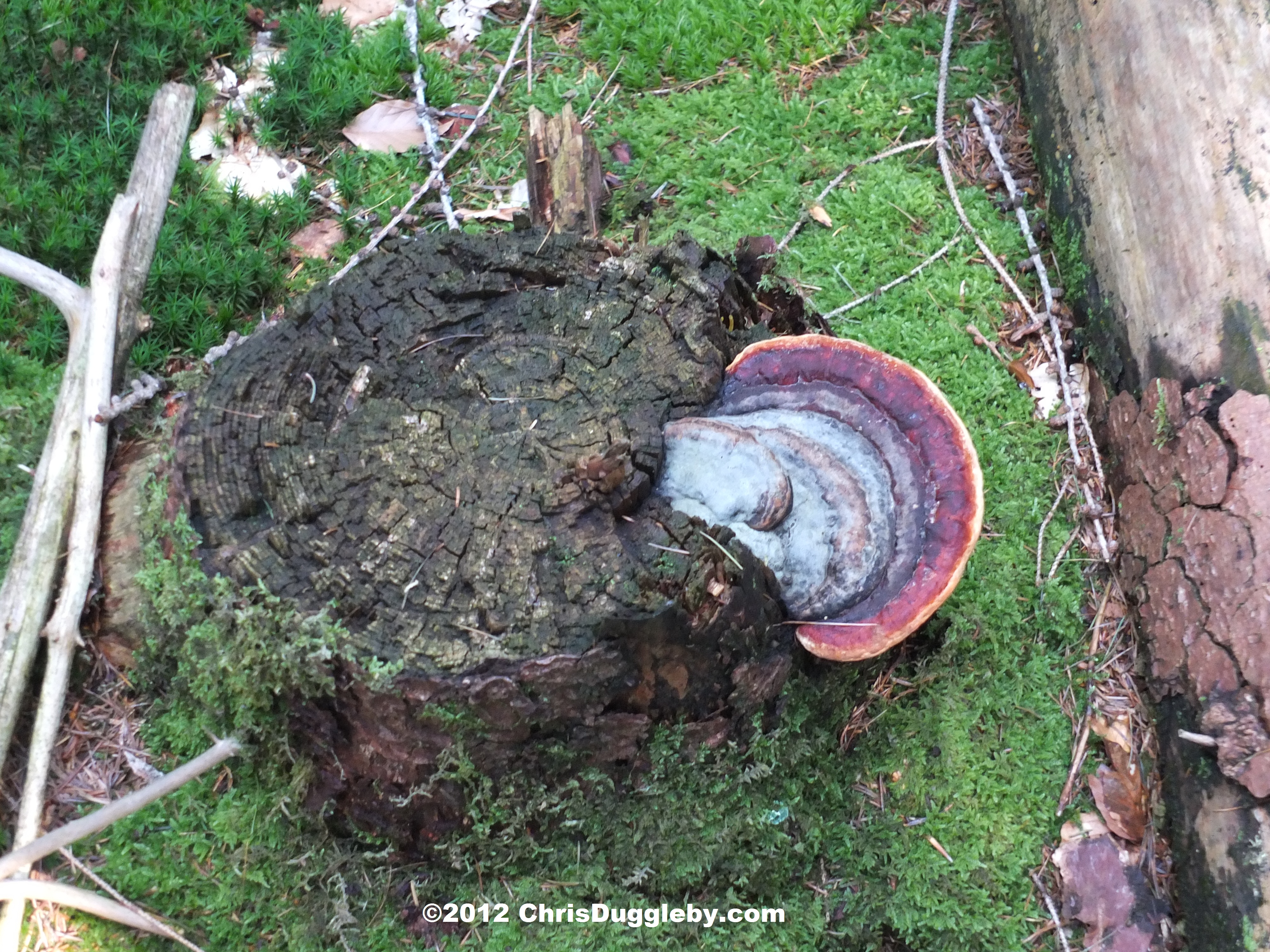
Tree Fungus 5: Bright red pizza from the Schwarzenberg Alpine Forest
Tree Fungus 6: Salami and Ice Cream growing on a tree in the Schwarzenberg Forest
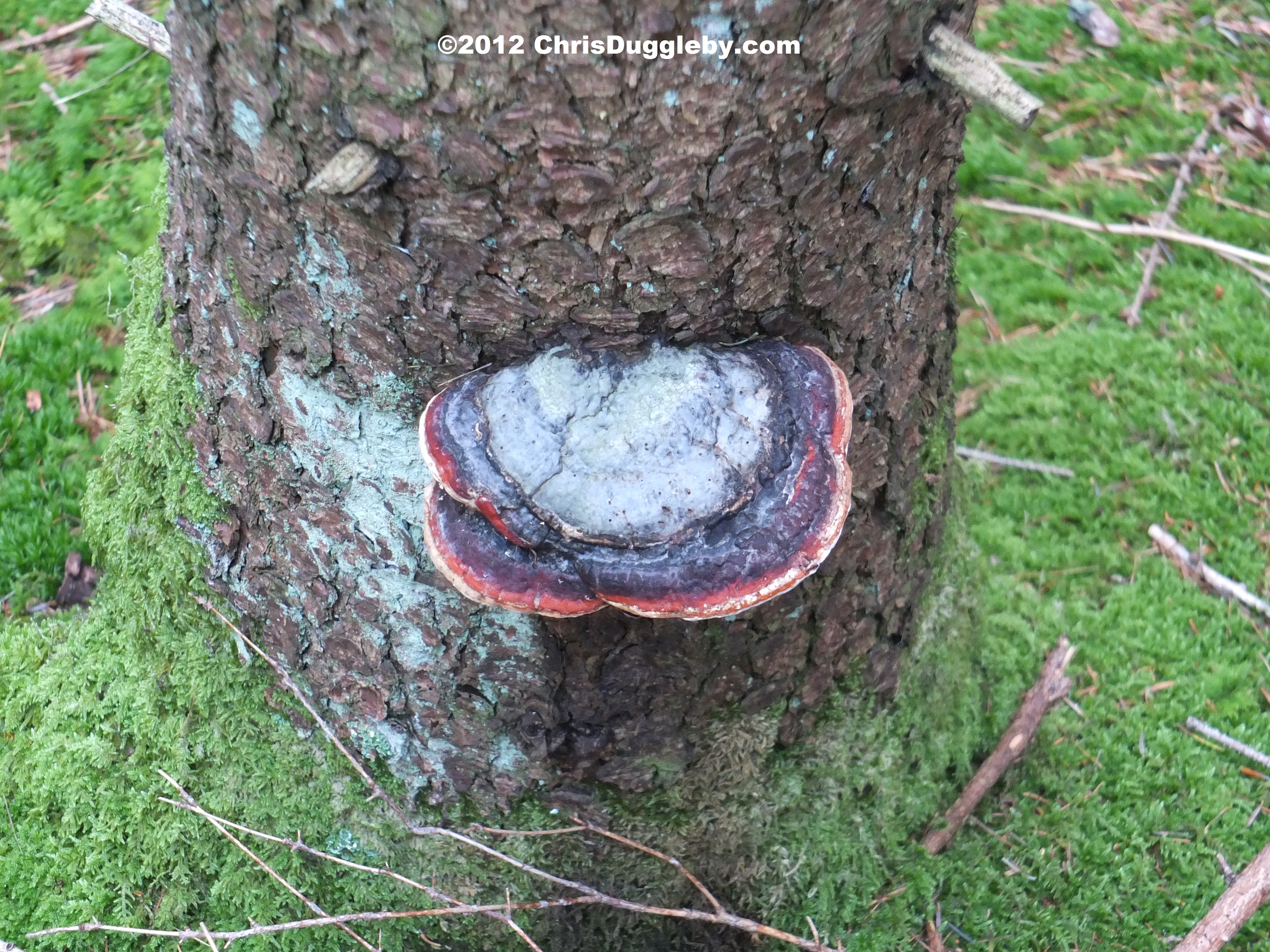
Tree Fungus 7: Blue White Bavarian Flag Pizza growing in the Schwarzenberg Forest
Tree Fungus 8: Twin Blue Cheese Pizzas growing in the Schwarzenberg Forest
Tree Fungus 9: Spectacular Salami Pizza from the Schwarzenberg Forest
Tree Fungus 10: Double Salami with Mozzarella Pizza tree growing in the Schwarzenberg Forest
Tree Fungus 11: Triple Deep Pan Pizza with extra topping growing in the Schwarzenberg Forest near Bad Feilnbach
Tree Fungus 11: Triple Deep Pan Pizza with extra topping growing in the Schwarzenberg Forest near Bad Feilnbach
Tree Fungus 12: Snow White Popcorn growing in the Schwarzenberg Forest
Tree Fungus 13: a fresh Popcorn Tree in the Black Mountain Alpine Forest
Tree Fungus 14: golden shoots springing out of the ground in the Black Mountain forest
Tree Fungus 15: close-up of Black Mountain gold seams near Bad Feilnbach
Tree Fungus 15: close-up of Black Mountain gold seams near Bad Feilnbach

If you would like to learn more about this research project from the Max Planck Institute you will find more information (in German) here and (in English) here. I am indebted to them for providing me with a timely excuse to publish my recent photographs of fungi from the Alpine Forests. In addition to Christopher Pöhlker, acknowledgments to Dr. Ulrich Pöschl and Prof. Dr. Meinrat O. Andreae, all of the Max Planck Institute for Chemistry in Mainz and their co-researchers in Germany, Brazil, India and the US. The original paper ‘Biogenic potassium salt particles as seeds for secondary organic aerosol in the Amazon’ was published in Science on August 31, 2012.

Now prepare for an uplifting experience! 

Men in lederhosen test their bullocks (videos); bubble tea cancer worry; herpes and animal cruelty; Germany’s sex tax

********************************************************************************************

STOP PRESS!! Have you tried the YouTube Playlist featuring all of my compositions for the TRANSFORMATES? Here it is:

********************************************************************************************

In this weeks blog I would like to bring to your attention a number of interesting subjects emanating from the alpine region. A couple of the articles are related to traditional alpine sports which I believe justify wider international coverage. I have also prepared two articles about animal health issues with serious implications for humans. Another article deals with nutrition and consumer health, and the last item relates to an important development in Bonn which could help other nations in their struggle to raise additional tax income.

This is rather a lot for one week because we had extremely good weather in the alps last weekend. Good weather meant that I had no excuse not to do some exercise and trek up the mountain a couple of times. This prevented me from providing an update to the blog last week. I was however able to write a couple of articles adapted from the local news which are included in the summaries below. This weekend it is raining again!

Sport in Bavaria

1. Fingerhakeln

Do you know what Fingerhakeln is? I was surprised to hear that my son in Vienna was unacquainted with this sport. However if you take a look at the video’s attached to the article you will see the impact this sport has on a participant’s middle finger. Since my son is a programmer his middle finger comes in quite useful for his job. Therefore any injuries to this digit could seriously impact his earning potential.

It is quite difficult to describe Fingerhakeln in words (although I have tried to in the article) so I do recommend that you take a look at the videos. By the way, in the video fingerhakeln is not what the two men joined by their necks are doing on the floor; this is another traditional Bavarian sport.

If you want to understand more about Fingerhakeln the article, and the embedded videos, are here

2: Ochsenrennen

Rather than write a separate article on this Bavarian sport let me describe it here. Try to imagine a land were people like to race with each other on the back of four-legged animals. Now try to imagine this in a place where there are not many horses (and the dogs are pretty small). In this place there are lots of cows and because of the plentiful supply of grass these cows are big and very strong.

These cows are the ‘Ochsen’ or to use a slightly more westernised term “bullocks”. Whereas fingerhakeln did not require much equipment (one finger to be precise) bullock racing requires a bullock. Therefore it can be considered a kind of ‘Upper Class’ alpine sport – a bit like horse racing in England. Although horse racing is often called the sport of Queens you will not find a single Queen participating in the alpine bullock races. Here we just have lots of well-built chaps dressed in traditional Lederhosen. In this respect it is quite similar to Fingerhakeln.

The reason I am introducing you to Bullock Racing now is that today we have the big Münsinger Ochsenrennen (‘Rennen’ is the German word for races). This is a huge event not dissimilar to the final of the Champions League in Football or the Grand National horse race in the UK. Rather than trying to explain all the details of how these brave Bavarian men and their trusty steeds battle it out on the alpine prairie why don’t you take a look at the video. Here come the Lederhosen Jockeys!

27th August update: STOP THE PRESS! I may have accidentally mislead readers with my comments about not having any Queens at the Ochsenrennen. If you take a look at the yesterdays photos from Münsing (courtesy of today’s Süddeutsche Zeitung) you will see on photo number 3 that we do indeed have a Princess participating in the Bullock Races; Jockey number 4 is indeed a very pretty Bavarian girl appropriately dressed in Lederhosen. Do not let it be said that Ochsenrennen is not an equal opportunities sport. The photos can be found here.

Animal Health Articles

The first of these articles describes how a polar bear caught herpes off a zebra. Fortunately this is not a particularly common occurence due to the fact that in the wild polar bears don’t tend to shack up with zebras. This is especially fortuitous because rather than simply picking up an unpleasant cold sore one of the infected polar bears died from the equine herpes virus.

This infection was instigated by humans. We placed the Polar Bears and Zebras much closer together than would be the case in nature and facilitated the transmission of the disease between them by ……………

…… to avoid any further deterioration in my repetitive strain injury I will not duplicate the gory details of what happened here. If you would like to find out exactly how the polar bear got herpes from the zebra please read my article which you can find here.

The second animal article this week is also a story of an animal tragedy caused by humans. Sometimes we think we are being kind to our pets but in reality we have the opposite effect. Find out how an old lady faces a court accusation of cruelty to her Pekingese dog and discover the other unpleasant things she threatened to do (to the vet) here.

Human Health and Nutrition

Since it was invented in Taiwan bubble tea has become very popular around the world. Scientists in Germany have carried out research into the ‘Bubbles’ and have come up with some potentially serious findings. If you, your friends or family like to enjoy a drink of bubble tea it will be worth reading about what these scientists have discovered. My bubble tea article can be found here.

Taxing ‘Financially Remunerated Romantic Activities’

Since this is a family blog I am trying to avoid the use of words which some of my readers will consider unsuitable for those members of the family who are not yet 21 years of age. I have therefore invented a new 4 letter ‘F’ word. I think the grown ups will know what I mean when I write about ‘Financially Remunerated Romantic Activities’ (or FRRAs). In Bonn they have introduced a tax during 2011 for FRRAs and recently the time arrived to determine whether this tax had been a success or not.

This article will explain the situation and also describes a fantastic innovation: a self-service FRRA permitting machine. No wonder this country leads the world in technological inventions (well at least as far as FRRA permits are concerned). Read more about these fiscal (and the associated physical) advances here.

Well that is all for this week. Please let me know if you have any feedback on the content or choice of articles I have presented. I am considering starting up a movement to get Fingerhakeln and Bullock Racing included in future Olympic Games. If you are interested in supporting this ‘Lederhosen Olympic Sports Initiative’ please let me know.

Happy Hakeln!

Chris Duggleby

Should we be playing with killer diseases?/Worrying trend of infections from rodents

********************************************************************************************

STOP PRESS!! Have you tried the YouTube Playlist featuring all of my compositions for the TRANSFORMATES? Here it is:

********************************************************************************************

In order to maximise the time available to enjoy the good weather in the mountains I will be keeping this week’s blog short. I have however spotted a couple of thought-provoking items in the alpine press (well actually one wasn’t strictly from the local press but I spotted it in the plane on the way over from London).

The first article concerns a debate that is raging about whether we should be carrying out experiments on extremely dangerous……………

To avoid duplication why don’t you take a look at the article. Here is the link.

The second article will hopefully be of interest to readers from both the US and Europe (and Asia). It concerns the potential killer’s that can be found in our cellars and garages. In addition to discussing what these killers are the article has some tips from the professionals on what to do to minimise the risk to yourself and your family.

The link to this article is here.

To avoid subjecting you to too much sensory deprivation with so many text-based articles here are some photographs I took of butterflies during my trip up and down the Schwarzenberg mountain this afternoon. Hopefully it will provide a little light relief from all the stuff about killer diseases. We are surrounded by lots of nice things – we just need to open our eyes.

Have a great week,

Chris Duggleby

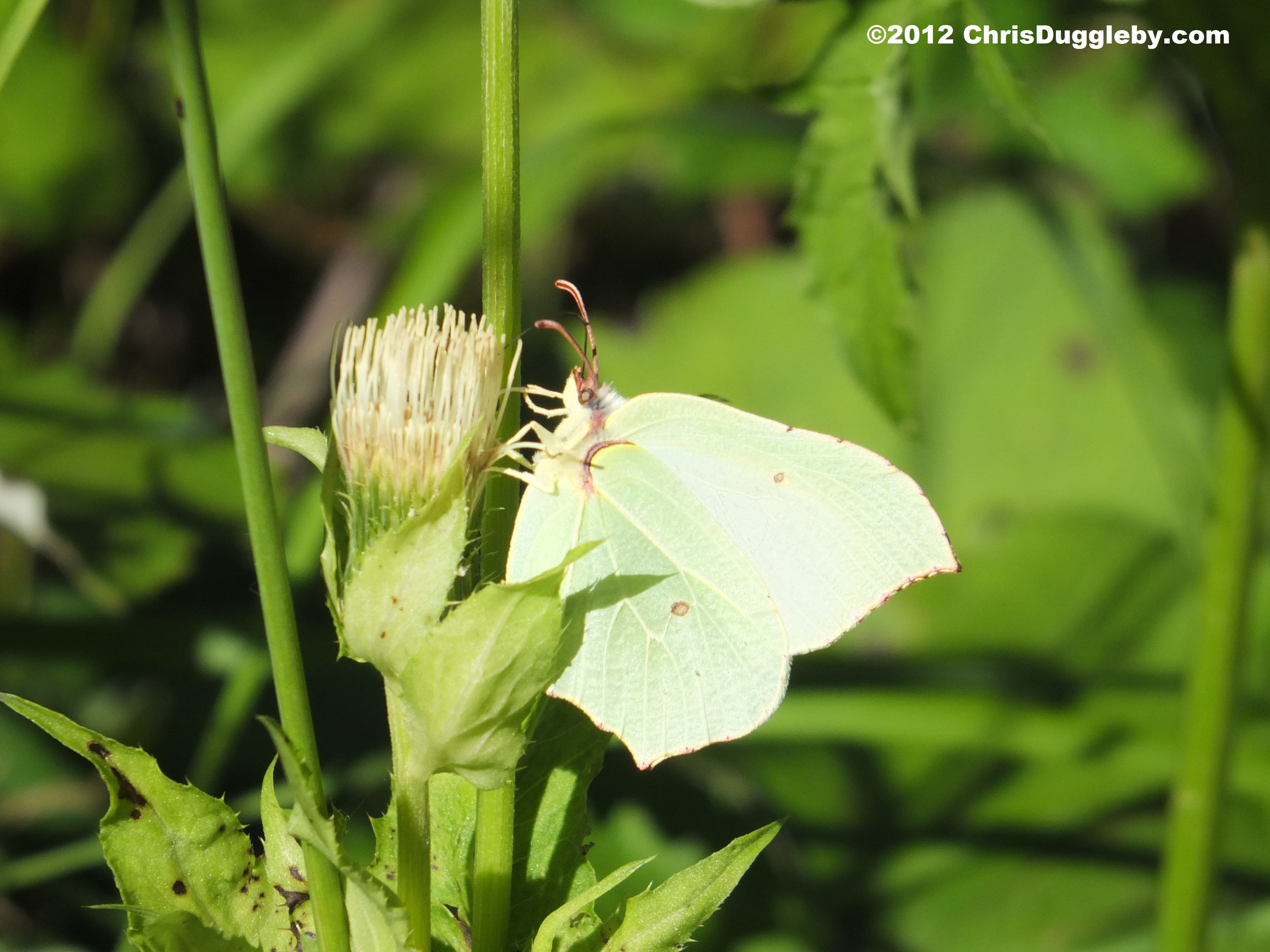
Butterfly 1 in the Schwarzenberg forest near Bad Feilnbach, Bavarian Voralpenland
Butterfly 1 in the Schwarzenberg forest near Bad Feilnbach, Bavarian Voralpenland
Butterfly 2 in the Schwarzenberg forest near Bad Feilnbach, Bavarian Voralpenland
Butterfly 2 in the Schwarzenberg forest near Bad Feilnbach, Bavarian Voralpenland
Butterfly 3 in the Schwarzenberg forest near Bad Feilnbach, Bavarian Voralpenland
Butterfly 3 in the Schwarzenberg forest near Bad Feilnbach, Bavarian Voralpenland
Butterfly 4 in the Schwarzenberg forest near Bad Feilnbach, Bavarian Voralpenland
Butterfly 4 in the Schwarzenberg forest near Bad Feilnbach, Bavarian Voralpenland
Butterfly 5 in the Schwarzenberg forest near Bad Feilnbach, Bavarian Voralpenland
Butterfly 5 in the Schwarzenberg forest near Bad Feilnbach, Bavarian Voralpenland

If it moves ban it, tax it, or give it a fine (especially horses, cows, snakes and women)!

I am sure some of my readers may consider the title of this week’s blog to be a bit provocative. The idea of regulating (or more precisely over-regulating) these dear cows as they eat grass is abhorrent and I feel it is time to bring these issues to the attention of the civilised World. This week I came across a number of articles in the alpine press which indicated that some people in authority are prepared to use their powers to ban, tax or fine innocent animals (specifically cows trying to make milk) which are just trying to go about their normal business. Repression appears to be alive in the heart of Europe.

When taken at face value the articles I have reviewed may appear to indicate that authorities in the civilised world are going mad. However, I prefer to consider them to be symptoms of something much more wonderful: the German sense of humour.

On my travels across the world I have often heard people comment that ‘the Germans don’t have a sense of humour’. Usually my reply to this has been that in my experience German people do have a sense of humour but you need to have a good understanding of the language to appreciate the joke. You also you need to look in some rather unusual places to see German humour at its best.

So this week I have reviewed four articles which for me reconfirmed that the German-speaking Peoples do have a sense of humour. You should keep this in mind when you read about some of their more excentric proposals about the creation of unusual rules and laws. In the end sanity usually prevails – but you can have a lot of fun on the way.

Article 1: Horse Poo crimes in Berlin

This is a subject which is getting ever more attention from the Berlin Public Order Authorities. The article explains the nature of the problem and what can happen to you if you get on the wrong side of the Horse Poo authorities (Berlin staatlischen Pferdescheiß Behörden). It also describes how some of the best technical brains are working on an innovative solution to ensure that visitor’s encounters with poo are kept to an absolute minimum.

The article can be found by clicking here.

Article 2: Proposed tax on snakes in Cologne

Snakes (Schlangen) are becoming an increasing problem on the streets of Cologne, particularly after hours. At the same time, like many cities, the authorities are trying to find ways of raising more taxes. The proposed solution is pretty simple: tax the snakes (Schlangensteuer). This article explains in more detail what kinds of snakes the authorities are considering taxing and how the tax will be applied (here the length and width of the snakes is quite important). Interestingly the biggest snakes tend to be found outside of Cologne’s discos and pubs.

If this brief summary is enough to wet your appetite please take a look at the article which can be found by clicking here.

Article 3: Men Only Slides at the Water Amusement Park in Erding

Clearly ladies (and especially German ones) are not poor defenceless animals but my attention was drawn to this article because it followed on so closely after the ‘men only parking spaces‘ in the German town of Triberg (if you would like to read that article just click on the link here). When I researched a little more deeply I realised that there was an important health issue for any ladies who use the high-speed slides found in these leisure parks and therefore I have reviewed the available facts in a new article. A number of ladies have had to visit the hospital after using the water slide in Erding so clearly this is a serious issue.

To find out more, including what ladies can do to minimise the risk, please read the article which can be found by clicking here.

Article 4: Alpine cows get fines in Austria for ringing their cow bells

This is this weeks horror story. Anyone who has visited the alps will be familiar with the welcoming sound of cow bells as our industrious friends go about their milk producing business. For those of us who spend a lot of time on the mountains it will be clear that the bells are essential for finding cows that have strayed from their normal grazing ground and get lost in the mountain forests. The bells are also a useful reminder to visitors to give grazing cattle a wide berth – they have important jobs to do and do not take kindly to disturbances.

Therefore it was with horror that I discovered that some of these poor, hard-working, innocent creatures have been fined for ringing their bells while grazing. Please read the article to find out more – but be warned – you may not sleep easily afterwards. The details can be found by clicking here.

After reading about this bovine trauma in the Alps I immediately took my camera and raced up my local mountain (the Schwarzenberg Mountain, above Bad Feilnbach in Bavaria). There I took some photos of my local mooing friends (I mean cows of course) who were happily ringing their bells as they munched on the mountain grass. If the Austrian courts have their way this is may soon become a thing of the past. Therefore I am dedicating the rest of this blog to the cows I met today; please see the photographs below which I took this afternoon. Long may the alpine cows eat grass and ring their bells!

Happy reading,

Chris Duggleby

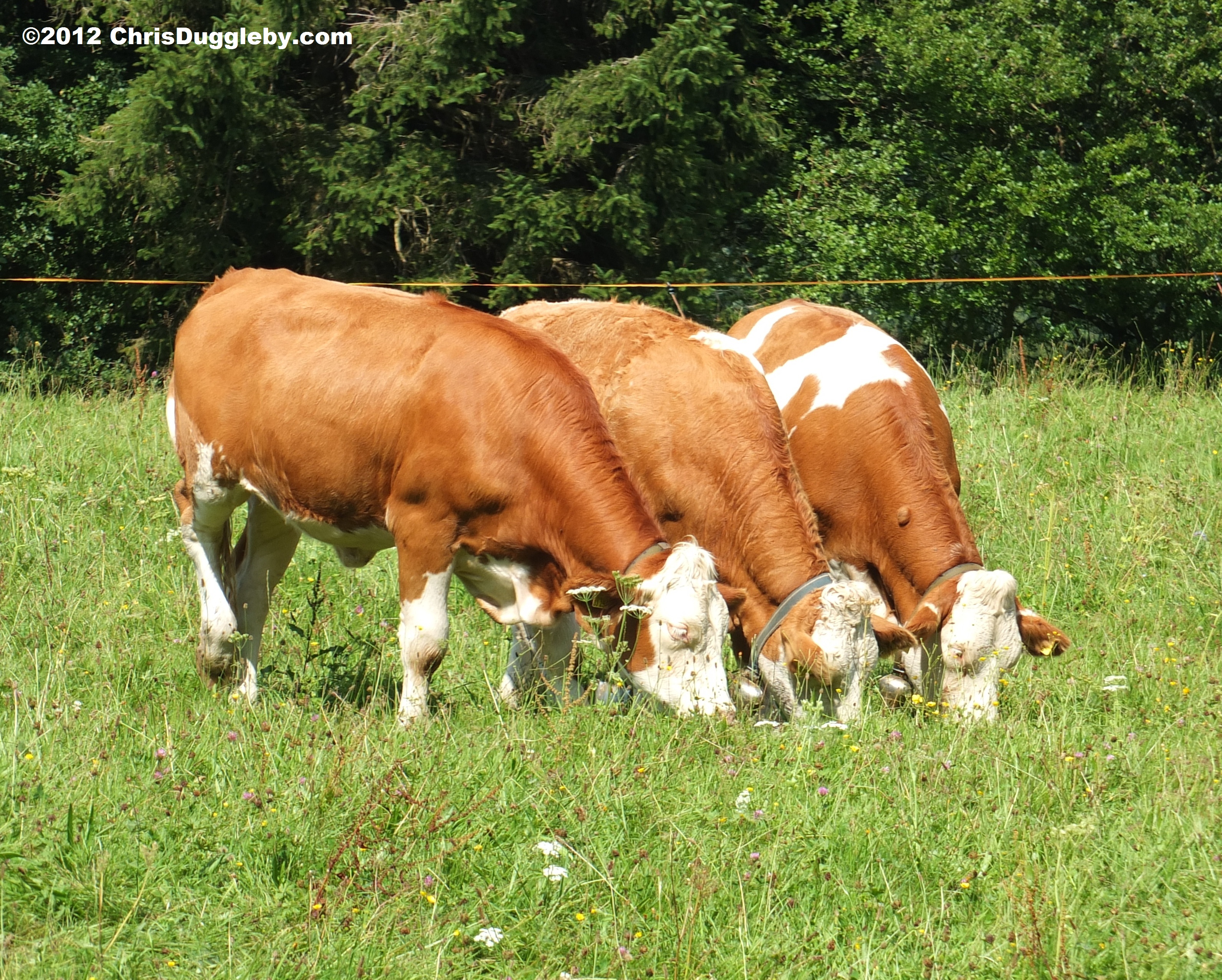
Trio of Cows with Cow Bells eating grass on Plateau above Bad Feilnbach
Cow showing off her Cow Bell on Plateau above Bad Feilnbach
Cow showing off her Cow Bell after eating grass on Plateau above Bad Feilnbach
Cow eating grass on the meadow with her Cow Bell above Bad Feilnbach
Cow with Cow Bell having a well deserved drink of water on the alpine plateau above Bad Feilnbach
Cow with Cow Bell having a well deserved drink of water after eating grass on the alpine plateau above Bad Feilnbach
Cows grazing on the Alm or Alpine meadow near the summit of the Schwarzenberg Mountain in the Bavarian Voralpenland
Cows grazing on the Alm or Alpine meadow near the summit of the Schwarzenberg Mountain in the Bavarian Voralpenland (near Bad Feilnbach)

If you are interested in reading my other health focused articles try the following

Torture In The Shower – Face and Body Soap Allergies – Main Suspect: Pears Transparent Soap

Poison in your Washing Machine: Allergic Contact Dermatitis from Laundry Detergents, Softeners, Conditioners and Whiteners

Is Alzheimer’s caused by the Gum Disease Bacterium P. Gingivalis – A Dementia Prevention/Treatment Breakthrough?

Toxic Chemicals in Sex Toys – 18 Vibrators, Cock Rings, Love Balls Tested – Only 3 Get All Clear

My T-shirt Made Me Sick – Textile Allergies – Sinusitis From Your Underwear

Transformation, Risk & Lifestyle